















Her birth name was Isabella Baumfree. She was born in 1797 in Ulster County, New York, to James and Elizabeth Baumfree. They were slaves, owned by a Dutch immigrant, and served on the estate of Johannes, then later Charles Hardenbergh. Her first language was Dutch, and although she had not learned to read, she could recite half of the Bible by heart. She was sold multiple times over 18 years.
Baumfree kept her bargain, which included a promise by her last owner, John Dumont, to free her on July 4, 1826. Between 1810 and 1827, she bore at least five children, fathered by a fellow slave by the name of “Thomas.” When Dumont rescinded on his promise, she grabbed her infant daughter, and walked away in 1827, ending up in New Paltz, New York. She later said, “I did not run off, for I thought that wicked, but I walked off, believing that to be all right.”
Baumfree was taken in by a free couple, Isaac and Maria Van Wagenen. When Dumont found her, he demanded her return. However, the Van Wagenen’s offered him $20 until the New York Anti-Slavery Law became effective later in the year; he accepted.
After the law was in effect, Dumont illegally sold Baumfree’s five-year-old son, Peter. With the help of the Van Wagenens, she filed a lawsuit to get him back. Months later, the court decided in her favor, and Baumfree became the first Black woman to win a case against a white man in America.
Influenced by the goodness of the Van Wagenens, she became a devout Christian. With her young family in tow, she moved to New York City to work for evangelist preacher, Elijah Pierson, as a housekeeper.
Three years later, she left Pierson to work for another preacher by the name of Robert Matthews. When Pierson died, Baumfree and Matthews were accused of poisoning him. They were later acquitted.
Baumfree’s faith grew stronger. “In 1843, with what she believed was her religious obligation to go forth and speak the truth, she changed her name to Sojourner Truth and embarked on a journey to preach the gospel and speak out against slavery and oppression.”
In 1844, she joined a Massachusetts abolitionist organization called the Northampton Association of Education and Industry. She met others with the same goal, including Frederick Douglass, where she became known as a civil rights activist.
Truth obtained notoriety when she made a memorable speech at the Ohio Women’s Rights Convention in 1851. She made a strong point that Black women remained inferior to white women with a now-famous closing statement, “Aren’t I a woman?” to point out the discrimination Truth experienced as a Black woman.
Although there is some controversy over her exact words, she continued to retain her Dutch accent, and most accounts confirmed the meaning of her remarks without question.
Truth made many rousing speeches. In one she spoke clearly and defiantly about the equality of women. “I have plowed and reaped and husked and chopped and mowed, and can any man do more than that?”
Later in the 1850s Truth moved to Battle Creek, Michigan where three of her daughters were living. She never stopped speaking in public about women’s rights and continued to help slaves find freedom. When the Civil War began, she encouraged white and Black men to fight for the Union and she helped organize supplies for Black troops.
After the war, she was invited to the White House and participated in the Freedman’s Bureau, which helped freed slaves to find employment and start new lives. She continued to fight against segregation. There is a story about Truth being blocked access by a streetcar operator. She had him arrested and won her case in a court of law in the mid-1860s.
Truth continued to fight for freed slaves and lobbied for their right to receive land to rebuild their lives.
Nearly deaf and blind, she lived her final years in Michigan. She died on Nov. 26, 1883. Engraved on her tombstone are the words, “Is God Dead?” A question she once asked a despondent Douglass to remind him to have faith.
“The Truth Lives Here”
Op-ed by James Turnage
Edited by Jeanette Vietti
Sources:
History.com: Sojourner Truth
Biography: Sojourner Truth
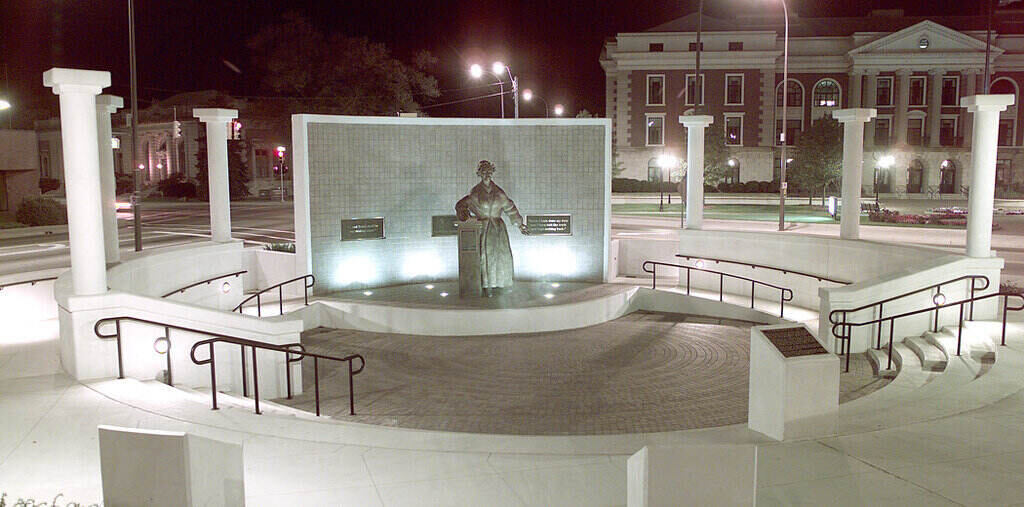
Featured and Top Image Courtesy of Battle Creek CVB’s Flickr Page – Creative Commons License
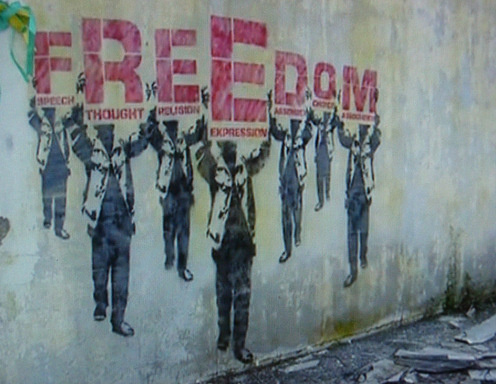
Inline Image Courtesy of andres musta’s Flickr Page – Creative Commons License




