
















Chicago has a rich history of cultivating bold women who dared to step outside expectations to shape and build America. Every year, March is set aside as Women’s History Month to celebrate vibrant women whose lives center around ceaselessly providing healing and promoting hope.
The courageous women below are visionaries, activists, philanthropists, and humanitarians.
Sandra Cisneros 1954 – Present
Sandra Cisneros was born in Chicago and is most known for her novel, “The House on Mango Street.” Her book sold more than six million copies. It tells the story of a young Latino girl growing up in Chicago. “The House on Mango Street” is taught in inner-cities and universities. Cisneros was born of American and Mexican descent, and she has dedicated her life to activism. She founded two non-profit organizations: Macondo Foundation and Alfredo Cisneros del Moral Foundation. Both of these organizations cultivate emerging writers. Additionally, Cisneros is an organizer for Los MacArturos, a community activist association. She is a bold woman who shows no signs of slowing down.
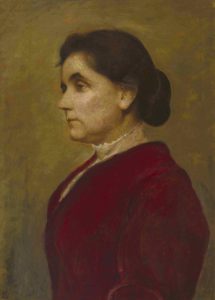
Jane Addams 1860 – 1935
Jane Addams is known as the “Mother of Social Work.” She was a bold advocate for world peace and fiercely dedicated to uplifting communities. She focused specifically on the care and wellbeing of women, children, and public health. As an activist, socialist, author, protestor, and community organizer, Addams changed the world. She was the first American woman to receive the Nobel Peace Prize.
Dr. Fannie Emanuel 1871-1934
Dr. Fannie Emanuel moved from Ohio to Chicago in 1887. She was a medical doctor and a civic leader. Dr. Emanuel served Chiropody Company as treasurer. This was her husband’s company in the Loop of Chicago. Later, she opened Emanuel Settlement House. This establishment was created to “purify the social condition.” At the settlement, there was a Kindergarten class, boy’s and girl’s clubs, sewing and cooking classes, a free dental clinic, an employment bureau, and more. The Emanuel Settlement House closed its doors in 1912. Her legacy lives on as one of Chicago’s most influential African-American women.
Katherine McCormick 1875-1967
Katherine McCormick was a philanthropist and suffragist who made significant “money moves” during her lifetime. She inherited her husband, Stanley McCormick’s fortune. This enabled her to fund many projects that benefited women and mental health. For example, she subsidized the first birth control pill. Additionally, she established a Neuroendocrine Research Foundation between 1927 – 1947. This institute was the first of its kind to study the correlation between endocrinology and mental illness. In her will, McCormick left $5 million to the Standford University School of Medicine to support female physicians and another $5 Million to the Planned Parenthood Federation of America.
Oprah Winfrey 1954 – Present

In 1983, Oprah Winfrey moved to Chicago to host “AM Chicago,” a talk show on WLS-TV. It did not take long for Winfrey’s “AM Chicago” to surpass Phil Donahue as the highest-rated talk show in Chicago. “The Oprah Winfrey Show” began because critic Roger Ebert predicted her ratings would also surpass his show, “At the Movies,” and she did.
Winfrey’s syndicated talk show aired nationally for 25 seasons from Sept. 8, 1986, to May 25, 2011, in Chicago. It still is one of the highest-rated talk shows in American television history.
She founded HARPO Productions in Chicago and remained a city resident for several decades. Additionally, she has donated millions of dollars to several nonprofits, charities, and educational institutions in the Windy City.
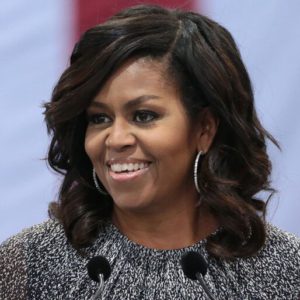
Michelle Obama 1964 – Present
Born in Chicago, Michelle Obama was a U.S. attorney who served as the first lady from 2009 to 2017. Her husband, Barack Obama, was the 44th President of the United States. She was raised on the South Side of Chicago before she went to Princeton and Harvard Law Schools. She worked as associate dean of Student Services at the University of Chicago and for multiple non-profit agencies.
Michelle was a strong, bold role model for women and young girls as the first lady. She advocated for poverty awareness, education, nutrition, physical activity, and healthy eating. In addition, she supported local talent and wore dresses made by American designers.
In 2020, she was praised as one of Gallup’s most admired women in America for the third year in a row. Her book, “Becoming,” spent 106 weeks on the New York Times Best Seller List, followed closely by her husband’s memoir “Promised Land.”
Koko Taylor 1928 – 2009
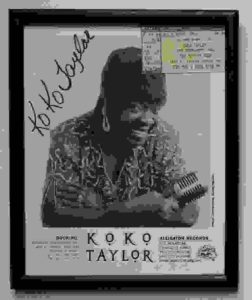
Born Cora Walton. Koko Taylor was given the nickname “Koko” because of her love for chocolate as a child. As she grew older, her voice became synonymous with Chicago blues. In 1967, her song “Wang Dang Doodle” propelled her to fame. She sang from her soul, capturing the heart and soul of the blues. Taylor was one of the first Chicago blues artists to have a following from the North Side.
In 2012, during an interview with World Cafe, Taylor said she would sleep behind the house so she could sing the blues with her brothers, who made musical instruments from corn cobs and hay bales. She stated proudly:
I sang gospel on Sunday and blues on Monday.
Her career lasted for over 40 years. During that time, she won more blues awards than any other woman in history. In 1984 she won a Grammy. Her first domestic live album, “Live in Chicago: An Audience With the Queen,” was released in 1987.
In 1997, Taylor was inducted into the Blues Foundation Hall of Fame. She died in a Chicago hospital on June 4, 2009, at 80.
Written by Jeanette Vietti
Sources:
Urban Matter: Famous Historical Women From Chicago; by Arniecea Johnson
Metro Self-Storage Blog: 9 Notable Chicago Women to Celebrate Women’s History Month; by Tracy P.
Featured Image Courtesy of wiredforlego’s Flickr Page – Creative Commons License
First Inline Image by George De Forest Rush Courtesy of Look and Learn – Creative Commons License
Second Inline Image Courtesy of GPA Photo Archive’s Flickr Page – Creative Commons License
Third Inline Image by Bill Ebbesen Courtesy of Wikimedia – Creative Commons License
Fourth Inline Image by Gage Skidmore Courtesy of Wikimedia – Creative Commons License
Fifth Inline Image Courtesy of Michael Sauers’ Flickr Page – Creative Commons License




