
















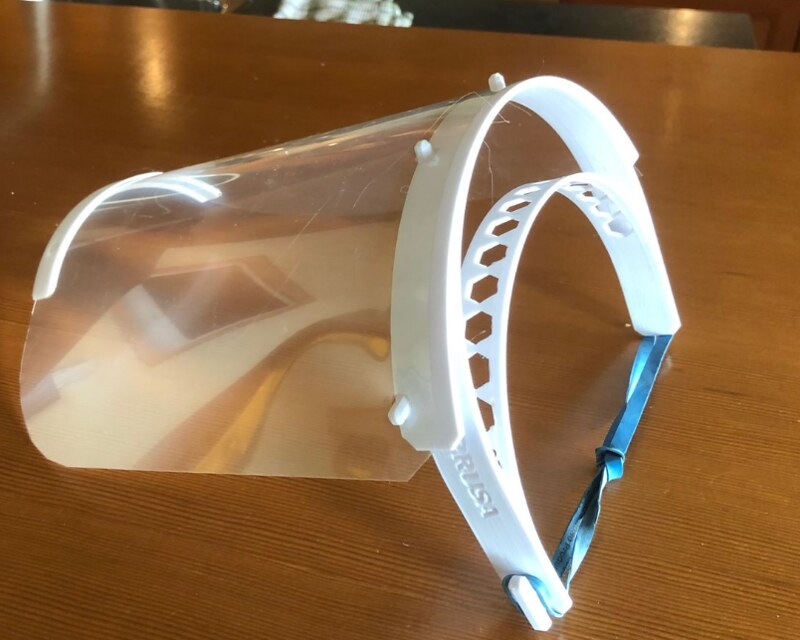
Coronavirus cases are this raising at a crazy high rate which has caused a lot of people to question safety precautions. A study by Florida Atlantic University is proving the ‘ineffectiveness’ of face shields and masks.
The researches conducted an experiment to test just how safe and protective these valved masks and face shields really are. The researches used a water and glycerin mixture to imitate a person sneezing from the mouth and nose. Sneezing is one of the main symptoms of the virus.
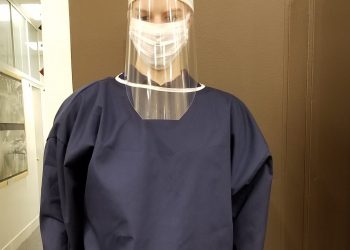 They used a face mask and a face shield or visor in two separate lab experiments. The face shield is supposed to contain the droplets from sneezing. The researchers claimed that when they conducted the experiment with the visor droplets from the mannequins “sneezing” escaped the shield.
Siddhartha Verma a professor at Florida Atlantic University said larger droplets got stopped by the face shield but smaller droplets follow air streams well and the slipped out of the visor into the air/environment.
If the air conditioning flow is strong the contamination can flow across the area or room quickly. Also, researchers from 2014 Environmental study confirmed the shields cannot be used as reliable respiratory protection.
The study back in 2014 showed that this type of protection only “protected the wearer” but not others around them. This type of protection only benefits the wearer that does not want to inhale something in the environment. However, it does not support what he or she is exhaling in the air and environment.
Also, masks with valves are very much like the face shield protector. It has the same pros and cons and is questionable whether it can completely contain each person breathing. There has been a lot of speculation whether the country had opened up too quickly. They fear it would lead to the cause of the second wave of the virus.
The number of coronavirus cases in the country has raised to 6.13 million. The second coming of this virus has been described as even more out of control. During a couple of months of severe quarantine, researchers have had enough time to study the virus and come up with safety precautions. They have also been able to find out the virus is transmitted from person to person.
In a research study at Duke University, they tested N-95 masks and surgical masks. According to them, these masks were the best and most effective at protecting the wearers and the people around them.
Valve masks and face shields provide a more comfortable breathing experience but you sacrifice protection. This protection could risk not only your life but others you often come around. Illinois high schools are making it a requirement for students to wear either surgical masks or solid covered masks with no holes or valves etc.
When walking around in the public or in stores it is best recommended to stay a couple of extra feet away from anyone with a mask with valves or face shields.
The N-95 masks are best because it has been tested and proved that it protects large and small particles from being exposed to the wearer. This respirator is tight-fitting which is not the most comfortable but it filters out at least 95 percent of possible contaminated particles in the air.
Fabric or cloth masks trap particles from your nose and mouth when you are breathing, coughing, or sneezing. With these types of masks, you have to refrain from touching them with your bare hands at any point because they do not filter out possible contaminated particles. Also, you should not borrow or share these masks. If the person that you are sharing with had the virus you will most likely contract it because this mask doesn’t filter out air.
Surgical masks are very good protection too. These are also more comfortable and loose-fitting. Unlike the cloth mask, these masks filter out particles and protect from droplets from coughing or sneezing. These types of masks are heavily recommended however they are better to use once and then dispose of them.
Written by Anay Amoah
Edited by Sheena Robertson
Sources:
Good morning America: “Only using Face shields or face masks with valves doesn’t stop spread of COVID-19, study finds”
The New York Times: “Face Shields and Valved Masks Offer More Comfort but Less Protection”
LiveScience: “Visualization shows Face shields may not protect against COVID-19 spread”
Featured Image Courtesy of CMLibrary Charlotte Mecklenburg Library’s Flickr Page- Creative Commons License
Inline Image Courtesy of NC Dept of Public Safety’s Flickr Page – Creative Commons License




