
















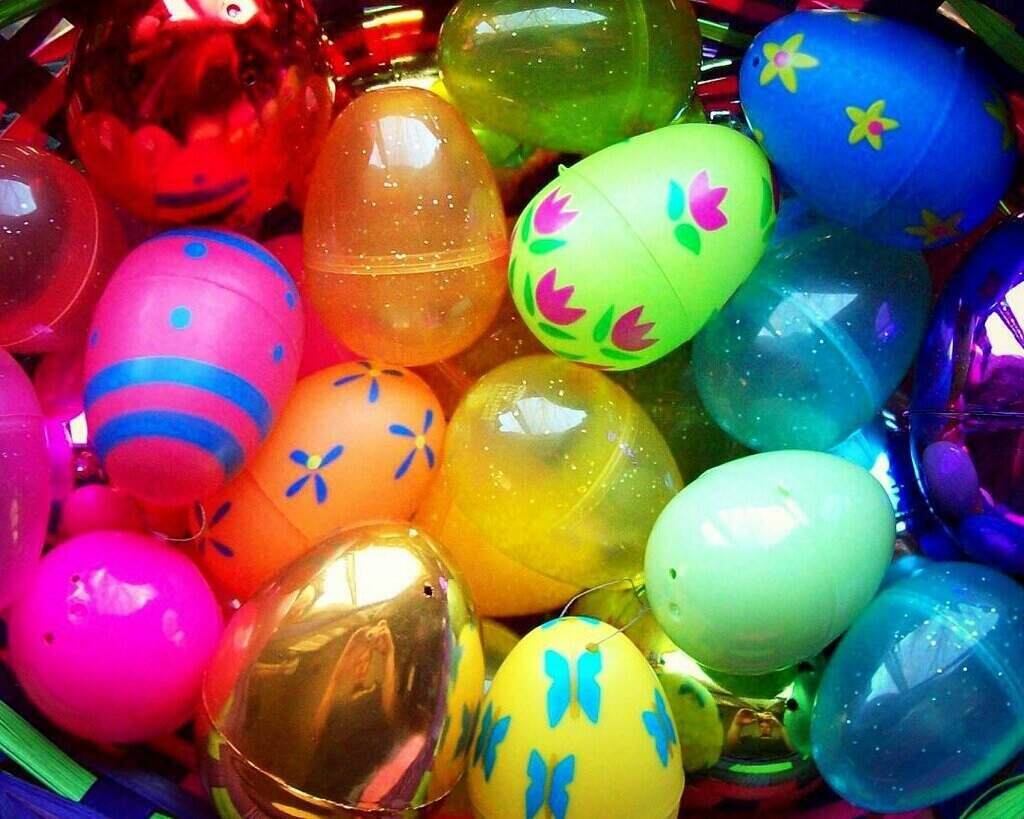
Easter is a Christian holiday celebrated on the Sunday following the Paschal Full Moon. Its roots date back centuries, but how did the holiday get its iconic symbols; the egg and the bunny? They have nothing to do with the resurrection of Jesus Christ, yet they are the icons of the holiday.
The symbolism behind the holiday is important to understanding where these icons originated. Easter is about rebirth or starting anew. There are many theories regarding the origin of the word. Some historians believe it came from the name Eostre, the goddess of dawn and spring. Another is that it comes from the word east, derived from the Latin word for dawn. Right down to its name, the holiday is symbolic of a fresh start or new beginnings.

The bunny and the egg are symbols of these as well. Bunnies represent rebirth and life as they have large litters. However, the origin of its ties with Easter remains unknown. Many historians believe this tie began with German immigrants in the 1700s. The egg, however, has an even more complex story.
The apparent similarities between what Easter represents and what eggs represent do not appear to be why the two are tied. Many historians believe that the tradition of eggs is a pagan one, and Christian missionaries adopted this tradition and celebrated Christian holy days in the same period as the pagan ones were set to promote conversion to Christianity.
Another theory was that the importance of eggs was related to Lent. The rules of Lent at this time were significantly stricter than they are now. Since all animal products were off the table, any eggs produced would soon go bad and therefore were hard-boiled so they could be preserved until the end of Lent. The end of Lent would be Easter, and then the hard-boiled eggs would be enjoyed.
Hard-boiled eggs are not the entirety of the tradition. However, at some point, they began to be dyed. The earliest evidence of this is Edward I of England buying 450 eggs to be colored for the holiday.
There are many ties between Easter and its iconic symbols of the bunny and eggs. The story is an excellent example of how many different stories are woven into one to explain a current occurrence. Whatever the case may be, these symbols represent the holiday extraordinarily well, and the traditions will likely go unbroken for many generations to come. This year, the Paschal Full Moon falls on Saturday, April 16, and Easter is celebrated on April 17.
Written by Joseph Nelson
Edited by Sheena Robertson
Sources:
HISTORY: Easter 2022
TIME: Here’s Why Easter Eggs Are a Thing
TIME: This Is Where the Word ‘Easter’ Comes From
Farmer’s Almanac: Easter and the Paschal Full Moon
Top and Featured Image Courtesy of Charles Rodstrom’s Flickr Page – Creative Commons License
Inline Image Courtesy of Jonathan Cutrer’s Flickr Page – Creative Commons License




