
















Mother’s Day, the day to recognize and celebrate motherhood, was created by Anna Jarvis in 1908. It became an official holiday in the United States in 1914. She later denounced the day’s commercialization. She spent the later years of her life trying to get the holiday taken off of the calendar.
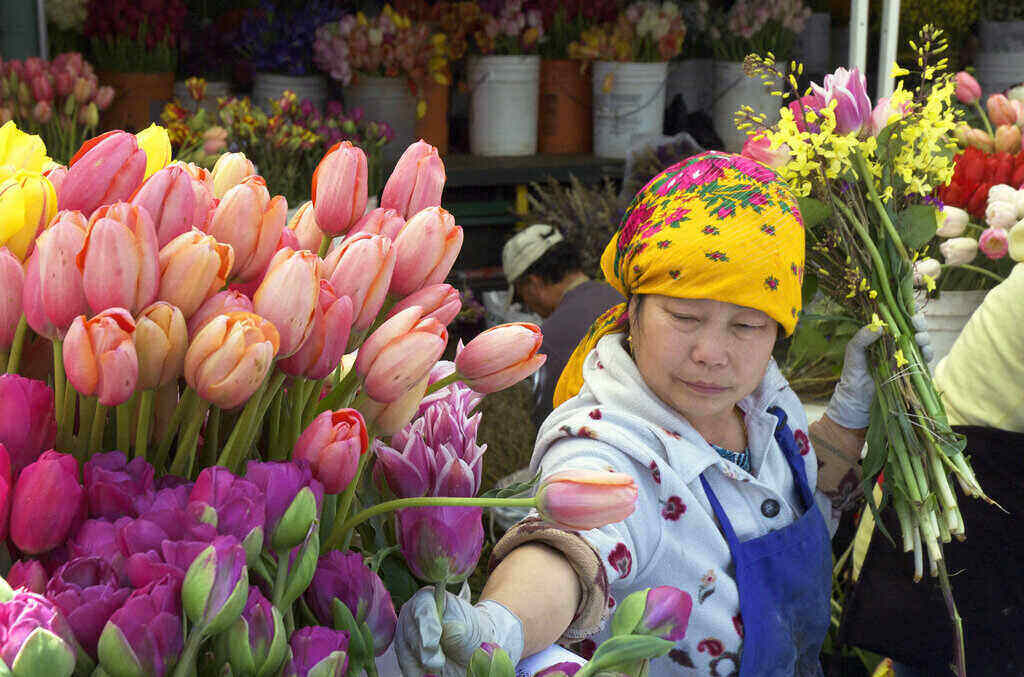
The ways to celebrate can vary, but the traditional gifts are giving moms flowers, cards, and other presents.
The celebration of moms can be looked back to the ancient Romans and Greeks. They held festivals to honor the goddesses Cybele and Rhea. The present-day example of Mother’s Day is the Christian festival known to be “Mothering Sunday.”
The holiday falls on the fourth Sunday of Lent in the United Kingdom and parts of Europe. The faithful would attend the church closest to their home. On that Sunday they led a special service in honor of Mother’s Day.
Evolution of Mother’s Day Traditions
As time went on, the tradition of Mothering Sunday changed into a nonreligious holiday. Children then started to give their moms appreciative gifts and flowers. The popularity of this tradition faded with time prior to the merge with American Mother’s Day traditions around the 1930s and 1940s.
The U.S. tradition originated back in the 19th century. Before the Civil War, Ann Reeves Jarvis aided in the start of “Mothers’ Day Work Clubs” to educate women locally about how to correctly take care of their offspring.
Later on, the clubs turned into a unifying force in the South while it was still separated due to the Civil War. Her daughter Anna created “Mothers’ Friendship Day” in 1868. During that day moms got together with former Confederate and Union soldiers to advocate for reunification.
Julia Ward Howe’s Mother’s Day
Julia Ward Howe, a suffragette and abolitionist, created another predecessor to the holiday. She created the “Mother’s Day Proclamation,” in 1870. This is a call to action that requests moms to come together to advocate for world peace. She wanted “Mother’s Peace Day” to be honored every June 2nd.

Howe’s holiday was successfully held in Boston, Massachusetts, and other places for many years. However, over time popularity was lost and disappeared from the public in the years that followed World War I.
Juliet Calhoun Blakely, Mary Towels Sasseen, and Frank Hering created different versions of the holiday. Blakely was a temperance activist who was an inspiration to Mother’s Day in Albion, Michigan, in the 1870s.
Sasseen and Hering worked to create their vision of the holiday in the later 19th to the early 20th century. He was called “the father of Mother’s Day” by some people.
Anna Jarvis’ Motivation
Mother’s Day became an official holiday nine years after the death of Jarvis’ mom in 1905. She created the holiday to honor the sacrifices that moms make for their children.
Jarvis led the first official Mother’s Day event at a Methodist church located in West Virginia. She did so after receiving support financially in May 1908 from a department store owner, John Wanamaker. On the same day, thousands of people went to Mother’s Day events at Wanamaker’s retail locations in Philadelphia.
After her first successful Mother’s Day, she was determined to get her holiday on the national calendar. She argued that holidays in America were biased and set on male achievements. She set up a large campaign asking people to send letters to important politicians and newspapers. The letters asked for the adoption of a celebratory day to honor moms.
Many churches, states, and towns started the celebration annually by 1912. Jarvis created the Mother’s Day International Association to aid in the promotion of her cause. In 1914, her commitment paid off when President Woodrow Wilson signed a bill that officially made Mother’s Day the second Sunday in May.
Jarvis pictured the holiday as a personal celebration for mothers and families. She envisioned families attending church services. White carnations were worn to honor deceased moms. However, Mother’s Day turned into a national holiday soon after card companies, florists, and other retailers took advantage of the holiday’s popularity.
Written by Marrissa Kay
Sources:
History: Mother’s Day 2022; by History.com Editors
Almanac: The History of Mother’s Day in United States; by Catherine Boeckmann and Heidi Stonehill
Nation Women’s History Alliance: History of Mother’s Day
Featured and Top Image Courtesy of Fiore Power’s Flickr Page – Creative Commons License
Inline Image Courtesy of Susanne Nilsson’s Flickr Page – Creative Commons License




