
















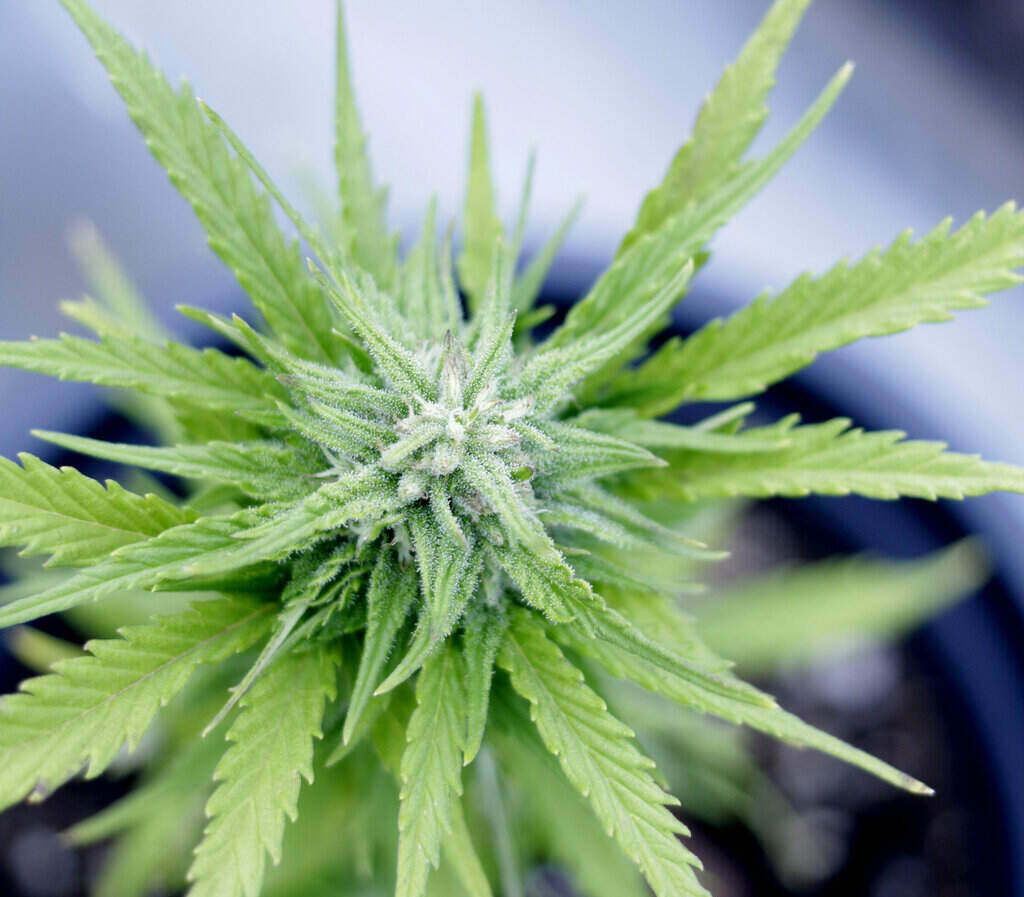
Marijuana is the most widely used drug in the United States. The legalization of marijuana, apparent for recreational use in Illinois, makes this drug more accessible to the youth. This opens the door to higher chances of adolescents’ usage of the drug. In this, the age at which an adolescent begins to consume marijuana may adversely alter brain structures that affect high-order thinking, according to the Center for BrainHealth at The University of Texas at Dallas.
The Legalization of Marijuana Concerns

In the U.S., there are 36 states with four territories that have legalized medical marijuana. In addition, 18 states, Washington, D.C., and four territories have made legislation permitting the recreational usage of marijuana. With this, researchers and clinicians have made known concerns associated with risks like the following: adolescents as young as 12 or 13 starting usage of the drug, the market being widely dominated by cannabis products, and what the premise of this paper consists of, which is the short and long-term effects of consumption/usage of the drug.
Additional concerns by critics come to light. Regardless of the age, the legalization of marijuana may make the drug more accessibility to youth. The concern of the adolescent brain being subjected to lasting damage from the drug was also brought about.
The question to add to this is if there are concerns such as the ones listed made by certain critics, like researchers, then why would the government continue forward in marijuana’s legalization? Most believe it is to increase profit at the expense of the chance of the youth being wrongfully influenced by the drug. With the amount of research gathered and the possibility of youth being more accessible to it, one would think holding off on making the drug legal would be considered, but after all, money is the root of all evil and this is an example of it.
Addiction Statistics and Marijuana Ingredients
Many say that research from the National Institute on Drug Abuse (NIDA) also reveals that people who start smoking in their teens have a 17% chance of being addicted to marijuana, while only 9% of adult users become addicted to the drug. Furthermore, Krista Lisdahl Ph.D., director of the Brain Imaging and Neuropsychology Laboratory at the University of Wisconsin- Milwaukee and principal investigator in the National Institutes of Health’s ongoing Adolescent Brain Cognitive Development Study, brings in how this is similar to the tobacco and alcohol industries that make the major amount of their profit on a small quantity of chronic or addictive users, according to the American Psychological Association.
The main ingredient used in marijuana that produces the high effect is the component tetrahydrocannabinol (THC). Susan Weiss, Ph.D., director of the division of extramural research at the National Institute on Drug Abuse (NIDA) adds there is extensive evidence revealing THC does not come risk-free.
What Have Some Studies Revealed?
Some findings have revealed that participants who began the consumption of marijuana at sixteen or younger exhibited “brain variation that [indicates] arrested brain development in the prefrontal cortex.” To give more context, the prefrontal portion of the brain is in charge of reasoning, judgment, and complex thinking. It is mentioned that individuals who started using marijuana after sixteen exemplified opposite effects of arrested brain development and showed “signs of accelerated brain aging.”
Another study done by the Center for BrainHealth explained how science reveals the changes that happen in the brain during the stage of adolescence to be complex and that their findings propose that the timing of cannabis usage can produce the outcome of “very disparate patterns of effects” as Francesca Filbey, Ph.D., principal investigator and Bert Moore Chair of Behavioral and Brain Sciences at the Center for BrainHealth explained. They further analyzed that not only does the age of usage impact changes in the brain, but the amount used plays a role in the extent of altered brain maturation becoming evident, according to the Center for BrainHealth at The University of Texas at Dallas.

While these studies are evident, Filbey acknowledges that a longitudinal study would be needed to declare a causal relationship between brain alterations and marijuana usage. It is concluded that future studies will start analyzing cognitive and behavioral changes linked to structural brain changes by considering the distinct development patterns in the adolescent period and how those very patterns could grow to non-linear effects.
Long-term Studies of Marijuana
Moreover, a long-term prospective study coming from New Zealand related to “the trajectories of young people before and after they take their first hit of marijuana” revealed some findings that are worrisome.
Psychologist of Duke University, Terrie Moffitt, Ph.D. and colleagues gathered data from Dunedin Multidisciplinary Health and Development Study where longitudinal research followed 1,000 New Zealanders. These individuals were born in 1972 and answered some questions about their marijuana usage at ages 18, 21, 26, 32, and 38. In addition to this, they went through neuropsychological testing at ages 13 and 38. The team’s findings revealed that constant marijuana usage was connected to a decline in IQ.
This was analyzed after researchers controlled for educational differences. Those who were most persistent in their usage of marijuana, ones “who reported using the drug in three or more waves of the study”, experienced about a six IQ point drop in neuropsychological functioning, according to the American Psychological Association.
The conversation develops as there is reason to think there may be a unique susceptibility to lasting damage due to marijuana consumption in adolescence at least until their mid or early-20s as their “0brain is still under construction “, stated by Staci Gruber, Ph.D., a neuroscientist, and director of the Cognitive and Clinical Neuroimaging Core and the Marijuana Investigations for Neuroscientific Discovery (MIND) Program at McLean Hospital/ Harvard Medical School.
She expounds in saying how in this timeframe of neurodevelopment, the brain is sensitive to damage from drug exposure. As lightly touched on before, she further describes the frontal cortex which is a region of the brain in charge of “planning, judgment, decision-making and personality” being the last part of the brain to fully develop as it develops during the time of adolescence until people’s mid or early-20s.
As these studies come out, research on the long-term cognitive effects of marijuana has been centered on heavy users. It is not fully evident if there is a safe level of usage, if the brain changes connected with its consumption are permanent, or if the brain can possibly recover from its effects with time, according to the American Psychological Association.
More Recent Findings
Krista Lisdahl Ph.D.’s work and a multitude of other colleagues have discovered that younger kids possess more negative outcomes from increased marijuana exposure. In this, “some mild and mostly mild reductions in verbal memory, complex attention–like cognitive control–problem solving, and psychomotor states” are evident, but cognitive function begins to recover after a few weeks if usage of marijuana stops.
Furthermore, three prospective longitudinal studies done by Lisdahl on 3,762 fraternal and identical twins further uphold her research in shedding additional light on the fact that usage of marijuana is connected with greater rates of mental health issues in the youth. This includes anxiety, major depression, antisocial personality, and substance use disorders being shown to be mostly temporary, but still prevalent.
As the ongoing research is done in regards to the usage/consumption of marijuana and its neurological effects on adolescents persist, this columnist, being an adolescent who wants the best for her peers and community of young people being that this drug is so popular, would say she does not think it is healthy for the youth to be consuming it with the iceberg of consequences researchers and scientists have discovered. In her understanding of its medical usage, she thinks it should be confined to medicine and the authorized need of the patient thereof, not easily accessible to adolescents within the population in the case of its legalization that is evident here in Illinois.
Written by Ke’Lena Thomas
Edited by Sheena Robertson
Sources:
The Center for BrainHealth at The University of Texas at Dallas: Starting Age of Marijuana Use May Have Long-Term Effects on Brain Development; by the Center for BrainHealth
American Psychological Association: Marijuana and the developing brain; by Kirsten Weir
WebMD: Not Your Parents’ Pot: Teen Cannabis Use Raise Red Flags; by Liz Scherer
Featured Image Courtesy of WILLPOWER STUDIOS Flickr Page – Creative Commons License
Inset Image Courtesy of wp paarz‘s Flickr Page – Creative Commons License
Second Inset Image Courtesy of Thomas Elliott‘s Flickr Page – Creative Commons License




