

















From the brilliant mind of Christine Houston, the play turned hit television show “Two-Twenty Seven” caught me by surprise. It follows the prominent family Mary, Lester, and Brenda Jenkins and is set in a middle-class apartment in 1950s Chicago. Mary, the central main character of the play, is different from your average major role.
Instead of being light-hearted or kind, she’s nosy, cruel, and not afraid to spread rumors without any context. There’s is also Mary’s husband Lester, or should I say, ex-husband. He’s a pretty moral character by some standards, loves his daughter, and is nice to the neighbors.
However, Mary has been a constant nuisance to the neighborhood which he doesn’t approve of. This leaves him to have an affair and leave somewhere else with one of the characters the name of Sandra. She is also one of the neighbors living in “Two-Twenty Seven,” with her character being the attractive one of the cast.
Sandra also has done some dirty deeds behind the closed door as Lester wasn’t her only affair. She also had the mailman’s head over his heels as he openly tries to talk to her taking her out to eat. But even then, she’s been planning to leave with Lester, with them both trying to get out of relationships they can “stand”.
It was kind of sad to see Mary have to see her husband run away with another woman. But at the same time, her constant rude nature to her neighbors and other peers causes problems for anyone she comes in contact with. Making it hard to root for her most of the play. These interactions include bullying her friend about her weight and consistently ridiculing the homeless person on the block. This is not a bad thing, it just gives more kudos to Shree Bydums’ portrayal of Mary.
Speaking of Mary’s friends, her most consistent friend goes by the name of Rose. Even when Mary was doing her shenanigans with the neighbors. Rose is also another character in “Two-Twenty Seven” who is normal, with her special character trait being that she loves eating.
She deals with most of Mary’s problems, trying to make sure her friend didn’t hurt anyone’s feelings. She did this by telling m=Mary to watch her mouth about people and telling her to keep secrets. One of the big plots in the story is when the little girls, are suspected of doing something with an older man for money. Rose tells Mary to not make any assumptions and more importantly, not tell anyone until more evidence is seen. But being Mary, she not only assumes they did the nasty for money but tells most of the neighbors, making the young girl embarrassed.
One of my favorite parts of “Two-Twenty Seven” as the story continues is that Mary’s constant mishaps lead to her downfall more than every other character’s success. Moreover, the more that Mary’s closest friends and family attack her way of thinking, the more they stray away from her and become more successful in their own right.
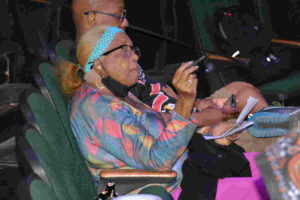
Another thing I’d like to highlight about “Two-Twenty Seven” is its tone changing. The story could have gone from a normal conversation, into a tense argument and ended off with a big spot for comedic relief. This setup is heightened with Ms. Huston’s use of tension building, so in whatever scenario you are always on your feet because something minimal becomes a big problem, something that wasn’t supposed to be a secret comes out or something one character is doing something out of ordinary and you’re trying to figure out the plan.
As someone who was born in the 2000s, I was still watching shows like “Good Times” and “Jeffersons” since they were still aired on main TV channels at the time. The same witty comedy, relatable characters, and fine story writing is shown here just as in the sitcoms of that time.
The actors who played their characters fit their roles to a tee. I went into the “Two-Twenty Seven” play thinking it would have been something like a documentary, a story something to a serious black family going through the trials and tribulations of the pain we call reality. “Two-Twenty Seven” still has that trope but with a more comedic twist with most characters spouting one-liners most of the time.
Written By Daylontie Jasper
Edited by Sheena Robertson
Feature and Inset Image Courtesy of TNS




