
















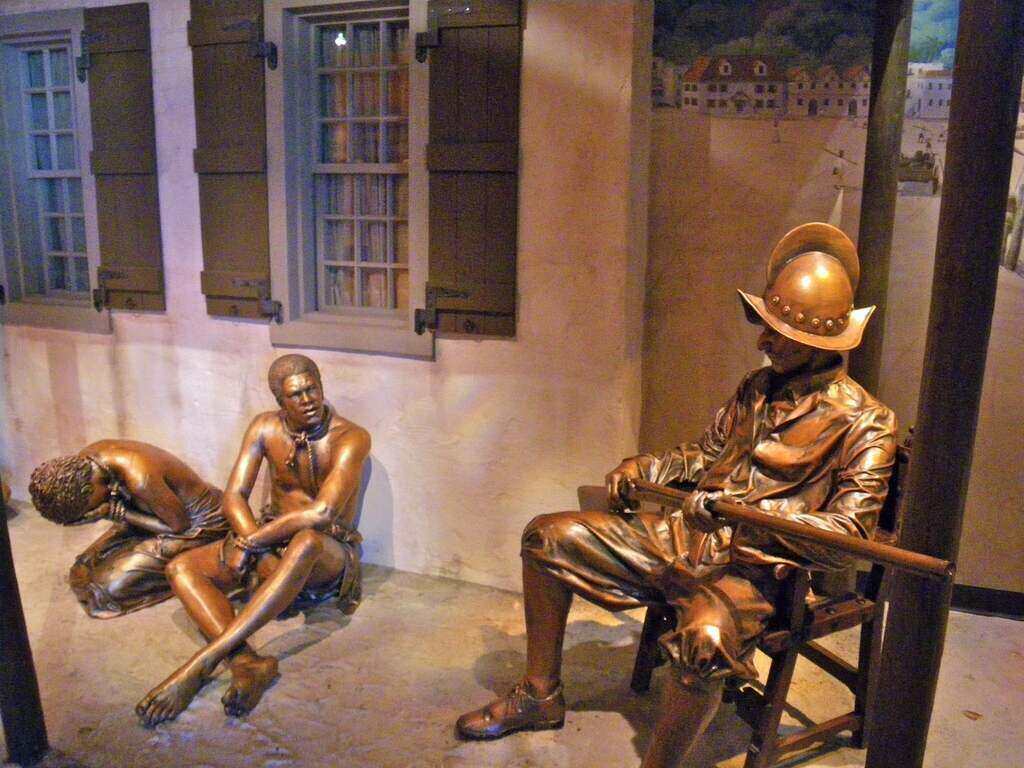
The 13th Amendment says: “neither slavery nor involuntary servitude except as [a] punishment for crime, [nor] if the party shall duly [be] convicted shall exist in the United States.” In layman’s terms, it says slavery is illegal except when a person is convicted of a crime. It was an intentionally crafted loophole and with many southern states dependent upon slave labor at the time of abolition, they exploited that loophole immensely.
Locking Black people up for anything like not having a job, or for tempting them to vote. Black men, women, and children would be sent to prison living in deplorable conditions, and leased out to work for plantations and mines. The system actually incentivized the mass incarceration of Black people for the sole purpose of forcing them back into slavery. Just under a different name.
Fast forward to today and our criminal justice system continues to over-police black communities and incarcerate black people at five times the rate of white people. As well as some of your favorite businesses unfairly profit off of imprisoned bodies that are disproportionately Black and brown.
Prison labor is now a multi-billion dollar industry with incarcerated people doing everything from staffing call centers to building office furniture. Some incarcerated people make measly cents per hour. Others, particularly in states like Texas, Georgia, and Florida, don’t make any money at all for their labor. While you love to believe slavery has ended it’s still alive in the form of prison labor. In fact, some of the plantations that used convict labor in the 1800s are still being used today at state penitentiaries. Although it’s unethical it’s all legal because that loophole still exists in our constitution today.
George Washington was the largest slaveholder in the United States, and he made use of a clever loophole to make sure that he stayed that way. Back in the 1790s Washington D.C was not the capital of the United States, the capital was Philadelphia Pennsylvania. Pennsylvania was a free state that had an ordinance that stated: “any slave that made it to the state of Pennsylvania and could stay for 6 months, could automatically declare themselves as free citizens.”
George Washington was the president at the time and understandably had a lot to do in Philadelphia but he didn’t want to free the slaves that he brought along with him. So right before the 6 month period, he would rotate out all of his slaves that were there with new slaves to bring in so that the slaves that were there could not declare themselves to be free citizens.
Prison inmates in the United States produce $11 billion worth of goods and services. More than 80% of prison inmates do general maintenance at the prisons. Cleaning, cooking, repair work all changes you name it. The inmates earn .52 cents per hour with the exception of these seven confederate states: Alabama, Arkansas, Florida, Georgia, Mississippi, South Carolina, and Texas, they pay nothing at all. Public officials have said that they couldn’t even operate without the prison inmates working this slavery.
They couldn’t take care of facilities, ditches, roads, or anything without this slavery. More than 75% of the inmates told researchers that if prisoners cannot work or decline to work they are subject to cruel and unusual punishments such as solitary confinement, loss of family visits, and even denial of sentence reductions. Most prisoners are not provided with the skills and training for their work that would help them get jobs when they’re free. Almost 70% of the prison inmates didn’t receive any form of job training and they couldn’t afford essentials such as soap and phone calls with their wages.
Some of the prison inmates make furniture, cleaning supplies, and uniforms, do laundry for public hospitals and universities and they also work phone call centers for the Department of Motor Vehicles. The United States government uses slavery more than any other country and it’s perfectly legal thanks to the 13th amendment loophole.
By: Zaylah De La Torre
Sources:
End Slavery Now: State-Imposed Forced Labor: History of Prison Labor in the U.S. By: CAZZIE REYES
The Guardian: ‘Slavery by any name is wrong’: the push to end unpaid labor in prisons By: Michael Sainato
GRANTHSHALANews: ‘Slavery by any name is wrong’: the push to end unpaid labor in prisons
Featured Image Courtesy of PunkToad‘s Flickr Page – Creative Common License
Inset Image Courtesy of Michael Coghlan‘s Flickr Page – Creative Common License




