
















The Father, The Son, and the Black Spirit
Many people may not be familiar with Dr. Carter G. Woodson when it comes to African Americans who changed the course of history. But like many Black figures, his work for Black justice came to fruition in the form of “Black History Month.”
This is the man who brought up the idea for the month of Black appreciation in America, which only lasted a week during his time. But in order to further understand the son that it is Black History Month, one must talk about the father.
Child-like Curiosity Turned Calling: Early Life and Education
Born on Dec. 19, 1875, Woodson hungered for education at an early age. Growing up with illiterate parents (former slaves), he spent time helping his family working the coal mines in West Virginia. Self-taught and a master at school subjects, led him to become a teacher and principal before he got a bachelor’s at Berea College in Kentucky for literature.
During college, he was a school supervisor in the Philippines, traveling to continents like Europe and Asia. He became the second Black American to earn his master’s at a University, getting him from the University of Chicago.
Woodson then joined the faculty of Howard University, eventually serving as Dean of the College of Arts and Sciences.
Shadow of American History: Carter G. Woodson’s Realization

During his time in the American Historical Association, he’d been barred from attending the conferences. Woodson realized that a white-lead historical professional had almost no interest in Black History
He believed African American history was unfairly forgotten in the history textbook by those who write and teach them.
This led to his mission to bring the unappreciated aspects of Black history to the forefront of the American people. With the help of the Association for the Study of Negro life funding this project, Woodson’s plans of spreading Black history take a big step forward.
Carter G. Woodson started a journal that had the contents of Black history all when it was published under the name “Journal of African American history.”
The pioneer of Black excellence launched Negro History Week. Woodson made sure it would happen the second week of February, the week of Abraham Lincoln and Fredrick Douglass’s birthdays.
Unfortunately, Woodson’s life was cut short by a heart attack, passing at the age of 74.
Paving the Road for Black History Celebration
Carter G. Woodson’s memory and work still live on and beyond February. With the increase of Black acknowledgment and appreciation which happens to this day. Black History Month, formerly Black History Week, is now recognized in countries like Canada and Europe. National holidays like MLK day, Juneteenth, Loving Day (the celebration of Interracial unions), and Kwanzaa came after his departure.
Black history is available to be studied by students all across America. Giving them the history that many generations before could not get, but are proud to be a part of.
By Daylontie Jasper
Sources:
NAACP: Carter G.Woodson; by NAACP
Thought Co.: A List of Holidays of Interest to Black Americans; by Nadra Kareem Nittle
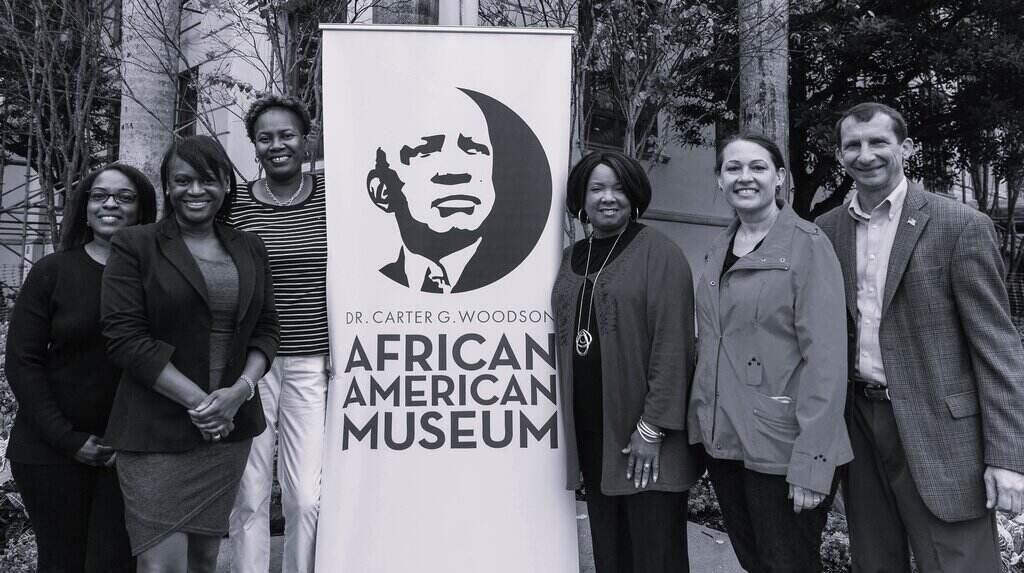
Inset Image Courtesy of IMCBerea College‘s Flickr Page – Creative Commons License
Featured Image Courtesy of CityofStPete‘s Flickr Page- Creative Commons License




