

















The progression of AI (artificial intelligence) technology has taken major leaps since 2013. While experts remain split on whether humans will retain control over decision-making, they all agree AI will play a role in people’s daily lives. Advancement in artificial intelligence has led it into its era of development.
The Birth of AI
World War II was the accelerator that perked people’s interest in technological developments. It also kicked off the human desire to understand how to incorporate the functioning of machines and organic beings.
One such person was Norbert Wiener, a cybernetics pioneer. His desire was to unify automation, electronics, and mathematical theory as “a whole theory of control and communication, both in animals and machines.” Prior to this, the formal neuron was developed by Warren McCulloch and Walter Pitts. Moreover, it was the first mathematical and computer model of the biological neuron.
The founding fathers of AI technology were John Von Neumann and Alan Turing. However, they did not use the term at that time. Von Neumann and Turing made the transition from computers to 19th-century decimal logic and machines to binary logic.
Coining the Term
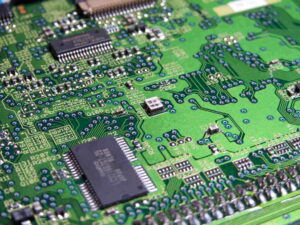 The term artificial intelligence has been attributed to John McCarthy of the Massachusetts Institute of Technology (MIT). Marvin Minsky from Carnegie-Mellon University defined it as “the construction of computer programs that engage in tasks that are currently more satisfactorily performed by human beings because they require high-level mental processes such as: perceptual learning, memory organization, and critical reasoning.”
Additionally, Minsky, McCarthy, and others attended a conference held at Dartmouth College held in the summer of 1956. The conference, which turned into a workshop, was funded by Rockefeller Institute. Afterward, McCarthy, Minsky, and four others remained a consistent presence throughout the development basis of AI.
Present Day
As time passed, the development of artificial intelligence flourished. For example, ChatGPT, Stable Diffusion, DALL-E 2, and Whisper. Moreover, these companies have been able to accomplish tasks such as:
- Text manipulation and analysis.
- Image generation.
- Speech recognition.
As with all new technology and devices, companies that develop artificial intelligence programs and models are continuously working to improve their systems.
Concerns
Many people are excited by the growing advancements in the field of artificial intelligence. However, on the other hand, some analysts are worried about how social systems, businesses, and governments becoming more automated.
On June 8, 2023, U.S. Senators introduced two separate bipartisan AI bills. One of the bills would require the U.S. government to be transparent when using artificial intelligence to interact with people. Additionally, the second would establish if America is remaining competitive in the latest technologies.
Competitive, Transparent, and Proactive
“The federal government needs to be proactive and transparent with AI utilization and ensure that decisions aren’t being made without humans in the driver’s seat,” stated Senator Mike Braun.
Senator Michael Bennet added, “We cannot afford to lose our competitive edge in strategic technologies like semiconductors, quantum computing, and artificial intelligence to competitors like China.”
While the certainty of AI in the future is unclear, it is safe to assume there will be more progress as technology improves.
By Sheena Robertson
Reuters: U.S. Congress to consider two new bills on artificial intelligence
Pew Research Center: The Future of Human Agency
Stanford University: Artificial Intelligence Index Report 2023
Council of Europe Portal: History of Artificial Intelligence
Top and Featured Image by www.vpsrus.com Courtesy of Mike MacKenzie‘s Flickr Page – Creative Commons License
Inset Image Courtesy of Daniel‘s Flickr Page – Creative Commons License




