















Hurricane Hilary
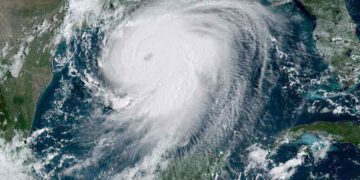
Hurricane Hilary was a large, Category 4 hurricane. which brought torrential rainfall and gusty winds to the Pacific Coast of Mexico, the Baja California Peninsula, and the Southwestern United States, resulting in widespread flooding and numerous mudslides. Hilary began from a disturbance south of Mexico with a tropical wave that entered the Pacific Ocean — going on to grow and cause over $7 billion in damage and economic loss.
On August 17 the storm peaks with winds up to 145 mph (235 km/h) and a central pressure of 939 millibars (27.7 inHg). This day the NHC issues its first storm watch for southern California.
Hilary began August 12, as a tropical wave traversing Central America. Producing widespread rain showers and thunderstorms, the storm continues around the southern coasts of Mexico, Guatemala, and El Salvador.
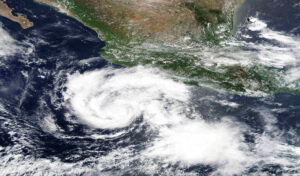
After days of gradually gaining organization an eye began to form. On August 17 the storm evolved into a category 1 hurricane while near Manzanillo Colima.
Due to winds and a trough of low pressure, Hilary mades its way toward California as a category 4 hurricane. It drenches the city in storms and heavy rainfall. The storm flooded roads and caused mud and rockslides. While Hilary rakes across California a 5.1 magnitude earthquake hit Ojai. Not causing any severe injuries or damage.
The storm produced flash floods in the San Gabriel Mountains east of Los Angeles and inundated more densely populated coastal areas of Ventura County northwest of the city.
Effects Of The Storm
In one dramatic scene, rescue officials in the desert community of Cathedral City, near Palm Springs, drove a bulldozer through the mud to the swamped care home and rescued 14 residents by scooping them up and carrying them to safety, Fire Chief Michael Contreras said.
They were among 46 rescues the city performed between late Sunday night and the next afternoon from mud and water standing up to five feet.
Residents were evacuated from areas like Catalina Island and towns in San Bernadino County in California.
The storm caused widespread power outages. Jason Robinson from PowerOutageUS claims to have had 24,000 customers.
Hilary was expected to weaken but forecasters warned rainfall from the storm could cause “life-threatening flooding.” Even though it was downgraded to a tropical storm, Brian Ferguson, deputy director of the California Governor’s Office of Emergency Services stated, “We are not out of the woods yet.” Talking to CBS News he also said, “The back end of this storm is still impacting us. We could still see mudslides today as that ground gets saturated.”
Hilary brought the wettest summer day on record to at least 16 cities in California. An entire year’s worth of rain fell in one day in some areas. Approximately 2,750 people had been displaced due the this storm with at least one death being attributed.
The storm continues to move north to Nevada where flood warnings are active. Red Cross disaster teams have emergency shelters open in California, Arizona, and Nevada.
Cleanup in California
Cleanup operations are in full effect across southern California as communities grapple with the aftermath of Hurricane Hilary. Crews have been working tirelessly to clear mud and debris, rescue stranded residents, and try to restore normalcy to areas that hadn’t witnessed such intense rain in nearly a century.
President Biden on Sunday said he has asked FEMA to deploy personnel and supplies to California. Biden also said the Coast Guard has pre-positioned aircraft to allow for rapid response and rescue efforts.
By Jamarion Thomas
Sources:
CBS NEWS: Hilary drenches southern California with record-breaking rainfall as storm wreaks havoc
PBS: live map: track the path of Hurricane Hilary
The New York Times: Tropical storm Hilary makes landfall in Mexico
Top and Featured image courtesy of Forsaken Fotos’s Flickr page
Insert Image Courtesy of NASA Goddard Space Flight Center Flickr page




