

















Google’s Driverless Vehicle
Recently, Google announced its plan to introduce driverless vehicles into the city of Chicago. Some have said that this new means of technology could shape how we use transportation today.
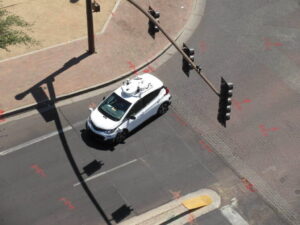
Years of work have gone into inventing driverless vehicles by Google. They have conducted extensive research just to develop a fleet of self-driving cars. This self-driving car is called the Waymo. The company’s decision to bring this technology to Chicago comes as no surprise. People recognize the city as a hub for technological innovation and forward-thinking policies. On their website, they even mention that their car “promises to be safer and more efficient than their human-operated counterparts.”
Waymos Background
These autonomous-driven vehicles do not have human drivers in the front seat. These cars are available 24 hours a day, 7 days a week. They even have an app called Waymo One, which allows the riders to hail one of the said cars.
Currently, these cars are located in Metro Phoenix, San Francisco, and are ramping up in Los Angeles County and Austin, Texas. They mentioned that they are interested in broadening these locations on their website.
The Vision of Self-Driving Cars
The introduction of self-driving cars on Chicago roads aims to alleviate traffic congestion and improve urban transportation efficiency, according to the official statement. These cars use advanced sensors, cameras, and AI technology to navigate complex city streets with ease. Prioritizing safety for both passengers and pedestrians, these vehicles make quick decisions with their advanced features.
Waymo Helps Chicago
Google’s autonomous vehicles in Chicago is expected to produce several benefits for both the city and its residents. One of the most significant advantages is the potential to alleviate traffic congestion, which is a persistent issue in many major metropolitan areas. With self-driving cars communicating seamlessly with each other, the flow of traffic could become smoother and more streamlined, ultimately reducing the time commuters spend stuck in gridlock.
In addition, these driverless vehicles have the potential to greatly enhance road safety. According to the National Highway Traffic Safety Administration, human error contributes to over 90% of all road accidents. By removing the element of human error from the equation, Google’s autonomous vehicles could lead to a significant reduction in the number of accidents on Chicago’s streets, making them safer for both drivers and pedestrians.
Impacts the Job Market
The introduction of autonomous vehicles brings both benefits and concerns. One potential drawback is the impact on the job market, particularly for taxi and rideshare drivers who may need to adapt to the changing landscape. However, the technology could also create new job opportunities for specialists in maintenance and software engineering. Moreover, the reduction in accidents could alleviate the burden on emergency services and healthcare systems, leading to more efficient resource allocation.
The Effect on the Public
The arrival of autonomous vehicles brings a multitude of benefits, but it also raises questions about the potential impact on the job market. The taxi and rideshare industry could witness a significant shift as self-driving cars become a more popular mode of transportation. Traditional taxi drivers and rideshare drivers may have to adapt their skill sets to remain relevant in a changing landscape.
However, the advent of autonomous vehicles could also create new job opportunities. Maintenance technicians, software engineers, and other professionals specializing in self-driving technology could be in high demand as the technology becomes more widespread. Moreover, the potential reduction in accidents could ease the burden on emergency services and healthcare systems, allowing resources to work more efficiently.
Furthermore, regulatory and legal frameworks will need to adapt to accommodate the presence of autonomous vehicles on the road. Questions regarding liability in the event of an accident involving a driverless car and concerns about data privacy will need to be addressed to ensure a seamless transition to this new era of transportation.
Sources:
By Khalyse Hemingway
Autos Innovative: There are many benefits and potential benefits to automated vehicles, including…
Wikipedia: waymo history
Washington Post: California just opened the floodgates for self-driving cars
Inset image courtesy of zombieite Flicker page – Creative Commons License
Featured image courtesy of elisfkc Flicker page – Creative Commons License




