














As of recent, Mayor Brandon Johnson is considering opening a city-owned grocery store in order to exit “food desert” in the West and South neighborhoods.
The Announcement and Planning
Mayor Johnson announced in September that he and his administration are exploring the idea of opening a government-owned grocery store. The main goal of this idea is to hopefully reverse the food deserts going on in the South and West Side neighborhoods. “All Chicagoans deserve to live near convenient, affordable, healthy grocery options,” stated Mayor Johnson. He also recognizes that the lack of accessibility hits the South and West Sides severely.
Chicago would be the first metropolis in the United States to have a city-owned grocery store as a way to tackle food inequity, only if the proposition goes further. Johnson and the non-profit advocacy group, Economic Security Project, are conducting a feasibility study hoping to further the Mayor’s administration’s food retail strategy. The strategy will receive input from experts, community leaders, and Chicago’s Food Equity Council.
Additionally standing with Johnson, is former alderman of the 47th Ward, Ameya Pawar. The former alderman is a senior advisor with the organization, saying that the grocery store would have the resemblance of a post office or library. Pawar believes this will offer economic choice and power to communities. “A city-owned grocery store in the South or West Side of Chicago would be a viable way to restore access to healthy food in areas that have suffered from historic and systemic disinvestment,” said Pawar.
Nay-Sayers
However, with this news, there are some nay-sayers to this idea. Republican politicians of the city say that the idea of a government-owned grocery store is “Soviet-style central planning.” Steve Boulton, chairman of the Chicago Republican Party, stated, “Take all the problems private chains face in low-income areas, then add in amateur management by a bureaucracy, Chicago-style political corruption in hiring and contracting, and a limited range of products.”
Boulton goes on to say that private grocery chains should be pulled out of all neighborhoods and only to be placed in the city, where there is better policing and lower prices. “…..the answer is promoting [capitalism] and stopping crime, not injecting more socialist dependency,” added Boulton.
Grocery Store Closures and Its Impact
As previously stated, the purpose for possibly opening a city-owned grocery store is caused by food desert. The cause of this food desert epidemic? Grocery store closures.
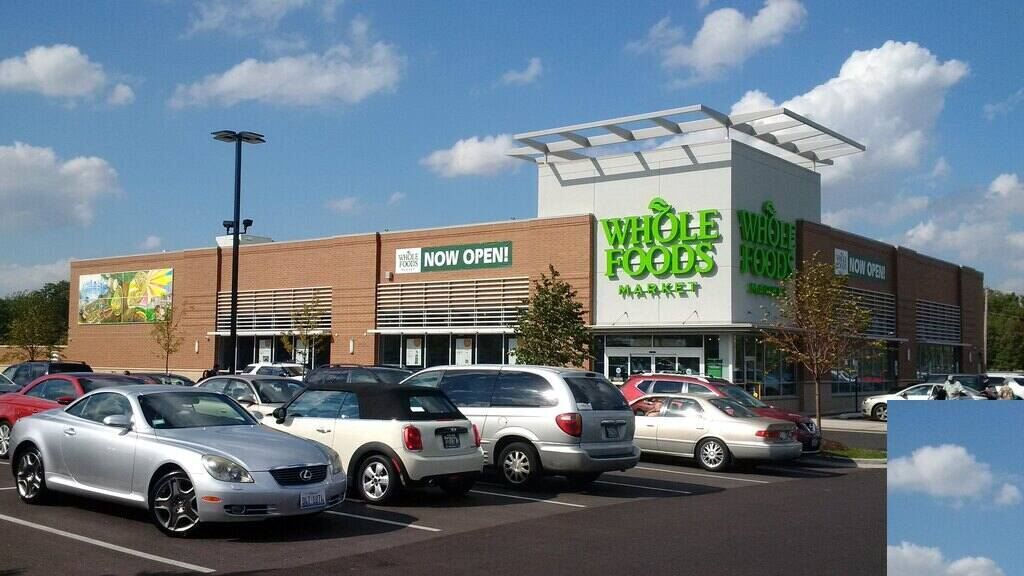
In recent times, several big-name grocery stores have been closing. In April of this year, Walmart closed locations in South Side neighborhoods. There’s also a large closure of Aldi and Save-A-Lot stores on the West Side. Impacting the surrounding neighborhoods of West Garfield Park, Auburn Gresham, Austin, and Washington Park. With all these store closures, it cut off the accessibility to fresh, affordable food.
Furthermore, data shows that a large percentage of East Garfield Park and West Englewood locals live significantly far from their nearest grocery store, according to the U.S. Department of Agriculture. In addition to that, the food security and access is directly connected to racial and environmental justice. Research shows that both Black and Latinx residents are insecure in comparison to the overall amount of residents in their neighborhoods.
Quality
But it doesn’t just stop there. The cleanliness and quality of products in these stores play a big role as well. For instance, Yellow Banana, the parent company of Save-A-Lot discount stores, has been receiving a lot of backlash from the residents who shop at the Englewood location. Residents say that stores are always unclean and repeatedly sell spoiled produce. “This is not what the neighborhood deserves. We want better, we expect better, we’re calling on the mayor and the mayor-elect to do better,” said one resident.
Hopefully, this plan to open city-owned grocery stores will alleviate the food desert epidemic within the South and West Side neighborhoods. Chicagoans need this win.
Written by Saniya Fields
Sources:
Block Club Chicago: City-Owned Grocery Store Could Be Coming To Chicago’s Food Deserts by Noah Glasgow
FOX Business: Chicago mayor considers creating city-owned grocery store after Walmart, Whole Foods close stores in the city by Eric Revell
New York Post: Chicago mayor proposes city-owned grocery stores as Walmart, Whole Foods exits leave ‘food deserts’ by Shannon Thaler
Top and featured image Courtesy of Artistmac’s Flickr Page – Creative Commons License
Inset image Courtesy of Artistmac’s Flickr Page – Creative Commons License




