














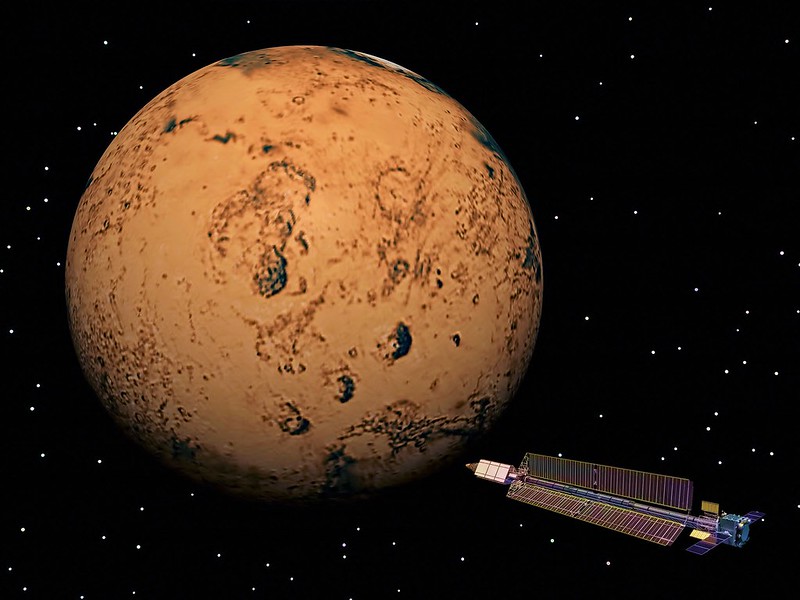
An international team led by planetary physicist Benjamin Fernando of the University of Oxford in the UK, have made a discovery of colossal tectonic activity in the Martian crust. According to the team’s data NASA’s InSight lander detected the quake on May 4, 2022, and registered at 4.7 magnitude. Scientist have long waited to find life on Mars, this event came as a shock because the planet has no tectonic plates.
To Infinity… and Mars!
The team decided it must have been a meteor strike but to no prevail.
Fernando explains Mars has no active tectonic plates, and that the event must have come from stress within the crust. He then adds that the stress results from evolution taking place over a lifespan of billions of years.
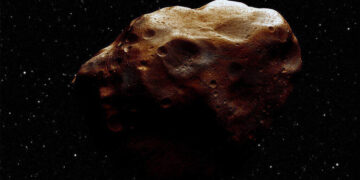
The team at InSight spent four years monitoring the interior on Mars before finally letting go of the project. During the time before they were ready to quit, the team had picked up hundreds of quakes and tremors on Mars. Most of their findings were because of asteroids colliding with the surface of the planet.
All Hands On Deck
Other times they related the tremors to magnetic activity concluding that Mars may have some life after all. The team wanted to get a bigger look at the biggest of the quakes, name S1222A, and so dug further. What the team found out was that the seismic data seemed to be just as those that were previously discovered. The team needed more hands on the project and so they recruited global space agencies with orbiting satellites around Mars.
The New Frontier For Exploration
While they traced other quakes to impacts on the surface, they made note of the easy to spot crater zones and blast areas. The team wanted to know if there was a bigger blast zone because of the quake being much larger. With the combined forces of the European Space Agency, the Chinese National Space Agency, the Indian Space Research Organization, and the United Arab Emirates Space Agency, they put their heads together to scour the surface of Mars for the larger crater zone which caused the quake.
The search lead no such findings, which lead the teams to a much bigger event that meant Mars is more seismically active than it lets on. The team known as InSight no longer operational in the findings of the surface of Mars and its tectonic plates. However, the data collected by the team’s research will be of the utmost help in future teams’ research and exploration throughout space and on Mars.
By Takhon Hemingway
Sources:
newsweek.com: Mars ‘Meteorite’ Boom Was Actually Planet’s Largest Ever Quake; by Jess Thomson
mashable.com: Unprecedented quake on Mars wasn’t caused by what you think; by Mark Kaufman
Featured and Top Image Courtesy of driver Photographer’s Flickr Page – Creative Commons license
Inset Image Courtesy of Alastair Rae’s Flickr Page – Creative Commons License




