















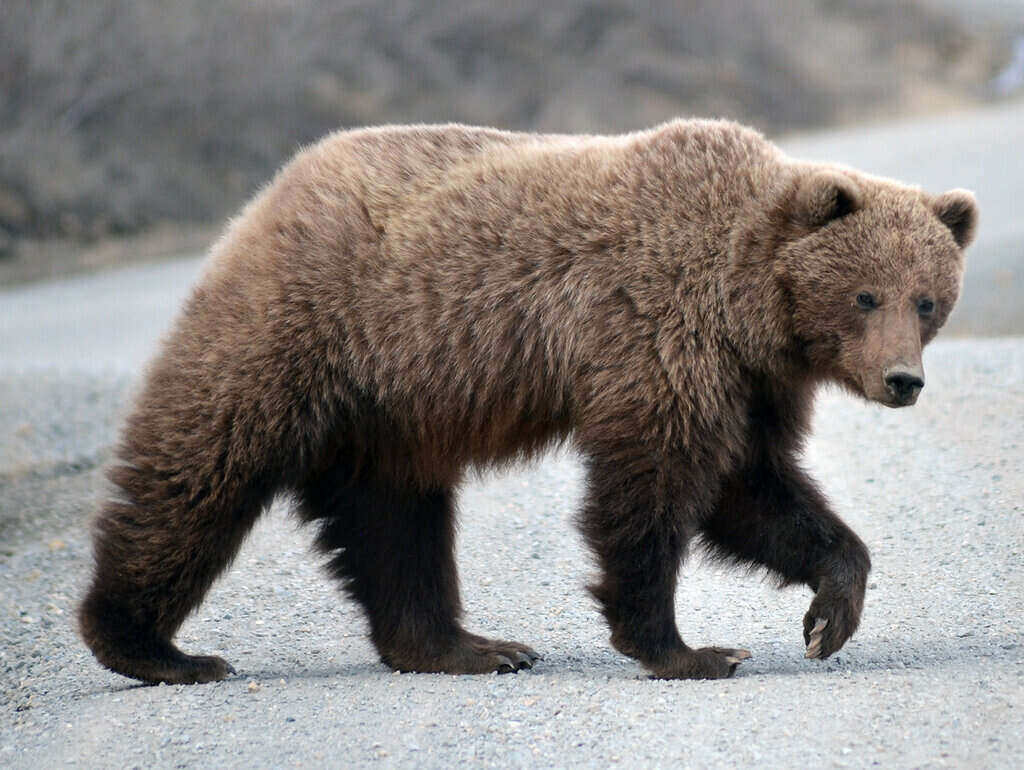
Early Sunday morning, Parks Canada released an official statement about a grizzly bear attack. On Saturday morning, Banff National Park officials located the bodies of two people after receiving an alert from a satellite device hours before. A grizzly bear displaying “aggressive behavior” was found nearby, stated the Canadian officials.
Grizzly Bear Attack
Around 8 p.m. (MT) September 29, the “Parks Canada Dispatch in Banff National Park received an alert from an inReach/GPS device indicating a bear attack,” states an official post of the Park’s Facebook page. Additionally, the alert’s location came from within the Park, in its Red Deer River Valley — west of Ya Ha Tinda Ranch.
Immediately, officials mobilized a Wildlife Human Attack Response Team. These individuals “are specially trained in responding to wildlife attacks,” the post continued. However, due to weather conditions, the team was unable to take a helicopter to the attack location. Instead, “the response team travelled through the night to the location by ground.”
About five hours later, the response team arrived to the location the alert was sent. Upon arrival, the found the bodies. Shortly thereafter, they came across the aggressive grizzly bear and they put the animal down. Moreover, Parks Canada staff’s decision to euthanize the bear was “to ensure public safety.”
Avoiding Bear Encounters Safety Tips
Both black and grizzly bears call Banff National Park home. It is wise to learn about bear safety before visiting any location they may reside in. Generally, bears tend to avoid humans. However, this does not mean encounters between bears and people don’t occur.
To avoid encounters with these animals people can:
- Be noisy. Calling/talking out loudly, clapping, or singing while in dense vegetation, near streams, or berry patches is advised. This is because bears have very sensitive hearing. Additionally, making a racket on windy days or in low visibility areas is also a good idea. Please don’t just rely on bear bells because they are not enough.
- Look for fresh bear signs. These include, droppings (scat), tracks, diggings, turned-over rocks, and torn-up logs are all signs that a bear has been through. If these signs look fresh, leave the area.
- If bringing the dog along, make sure it is on a leash at all times. Canines and bears are like oil and water. It is not uncommon for a bears defensives to be provoked when dogs are around.
- Hike/camp in larger size groups. It is less likely to have a serious bear encounter when in a group setting. Officials recommend people to hike in a tight group of four or more. Furthermore, children should never be allowed to wander alone.
- Stay on officially marked trails and paths. Additionally, hiking trips should be done in daylight hours to lessen the chances of injuries or encounters with wildlife.
- If anyone comes across a large dead animal they should leave the area immediately. Furthermore, when able to report the sighting to park staff.
- Additionally, when disposing of fish waste (offal), do so in fast moving streams or in the deep parts of lakes. Disposing of this along stream sides or lake shores entices wildlife presence.
Items to Help Stay Safe in Grizzly Bear, Or Any Ursine, Country
In addition to avoiding encounters, people can carry items with them to help stave off a bear attack. For example, carrying bear spray can help deter off some of these animals. However, people need to keep in mind that spray distance, rain, wind, freezing temperatures and product shelf life can influence its effectiveness. Additionally, individuals should make sure they know how to use it properly, including the specific instructions on the product.
 Furthermore, if people see a black or grizzly bear they need to remain calm and stop. In fact, they should get ready to use the bear spray. Never, under any circumstances should they run, bears are like dogs in this case and will pursue. In fact, it is best to back away slowly, keeping hold of any gear as it can provide protection.
Keep in mind that bears may try to bluff their way out of an encounter. This can be done by them charging at an individual before turning away at the last moment. Additionally, they may become defensive. This is displayed by laying back their ears, woofing, snapping their jaws, and growling. Again, if this happens, stay calm. It reassures the bear where sudden movements and screams could trigger an attack.
More on the Recent Grizzly Bear Incident
At 5 a.m. on Saturday, police officers arrived to help transport the victims to a town 40 miles east called Sundre. While the victims names have not been released, the CBC reported they were a married couple. A friend of the victims family, Kim Titchener, stated their dog had fatally attacked by the grizzly bear also.
Parks Canada stated there are roughly 691 grizzly bears in Alberta. Of those, 65 reside in Banff National Park. Additionally, the grizzly bear can live up to 30 years in the wild and are listed as “threatened” in the Canadian province.
It is unclear why the grizzly bear attacked the campers and their dog. However, these relatively rare attacks can occur when the bear is protecting its young, surprised, or when it is feeding.
As a safety precaution, the Banff National Park has implemented and area closure until further notice.
By Sheena Robertson
Sources:
The New York Times: Two People Killed by Grizzly Bear at Banff National Park in Canada
Parks Canada: Safe travel in bear country
Fox News: Grizzly bear attack in Banff National Park leaves couple, dog dead
Featured Image by Katherine Belcher (NPS Photo) Courtesy of Denali National Park and Preserve’s Flickr Page – Creative Commons License
Inset Image Courtesy of Jim & Robin‘s Flickr Page – Creative Commons License




