















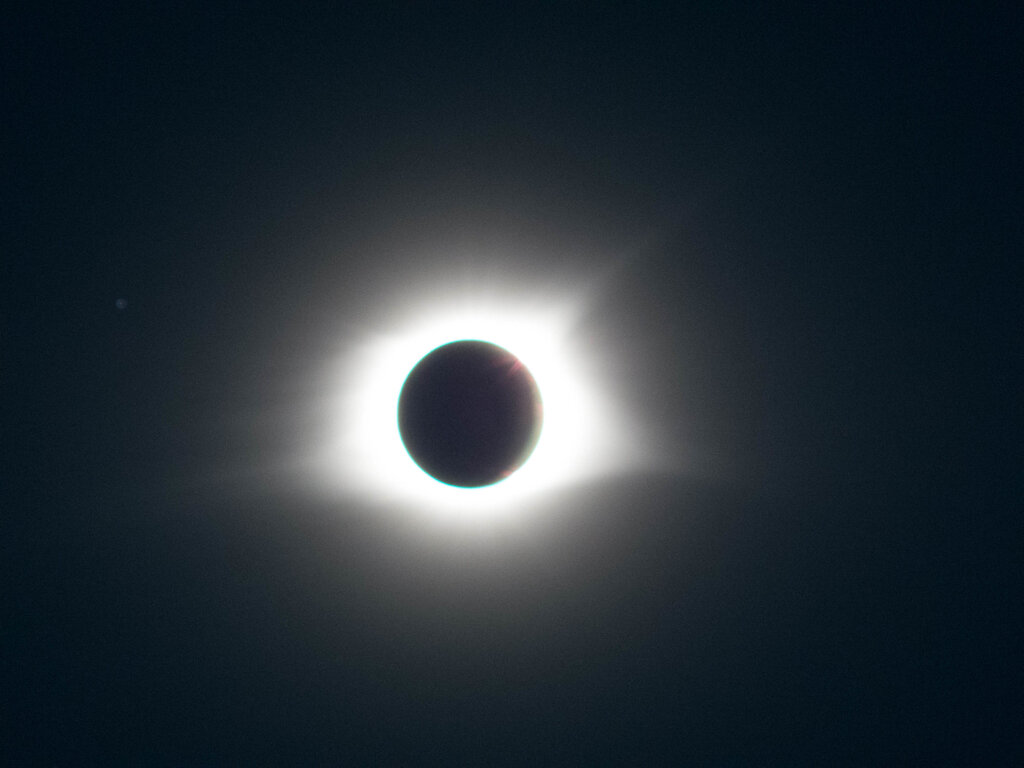
The Annular Solar Eclipse
On October 14, a solar eclipse will be visibly taking place in North and South America. It will be an annular eclipse. Although it will be an annular eclipse within a narrow path across the country. Nonetheless, with good weather, Chicagoans would be able to see a partial eclipse. An annular eclipse happens when the moon is at its farthest point in orbit from the Earth.
It is called a partial solar eclipse when the moon covers only part of the sun’s disk, creating a “bitten” effect. A partial eclipse also happens when the sun, moon, and earth aren’t perfectly aligned. During this point, the moon will fully pass by the sun. Moreover, because of the distance, it creates a blocking of the sun with a “ring of fire effect.” Director of the Heliophysics Division at NASA headquarters, Peg Luce states people will experience “the awe and the wonder of seeing a beautiful ring of fire eclipse.”
When an annular eclipse occurs the sun’s brilliant light creates a ring effect around the shadow of the moon. Creating the aptly named “ring of fire” effect.
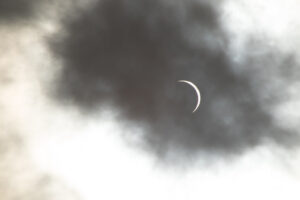
According to the Adler Planetarium, the eclipse will start around 10:37 a.m. and last till 1:22 p.m. Central Time. The eclipse is projected to pass from the east Oregon coast down to the Texas Gulf Coast. The sun will be heavily covered in the states of Oregon, Nevada, Utah, New Mexico, and Texas. Scientists report, that up to 90% of the sun will be obscured in the path of these states. However, the rest of the country, including Chicago, will only see about 40-50% of the sun being covered. The next eclipse to be seen in Chicago will be a total eclipse on April 8, 2024.
How to Safely View The Eclipse
No one should stare at the sun with their naked eye, even during a solar eclipse. Permanent eye damage can happen in just seconds without proper protective gear. A certified solar viewer is a necessity to view the sun and protect yourself from injury. Certified solar viewers are eyewear that are thousands of times darker than average sunglasses.
The Adler Planetarium also advises to not look at the sun while using binoculars, camera lenses, telescopes, or any other optical device, even with solar viewers on.
However, if you can’t get your hands on protective eyewear before the eclipse, you can always make an indirect solar projector like a pinhole projector. A pinhole projector casts an image of the moon’s coverage onto a surface.
Building A Pinhole Projector
This safe STEM-based project is easy, effective, and inexpensive. All you will need to build your pinhole projector is a cardboard box, tape, a white piece of paper, scissors, aluminum foil, and a pin, nail, or paperclip.
On the open end of the cardboard box, cut off the smaller side flaps, then cut the edges of the longer tabs. This will leave both sides of the longer flaps open. then tape the remainder of the flaps together. It is also recommended that you tape a white piece of paper to the inside bottom of the box if it isn’t already white.
Then, grab your aluminum foil and securely tape one of the openings on the top, covering one side completely. After, you will need to grab a pin and poke a small hole in the center of the aluminum. Now you should have a working pinhole projector!
Now, to safely use it you have to stand with your back facing the sun and hold the large square hole up to your eye. Lastly, find the right angle of sunlight till the image is projected on the white paper on the inside!
This is a safe way to watch the upcoming solar eclipse on October 14.
Written by AriAnna
Sources:
NBC Chicago– Here’s when, and how you can see next month’s solar eclipse in the Chicago area
CNN– How to see the last ‘ring of fire’ eclipse until 2046
Adler Planetarium– Adler Skywatch: October 2023
Adler Planetarium– How To Make A Pinhole Projector To Safely View A Solar Eclipse
Featured and Top Image Courtesy of Brett Davis’ Flickr Page – Creative Commons License
Inset Image Courtesy of brendangates‘ Flickr Page – Creative Commons License




