















On January 18th NASA’s Lunar lander, Peregrine unfortunately did not make its landing back to Earth. Named after the great Peregrine falcon, sadly this probe was not able to make its projected return. After soaring through space for miles the probe’s anticipated journey came to a scorching end.
NASA’s Peregrine
The lunar lander’s short 10-day mission ended with it being expected to return at 4 pm on January 18th. However, the flighty craft didn’t make it back in one piece. On Thursday the probe crashed back into Earth’s atmosphere over a remote area in the South Pacific Ocean.
Astrobotic Technology had a contract with NASA to create the lander. The Pittsburgh-based private robotics company has confirmed the destruction of the spacecraft.
NASA’s Statement
They came out with a statement saying that they had lost connection with the probe right before its reentry. Technology also stated that this means that it “indicates the vehicle completed its controlled re-entry over open water in the South Pacific.”
Despite their assertion of the destruction of the lander the company then went on to say that they are waiting for confirmation from “government entities”
There is an expected briefing from NASA and Astrobotic Technology on January 26th. The
failed mission is a setback for both NASA and the robotic company. Both of their goals are to create an affordable, well-working robotic lunar lander to pave the way for crewed lunar landings.
There is also a projected human-piloted moon landing set for later this decade with a calculated time around 2026.
A Setback for Cosmic Expedition
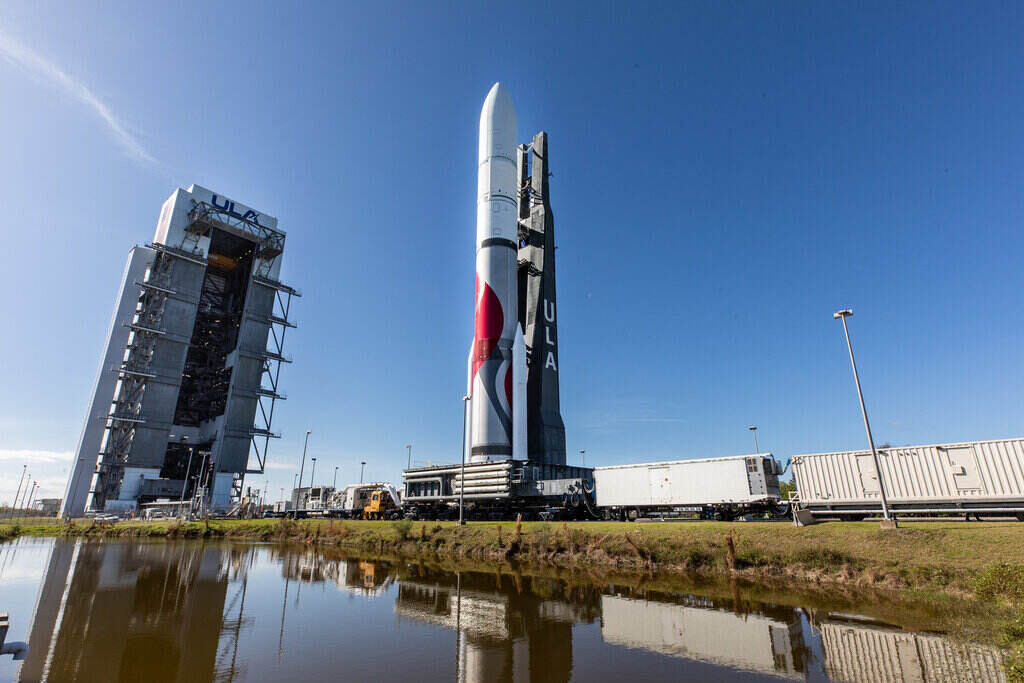
The planetary explorer was sent off on January 8. It departed on top of a Vulcan Centaur rocket. This was done through a joint project between the aerospace, defense, and technology corporation Lockheed Martin and the airplane, satellites, and telecommunications company Boeing.
The spacecraft was set to be the US” ‘s first successful “soft landing” on the moon since the 1972 Apollo 17 mission.
Sadly, however, the probe had issues with its propulsion system just hours into its flight. It had been leaking fuel grievously. This had left the craft without enough fuel to safely and soundly make it to the moon.
Due to this the probes’ parent company Astrobotic had attempted to use the planetary traveler almost like a satellite around the planet and redirected its course back to Earth.
The company stated how it was a hard decision to allow the craft to return to Earth in a fiery descent.
NASA’s Failed Investment
The failed mission has cost both NASA and Astrobotic a large sum of money, time, and effort. NASA specifically has made a deal with the other corporation that had cost them 108 million dollars. Also, the contract price had been increased by 36% due to supply issues during the COVID-19 pandemic.
Despite, the failed probe, NASA hasn’t considered this as its only attempt at automated Lunar research. The space agency has also created deals with three other companies to create lunar landers. One company in particular is Intuitive Machines, which is planning for a probe mission in mid-February.
Furthermore, NASA had set up these contracts to be one-time payments. They did this to ensure that through the developmental process, any theoretical setbacks wouldn’t draw out payments.
The deals between the lunar companies have been set up where complete ownership still belongs to them and NASA is contracted as just a customer of their space vehicles.
However, NASA isn’t the only space agency to recently fail with a lunar landing. The Israeli company SpaceIL also had a failed lunar probe attempt in 2019. As well as in 2023 the Japanese-based company ISpace whose lander they had lost control of when it approached the lunar surface.
Written By AriAnna Rathers
Sources:
CNN– First US spacecraft to attempt moon landing in decades burns up after failed mission
CNN– NASA delays astronaut moon landing to at least 2026
SpaceNews– Astrobotic to begin formal investigation into failed Peregrine mission
Featured Image Courtesy of NASA Kennedy’s Flickr Page – Creative Commons License
Inset Image Courtesy of NASA HQ PHOTO’s Flickr Page – Creative Commons License




