
















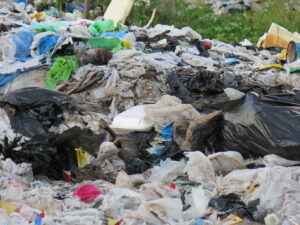
Do you ever wonder how much why the fines for littering have become so high? That’s because it keeps getting worse. In 2023, the city spent $6.1 million IDOT to pick up trash this is the equivalent of resurfacing 30 mines or rode or 40 Mantas trucks. Not only is it an eyesore to the city but it is also taking away valuable scores to improve it.
This money could be used for fixing any of the other problems we all would like to see fixed in Chicago. Everyone has contributed to littering at one point or another. Nearly 75% of people in the last five years have admitted to littering in public at least once in their lifetime. Littering can be a straightforward thing to do in many different regions. Maybe people accidentally dropped it and didn’t feel like picking it up or maybe they didn’t have pockets and didn’t feel like holding it, Whatever the reason people have officially littered, and that trash doesn’t just affect them.
From the River to the Sea
As the wind blows and moves the trash around it canned up in the river and instead of Chicago River imprinting Lake Michigan, pumping stations would funnel water from Lake Michigan through the canal, thereby flushing Chicago’s waste downriver and toward the Des Plaines and Mississippi rivers. The same river that in the early 19th century was made the border between Spanish and American territories and it continues to give life. Which springs up along it routes.
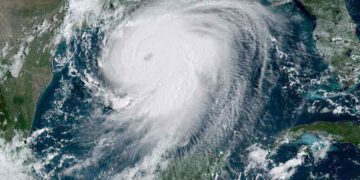
The Mississippi River is the second longest river in North America, flowing 2,350 miles from its source at Lake Itasca through the center of the continental United States to the Gulf of Mexico.
The Missouri River, a tributary of the Mississippi River, is about 100 miles longer. Some describe the Mississippi River as the third longest river system in the world, If the length of the Missouri and Ohio Rivers. Yet, people continue to put litter and trash into the river and eventually the oceans.
The Effect One Person Has
Humans have discovered only 5% of the ocean and 88% of it is already covered in trash. The issue of trash in the ocean has become a significant concern in recent years. With staggering estimates of 5.25 trillion pieces of plastic debris in the ocean, the impact on marine life and coastal environments is undeniable. People might think that the wrapper or soda bottle can’t hurt, but the one percent’s add up.
Each piece will add to the growing problem and that’s what people forget. Scientists call the statistics the “wow factor” of ocean trash. The tallies, published last year in three separate scientific papers. The useful in red-flagging the scope of the problem for the public.
But beyond the shock value, how does adding up those rice-size fragments of plastic help solve the problem? Although scientists have known for decades about the accumulating mass of ocean debris and its deadly consequences for seabirds, fish, and marine animals, the science of sea trash is young and full of as-yet-unsolved mysteries.
Think Before You Throw
Almost nothing was known about the amount of plastic in remote regions of the Southern Hemisphere, for example. Until last year little was known because few had ever traveled there to collect samples. By the time the data is gathered, experts already figure the damage is way more severe. By the time people notice the devastation, it tends to get worse.
Next time you think about throwing that reaper think about the effect it will have on your neighborhood and world.
By: Jada Dunkentell
Sources:
Illinois: Think Before You Throw!
Smithsonian Magazine: The 70 Million-Year-Old History of the Mississippi River
National Geographic: Ocean Trash: 5.25 Trillion Pieces and Counting, but Big Questions Remain
Condor Ferries: Shocking Ocean Plastic Statistics: The Threat to Marine life, The Ocean & Humanity
Featured Image Courtesy of greg westfall‘s Flickr Page – Creative Commons License
Inset Image Courtesy of The Reef-World Foundation‘s Flickr Page – Creative Commons License




