
















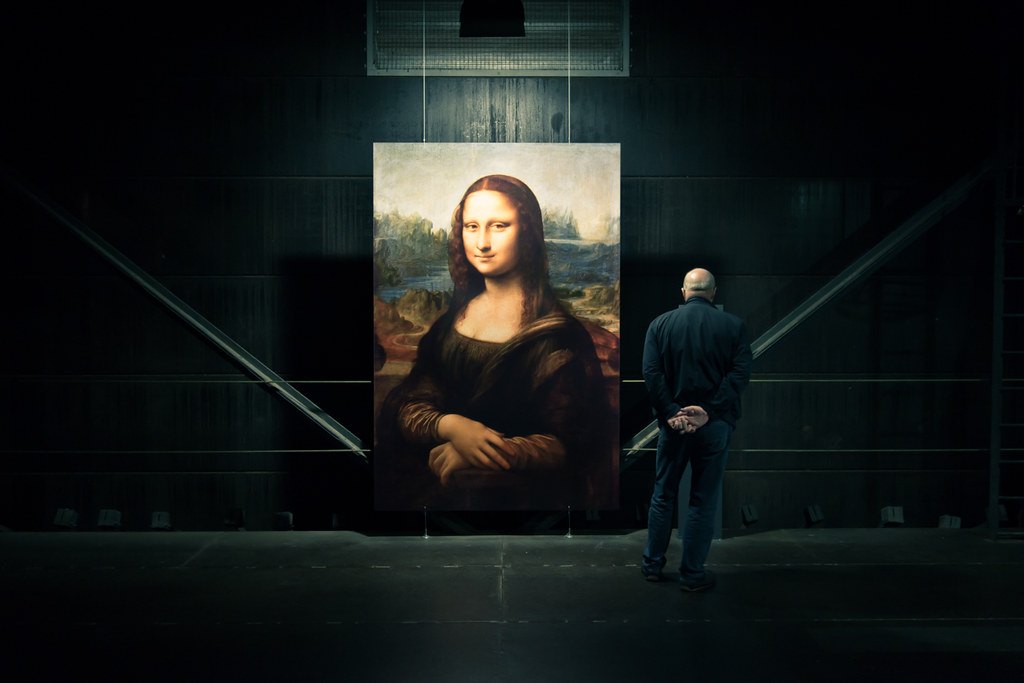
Lisa painting
Leonardo da Vinci, an Italian renaissance painter credited with the painting. This is one of the most well-known and recognisable paintings in existence. The “Mona Lisa” painting is known for its secretive smile and the subject’s captivating expression. The artwork unanimously recognized as a masterpiece of art. The artwork is held at the Louvre Museum in Paris, France. Who is Mona Lisa?
The famous painting
Leonardo da Vinci began working on the Lisa in 1503. The subject is thought to be Lisa Gherardini, a woman from Florence, Italy. Her exact identification has not been established.
The Lisa Style
Leonardo’s famous painting. the “Mona Lisa,” has a reputation and curiosity stem from a variety of factors, including the subject’s secretive smile, the use of sfumato (a technique that gives a blurred look), and the detailed surrounding landscape. Give it’s enormous global fame. Lisa tiny dimensions of 30 × 20 inches (77 x 53 cm) is equally striking.
Mona Lisa Evolution
The Mona Lisa has become a cultural icon over the years, inspiring innumerable interpretations, parodies, and references in art and popular culture. Millions of people visit the Louvre due to it’s position as an art icon.
Who is Lisa?
The identity of the woman depicted in Leonardo da Vinci’s “Mona Lisa” has sparked much discussion and dispute among art historians. The most widely held belief is that the subject is Lisa Gherardini, the wife of Florentine trader Francesco del Giocondo. Leonardo’s famous painting referred to as “La Gioconda” in Italian. Which translates to “the joyful one.” Most likely referring to her married name.
When Did He Begin?
Leonardo’s famous painting work began in 1503. He proceeded to refine it for several years. The sitter’s identity has not been fully established. Several art historians have presented other ideas. The lack of convincing historical information and archives from the Renaissance period adds to the uncertainty surrounding the painting’s subject.
Mona Lisa Identity
Despite the uncertainties, evidence back to the early 16th century support the hypothesis that Lisa Gherardini is the likely subject. Giorgio Vasari, a 16th-century painter and biographer, identified Lisa Gherardini as the woman represented in the artwork.
A current study using advanced technology and archive documents has revealed additional evidence that Lisa Gherardini was the model for Leonardo’s famous painting.
Visitors’ Experience
Historical and cultural significance: Leonardo’s famous painting is one of the world’s most well-known and iconic works of art. Visitors frequently recognize its historical and cultural significance, viewing it as a symbol of Renaissance art and a masterpiece that transcends time.
Crowds and Security
Depending on the time and location of the visit, some visitors may make comments about the crowds and the stringent security measures surrounding the painting. The popularity of the Mona Lisa frequently results in crowded situations, making it difficult for tourists to get a close view.
Personal Connection
Art is a very personal experience in which visitors bring their own viewpoints, feelings, and interpretations to the paintings. Some people may experience a significant connection or emotional response, while others may not.
By Thamara Dunlap
Sources:
Britannica – Mona Lisa painting by Leonardo da Vinci
Art & Object– The Mona Lisa: A Brief History of da Vinci’s Famous Painting
Featured and Top Image Courtesy of Jesús Belzunce Gómez‘s Flickr Page – Creative Commons License
Inset Image Courtesy of Jay Cross‘ Flickr Page – Creative Commons License




