















Japan has become the fifth country to successfully reach and soft land on the moon. Japan came after China, the U.S., the Soviet Union, and India. The Japanese Smart Lander for Investigating Moon (SLIM) lander victoriously landed on the celestial body.
On January 19th, the lunar lander safely descended on the moon. However, the lander was traveling with a low battery. The craft was only expected to survive a few hours after the battery failure after it had landed in a shadow.
Furthermore, the movement of the sun’s light path was able to charge its’ solar panels again. It was also debated whether the craft could survive temperatures of -200 degrees for more than two weeks. They are still monitoring the lander in hopes that it will wake up again.
What Happened to Japan’s SLIM Lander

The SLIM moon rover landed upside down, with the solar panels facing away from the sun. The vice president of the Japan Aerospace Exploration Agency (JAXA), Hitoshi Kuninaka, said however that despite the setbacks this was a successful mission.
This mission happened just a few weeks after N.A.S.A’s failed lunar lander wasn’t able to safely land on the celestial satellite due to propellant fuel issues. Due to this, the lander was treated as a satellite and flew around the Earth till it then fell back to the Earth and burnt up upon reentry.
The very few successful lander missions are a testament to how truly difficult is to accurately and safely land on the moon without crashing. A 54-year-old undertaking since e the first men walked on the moon.
The lander also was able to safely land in a range of 100 meters, a large downsizing of the usual dozen kilometers most landers need. Also, the 200-kilogram space vehicle landed at a 15-degree angle instead of the typical four-legged landing.
The scientists believe that during this the craft may have rolled and that is what subsequently put SLIM upside down.
The Projected Mission
Two small robots were also supposed to be ejected from the craft and send photos back to the space headquarters. However, it’s uncertain if they had successfully done so.
The SLIM lander also had a camera-based navigational system that it could use to locate itself if lost. The camera’s other intended use was also to locate the mineral olivine from the moon’s mantel.
According to the project manager, Shinichiro Sakai, this can be used as evidence by comparing the Lunar olivine to Earth’s. This can help prove if the moon at some time had been a part of the Earth.
The lander also is set to confirm the samples from the Apollo 16th mission. SLIM’s landing site was only about 250 meters from the Apollo 16th site. The 1972 site is also very close to Mare Nectaris, an ancient Lunar sea.
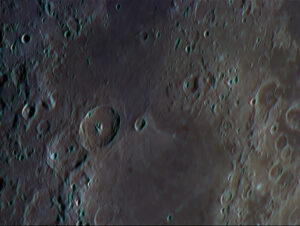
It’s theorized that the rare basalts- or volcanic rocks found in the samples had come from Mare Nectaris.
However, the scientists at JAXA believe the little lunar craft, SLIM might’ve taken its last photo on February 1st, if they can’t revive it.
Upcoming Missions
Despite the less-than-stellar results from many of the past missions, the human indomitable spirit prevails. It seems that multiple countries are still attempting to find out all that they can from Earth’s celestial satellite.
There was a NASA-staffed mission, the Artemis mission, that was projected to take place in 2025. However, the mission has been recently pushed back to 2026 to 2027. This would make the U.S. still the only country to land humans on the moon.
Another rover lunar launch by the U.S. is projected to happen as early as November 2024. The NASA Volatiles Investigating Polar Exploration Rover will be sent to the Moon’s South Pole in a 100-day mission.
Written By AriAnna Rathers
Sources:
FOX Weather– See what is possibly the last photo from Japan’s Moon lander
Nature-Japan’s successful Moon landing was the most precise ever
The Guardian-Japan’s ‘moon sniper’ probe made incredibly accurate landing, but is now upside down
Featured Image by Zengame’s Flickr Page – Creative Commons License
First Inset Image by NASA’s Marshall Space Flight Center’s Flickr Page – Creative Commons License
Second Inset Image by David Simonetti’s Flickr Page – Creative Commons License




