

















All over the world, women are experiencing a rise in violence. Multiple continents have seen the violence manifest in many ways. Violence may come in the form of sexual harassment, abuse, femicide, and even abusive patriarchal systems.
These byproducts of global misogyny have led to a viral question being directed toward women. ‘Man or Bear?’ Would you rather be in the woods alone with a man or a bear?
Violence Against Women in Australia
Domestic-violence related deaths of women are rising consistently in Australia. Violence against women has been such an issue for the continent that Prime Minister Anthony Albanese has considered it to be a national crisis.
According to the Australian Institute of Criminology, the rise of female deaths at the hands of romantic partners rose by 30% from 2022 to 2023. During the 2022 to 2023 period, 34 women were reported murdered by a current or previous partner. This number is eight more cases higher than the 2021-2022 count, or a 31% increase.
Moreover, from 2022-2023, 60 known women were reported to be murdered by men, nine women were reportedly murdered by other women, and perpetrators of an unknown gender murdered six women.
Though there has been a visible rise, the rate decreased from the height of the murder rate in 1989 to 1990, equating to a 66% decrease.
In contrast, there were four cases of men being murdered by a romantic partner from 2022 to 2023.
In totality, Australia had 232 homicide incidents, including 247 victims from July 2022 to June 2023; 34% of these cases were domestic homicide. 2022 to 2023 was one of Australia’s lowest years for homicide rates.
However, men made up 69% of all homicide victims, including manslaughter, murder, and unstated causes. Additionally, men committed 86.4% of the homicide cases for that year, and women committed 13.6 % of all the instances when the perpetrator’s sex was known.
Indigenous people were statistically more likely to be the victims of murder compared to non-indigenous citizens. Aboriginal citizens have a seven times higher rate of homicide victimization than non-indigenous people.
Indigenous women are also more likely to be killed by a partner with a 63% than non-indigenous women with a 52% rate.
Diversity of Violence Against Women
The United Nations(UN) has regularly worked to combat poverty and crisis and help disadvantaged groups. Women are heavily represented in this category, especially those in environments dealing with crisis and poverty.
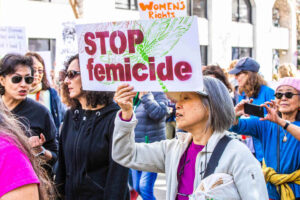
The rise of violence against women isn’t always physical violence; it can manifest through oppressive patriarchal rule.
Women confined to impoverished and distressed environments are statistically more likely to die prematurely due to a lack of sufficient healthcare. A lack of contraceptives, safe birthing practice, and more extensive reproductive healthcare lead to these deaths.
Globally, approximately a quarter of women aren’t protected by the law against spousal rape, while one in ten women are not allotted contraceptives. Roughly 800 women die in childbirth daily, equating to about 300,000 annually.
Five hundred of the 800 preventable deaths take place in areas that are already in a state of crisis. Moreover, women in more impoverished countries also face violence through the lack of complete autonomy over their own medical choices, especially with reproductive health.
However, these statistics aren’t just confined to areas outside of the Western world. In the US, African American women have a higher maternal mortality rate compared to white women. Furthermore, disabled women are more likely to face gender based violence by ten percent.
The UN intends to make more tailored programs for women in different countries and situations to provide necessary support.
UN’s Involvement in Gaza towards Violence Against Women and Children
The rise of genocidal violence against women and children in Gaza has attracted the UN’s attention.
UN officials released a report recently condemning the treatment of Palestinian women and children at the hands of Israeli soldiers. Many human-rights professionals spoke out against the “systematic” violence used towards the assailable groups.
According to the UN, more than two thirds of the Palestinian victims during Israel’s genocidal occupation over the pass seven months were women and children. However, these numbers are disputed by Israeli officials who claim they are fabricated.
Death and Genocide
Nonetheless, the statement declares there are multiple instances of Israeli soldiers committing sexual harassment and excessive violence to women and girls in Israel’s captivity.
The report also states that “a number of” women and young girls have “forcefully disappeared” since the past seven months.
The statement goes on to note that the rate of miscarriages has risen, the largest fertility clinic in Gaza was destroyed by Israeli forces, and 17,000 children have been orphaned. Mass graves have also been found around the Al Shifa and Nasser hospitals. Currently, 390 bodies have been discovered in these makeshift burial grounds.
The UN statement concludes with declaring, “Israel must cease all hostilities and states must end the export of all weapons immediately. These states can no longer ignore the fact that weapons are being used to kill and maim innocent women and children.”
Women-Only Train Cars
Across the world women are actively combating the influx of systemic and entropic violence in different ways. In multiple countries women only trains cars have been implemented to combat sexual harassment. Japan is one of the most notable examples of a nation using this solution.

Japan’s first use of women only cars was seen in Tokyo 1912. These women only lines were first used for schoolgirls to transport during rush hour. A few more would be seen on certain lines in the years following. After WWII more lines reserve for women and children were created.
However, the growth of women only train carts dwindled for a little in favor of priority seating for elders and disabled individuals. This was until the early 2000’s when ‘chikan’ cases became more prevalent. Chikan involves the sexual harassment, usually groping, of a victim in public places, typically crowded trains.
Honor and Respect
This form of sexual violence and harassment was finally taken seriously by Railroad police through years of rallying by anti-harassment groups. Through these efforts, most metropolitan stations in Japan now have women only carts.
Though women only carts are handled through an honor system code, most abide and respect the system. However some still fight against it. Some men feel as though the exclusive carts are discriminatory.
Its efficiency in combating sexual violence and harassment in Japan is polarizing. Some view it as a “band-aid” fix while others see it as a stepping stone to creating a safer environment for women in public spaces.
4B Movement – Coup Against Violence and the Patriarchy
Throughout the fight for equality and the battle against gender based violence women have consistently come together to create safer environments for each other. This is currently observable in movements in Korea as well as Mexico.
In the early 2010’s the 4B movement was birthed out of South Korea. The name comes from the core beliefs of ‘no sex, no childbirth, no dating, and no marriage’. In Korean all four words start with the letter ‘b’; bihon, bichulsan, biyeonae, and bisekseu.
The movement is used to combat societal expectations of women to marry and settle down, as well as a ‘punishment’ towards men in retaliation of sexual harassment and violence.
Privacy and Security
The 4B movement gained more traction in 2018 when a large emergence of ‘Spycam’ crimes erupted. Spycams were used to film unsuspecting women while using the bathroom and during sex. These sexual crime were typically committed by men.
Women apart of the 4B movement generally avoid men at all possible cost. Followers of 4B will go as far as avoiding conversation and eye contact with men as well as taking opposite sides of the street and even aisles in grocery stores.
The movement recently has moved outside of South Korea and migrated to other countries and seems to continue to gain followers.
Mercadita Feminista – Feminist Market
In Mexico City markets of colorful tapestries and assortments of goods can be found, marking the location of the feminist markets. These female led markets are used as a safe space for women to buy and sell. It also is a stand against male saturated commerce, workplaces, and gender inequality.
The markets started on Facebook as a group where women bought and exchanged food and goods.
The end goal isn’t just consumerism but it also gives the chance of exchanging knowledge, services, and necessities. Necessities such as access to physical and mental healthcare resources, as well as legal services.
Rising Femicide
During COVID, women in Mexico experienced many layoffs and the rate of femicide and violence against women had a distressing rise. These issues pushed the feminist market groups to act as a support system for women in need as well.
Annually in Mexico, around 3,000 women are murdered. However, the conviction rate for these murders is a little over 5%. Roughly 1 in every 4 murder in Mexico is classified as femicide.
Moreover, a 2019 report showed that women in Mexico spend 67% of their time on unpaid work such as household chores and child rearing. Yet, men spend around only 28% of their time on unpaid labor. This creates a wealth gap that causes women in Mexico financially vulnerable.
The mercadita feminista creates opportunities for women to become more self stable and gives resources and opportunities to live safer lives.
Man or Bear?
The question of which would you rather be alone in the woods with, a man or a bear is circulating around social media. The majority of women seem to have chosen the answer that they would chose the bear. However, some response garnered backlash from those who feel its dramatized.
The question is a hypothetical reflecting on the sense of impending fear of violence women can feel in the presence of men. According to the UN in 2022, 89,000 women and young girls fell victim to femicide.
Furthermore, the UN also reported 1 in 3 women worldwide experienced domestic violence or rape at the hands of either a partner and or non-partner the same year. This data didn’t include sexual harassment or other forms of violence than could threaten someone’s life.
However, some people are calling the question ‘misandrist’ and an excuse to openly hate men. Others are mocking the responses of women.
Empathy and Misogyny
Some men’s responses make light of the graphic imagery of bears mauling those who’d chose them over men. As a consequence of these responses, many have pointed out how these violent and apathetic responses prove why women would feel safer around a bear than a man.
Moreover, some men are treating those choosing the bear with contempt. One response states, “The bear would eat her. It’s not going to help her one bit. A man she can bond with to a point where he will work with her to survive in the woods. If she used her feminine traits. He would hunt, building and protect.”
Nonetheless, the question is a hypothetical question. The question prods at the very real issue of the prevalent violence against women and its psychological effects. The hypothetical lays bare the truth of violence against women and opens up a necessary discourse against it.
Written by AriAnna Rathers
Sources:
The Guardian – Almost 30% spike in rate of Australian women killed by intimate partner last year, data shows, By Kate Lyons
United Nations News – Violations of women’s reproductive health right’s trigger rise in preventable deaths, By UN Staff
Politico – UN denounces ‘onslaught of violence against women ‘ by Israel, notes mass graves in Gaza, By Joe Stanley-Smith
Tokyo Weekender – What’s Up with Japan’s Women-only Cars?, By Alina Joan Ito
SBS News – No dating, no sex, no babies and no marriage with men: Inside the anti-men ‘4B’ movement, By Michelle Elias
The Guardian – Stickers, soap and legal help: the rise of Mexico City’s ‘feminist markets’, By Gabriela Barzallo
CNN – Man or bear? A viral question has spawned scary responses, By AJ Willingham
Featured Image Courtesy of Tony Fernandez’s Flickr Page – Creative Commons License
First Inset Image Courtesy of Thomas Hawk’s Flickr Page – Creative Commons License
Second Inset Image Courtesy of Martin Lewison’s Flickr Page – Creative Commons License




