















Hamas accepts the Gaza ceasefire and hostage exchange agreement in Gaza. The Palestinian militant faction has agreed to the terms set forth by Qatar and Egypt following intense negotiations with U.S. involvement. The success of this agreement now hinges on the decision of Israeli Prime Minister Benjamin Netanyahu. Should he consent to the deal, it would probably necessitate the liberation of Israeli captives taken by Hamas and its affiliates during the Oct. 7 assault that initiated the conflict, coupled with a prolonged cessation of Israeli airstrikes in Gaza and a partial retraction of Israeli troops.
Benjamin Netanyahu has consistently stated that his campaign will not cease until Israeli forces have complete control over Gaza, encompassing the southern town of Rafah, which currently shelters 1.5 million Palestinians and serves as an operational base for the remaining Hamas battalions.
Since Hamas accepted the Gaza ceasefire, Israel has not yet issued a response to the announcement made by Hamas.
Israel has pounded the Gaza Strip in retaliation for a cross-border attack led by Hamas, which killed about 1,200 people. More than 34,700 Palestinians have since been killed in Gaza. The vast majority of whom have been women and children, and 78,100 others injured, according to Palestinian health authorities.
On Monday, Hamas announced that Ismail Haniyeh, the leader of its political bureau, had communicated to the prime minister of Qatar and the Egyptian intelligence minister the group’s accepts the cease fire proposal and hostage exchange proposals.
Palestinians took to the streets of Gaza to celebrate the statement. Meanwhile, in Tel Aviv, families of hostages and their supporters urged Israeli leaders to agree to the deal.
Israel’s Response

The report emerged mere hours after Israel directed Palestinians residing in Rafah, a southern Gaza city, to evacuate without delay.
The directive has heightened concerns that an impending Israeli attack on the city is near. Over a million Palestinians have sought refuge in Rafah. The northern areas of Gaza, enduring substantial Israeli bombardments, have become recognized as a bastion for Hamas.
The Biden administration continues to oppose Israel’s entry into Rafah, as stated by White House spokesperson John Kirby to the press.
Senior officials from Israel and the United States have reported that Hamas has agreed to a new framework proposal, which is distinct from the one previously developed by Israel and Egypt. The current proposal calls for a halt to hostilities, a stipulation that Israeli Prime Minister Benjamin Netanyahu has deemed unacceptable, as conveyed by a senior US official.
Benny Gantz, a member of Israel’s war cabinet, stated on Monday that there are “significant gaps” between Israel and Hamas. He added, “Nevertheless, we are exhaustively exploring every option, and a delegation will be sent to Cairo.”
Netanyahu is under significant pressure from the more extreme members of his coalition to dismiss the ceasefire proposal offered last week, focusing instead on the disassembly of Hamas’ presence in Rafah.
Israel’s National Security Minister, Itamar Ben Gvir, stated that Prime Minister Netanyahu had “committed to Israel’s entry into Rafah, guaranteed the continuation of the war, and vowed that there would be no hasty agreement.”
The latest round of negotiations in Cairo, aimed at securing a hostage-release agreement, concluded without any evident progress towards resolving the outstanding issues, according to a statement from a high-ranking Israeli official on Thursday. The official further stated that Israel’s operations in Rafah will continue as originally scheduled.
People in Gaza
Approximately 450,000 displaced Palestinians are currently taking refuge in Muwasi. The United Nations Relief and Works Agency for Palestine Refugees (UNRWA) has reported providing aid to them. However, the conditions remain dire, with inadequate sanitation facilities in this predominantly rural region compelling families to construct their own latrines.
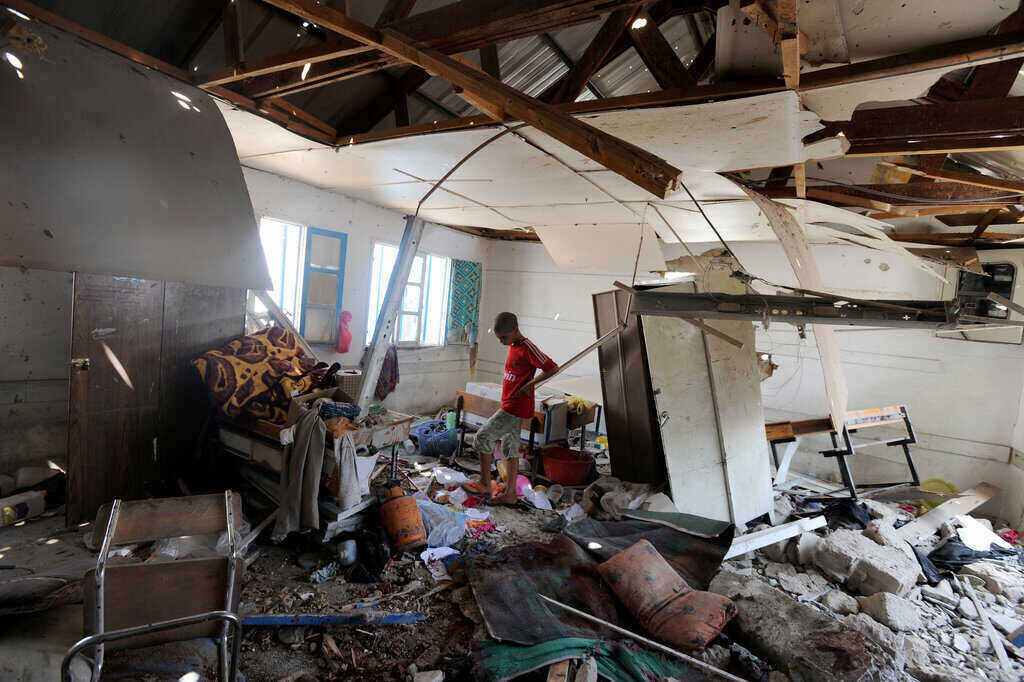
The evacuation order has forced Palestinians in Rafah to confront the prospect of displacing their families yet again. Every day, they face an uncertain future after spending months in expansive tent camps or packed into schools and other forms of shelter within and surrounding the city. Early Monday, Israeli airstrikes on Rafah resulted in the deaths of 22 individuals, among them children and two infants.
U.S. officials have informed CNN that they are closely monitoring the reports of explosions in Rafah and express “real concerns” about the developing situation. However, they do not consider the current events to be the start of a significant Israeli military operation in southern Gaza.
Written By Layla Ndiaye
Sources
AP – Hamas accepts Gaza cease-fire; Israel says it will continue talks but presses on with Rafah attacks
CNN – Israel says Rafah operations will go ahead as Hamas deal remains ‘far’ from meeting its demands
Huff Post – Hamas Accepts Cease-fire Proposal For Gaza War
Featured Image Courtesy of United Nations Photo’s Flickr Page – Creative Commons License
Inset Image Courtesy of duncan cumming Flickr Page – Creative Commons License




