

















Introduction
The world economy is currently experiencing a worrying trend: higher prices for products and services combined with stagnant or barely increasing wages for a large number of people. This troubling dynamic poses significant challenges for individuals and families striving to maintain financial stability. Let’s investigate this topic in more detail, looking at the causes of rising costs and the absence of wage rises that would balance them, and talking about possible remedies.
Rising Costs of Living
The constant increase in the cost of living is one of the main causes of high prices. Essential costs, which include housing, healthcare, education, and transportation, are increasing faster than inflation and placing stress on household budgets. Because of this, families and individuals have to spend more of their income to paying their basic needs, which leaves little room for savings or free spending.
Housing Market Boom: Pricing Out the Average Worker
Particularly in real estate, prices have risen dramatically due to a number of variables like low mortgage rates, a lack of available properties, and rising demand from both domestic and foreign purchasers. Due to this, home prices have shot up in many areas, making homeownership increasingly unaffordable for the average worker. In a similar vein, rental rates are also up significantly, putting stress on household budgets and adding to the affordability issue.
Healthcare Costs: A Growing Financial Strain
The cost of healthcare continues to be a significant financial burden for many individuals and families. A number of factors, including increased medical costs, prescription drug costs, and insurance premiums, cause the total growth in healthcare spending. Even with attempts to rein in costs through insurance market rules and healthcare reform, households still spend plenty of money on healthcare.
Education Expenses: Investing in the Future
Additionally, the cost of education has been steadily growing, with fees rising much faster than inflation. Because of this, a large number of students and their families have to acquire large debt from student loans in order to pay for their schooling. Long-term financial repercussions of this debt load may include reduced capacity for people to save for retirement, buy homes, or achieve other objectives.
Transportation Costs
Transport costs, such as gas, auto maintenance, and the cost of using Ubers and Lyfts in addition to public transportation. Various factors affect the transportation expenses, including fluctuating oil prices, deteriorating infrastructure, and the growing need for substitute modes of transportation. Growing transportation costs have a chance to reduce spare income and limit future savings for people who rely on their cars for family transportation or getting to work.
Stagnant Wages
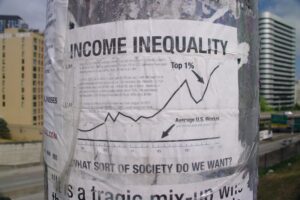
Products and services are experiencing gradual price increases, and many workers’ incomes have not risen in tandem with inflation. Due to this gap between wages and costs, workers’ real income is actually declining over time as their ability to spend declines. Workers struggle to keep up with the rising cost of living without significant salary increases, which causes financial stress and uncertainty.
Causes of Stagnant Wages
Today’s economy’s wage stagnation is caused by a number of factors. The decrease in unionization and negotiating authority, which has made it harder for employees to bargain for better pay and working conditions. Furthermore, technical developments and globalization have pushed wages lower and increased competition for jobs, especially in sectors that may be automated or outsourced.
Employer Practices
In order to reduce labor prices and increase profits, employers may also use strategies like recruiting temporary or contract workers. These tactics might help businesses make more money in the near run. They compromise workers’ pay and job security, which adds to the general wage stagnation.
Government Policies
Government policies are a major factor in determining wage dynamics. Examples of these policies include minimum wage laws and labor restrictions. These policies, however, weren’t always kept up with the changing demands of the economy or properly taken care of workers’ needs. Lawmakers must give top priority to measures that advance fair pay, uphold workers’ rights, and alleviate income disparity in order to solve the problem of declining wages.
The Impact on Workers
Workers at all income levels are severely impacted by price increases and stagnating salaries. The effort to pay for needs like housing, healthcare, and education can be too much for low-wage workers. As they attempt to reconcile growing costs with stagnating earnings, even middle-class workers can find themselves overworked, so sustaining economic inequality and expanding the divide between the affluent and those who need.
Conclusion
Today’s workers who are trying to make ends meet have a great deal of difficulty due to rising prices and stagnating incomes. Legislators, businesses, and other interested parties must work together to address this problem by passing laws that support equitable pay, lessen income inequality, and build an inclusive economy. Through significant measures to tackle the underlying reasons behind rising costs and stagnant incomes, we can create a future that is both successful and just for everyone.
Written by Jordiana Jean
Sources
cnn.com: Two out of three workers say prices are still rising faster than wages, new survey shows
weforum.org: Wages: Why are they not keeping up with inflation?
cnn.com: Inflation, explained: Why prices keep going up and who’s to blame
Featured Image Courtesy of Pictures of Money Flickr page – Creative Commons License
Inset Image Courtesy of mSeattle Flickr Page – Creative Commons License




