















North Lawndale Redlining
Originally known as Lawndale, the community area of North Lawndale was given its name by a real estate developer during the late 1800s. The intention behind the name was to create a sense of suburban tranquility, far removed from the bustling city.
However, North Lawndale eventually transformed into a vibrant neighborhood bustling with activity due to the presence of nearby industries.
In the late 19th century, prominent manufacturers like McCormick Reaper Works and Sears established their operations near North Lawndale. These newly instated operations attracted a significant number of European immigrants who sought employment opportunities.
According to the Encyclopedia of Chicago, Russian Jews began to settle in the community during the early 20th century, seeking respite from the overcrowding of Maxwell Street on the Near West Side.
The Emerge
As a result, North Lawndale emerged as a hub of Jewish culture in Chicago, with numerous synagogues and social organizations scattered throughout the neighborhood.
In the 1960s, African Americans started relocating to North Lawndale, causing white residents to move away to different neighborhoods and suburbs. As a result, the community began to experience the negative consequences of disinvestment.
The combination of racial tensions, poverty, and increasing African American unemployment eventually led Dr. Martin Luther King, Jr. to select North Lawndale as the headquarters for the civil rights movement in the North.
In 1966, he took up residence in an apartment within the community to draw attention to discriminatory housing policies. The riots that ensued after his assassination left lasting scars that are still visible in the neighborhood today.
Decreasing in Population
Over time, the population of North Lawndale has decreased as the area continues to face the repercussions of disinvestment, including poverty and crime. However, similar to other Chicago neighborhoods in comparable situations, the residents of North Lawndale are actively striving to bring about change.
Presently, organizations like My Block, My Hood, as well as My City are dedicated to altering the perception of North Lawndale through community engagement initiatives, such as youth-led tours that showcase the neighborhood’s history and foster a sense of local pride.
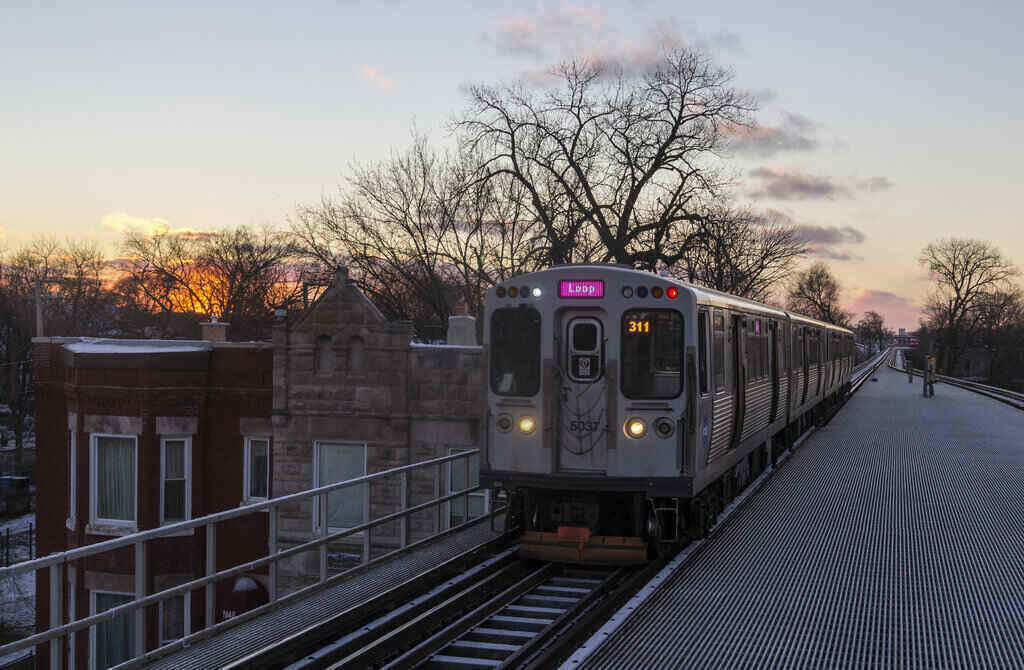
For those traveling through North Lawndale, the Pink Line conveniently stops at Kedzie, Central Park, Pulaski, and Kostner stations within the neighborhood.
The Migration to Chicago
In 1966, a large number of African Americans migrated to Chicago during the Great Migration. Due to a history of redlining, a discriminatory practice, most of them were forced to rent homes as owning a house was nearly impossible for them.
The term ‘redlining’ originated from a federal agency that marked predominantly African American neighborhoods on the Chicago map with red shading, signaling lenders to deny loans in those areas.
North Lawndale was one of the neighborhoods densely populated by black and brown residents living in run-down apartments.
Redlining
Although redlining is now prohibited by law, some argue that obstacles to homeownership still exist. April Campbell, a millennial with a full-time job and her own business, struggled for almost three years to secure a mortgage as a first-time homebuyer.
“I believe that institutional racism or redlining has simply taken on a different form,” she stated. “It has evolved into a 21st-century version.”
Despite being encouraged to leave North Lawndale, Campbell persevered and remained in the neighborhood.
Real Estate Agent
She mentioned that a local real estate agent had recommended she gather more comprehensive documentation to substantiate her strong financial position.
Eventually, she managed to secure a loan from a lender who recognized the area’s potential and would not discourage her.
She has recently relocated to her newly acquired residence. “I have an ensuite bathroom in my bedroom. I never thought that would be possible.
Empowered

He feels empowered, like I am breaking the cycle of generational hardships,” she expressed. “I was raised in this community, attended schools here. I am not just going to talk the talk, I am going to walk the walk.” She continues to say,
“I have laid down my roots, purchased a condominium here. I am prepared to advocate for North Lawndale, to rejuvenate it.” Regarding Shaw, she mentioned that she will continue to advocate for her neighborhood. “I am not going to give up.
As my grandmother used to say, ‘Where there is a will, there is a way.’ I will persist,” Shaw affirmed. “Something positive will come out of this. I am very optimistic about that.”
The Residents
Chicago residents who have reached a certain age can recount tales of a bygone era in the Windy City during the 1950s. They reminisce about nights spent sleeping in the park to seek respite from the scorching summer temperatures.
It was a time when leaving the front door unlocked was the norm, they’d ventured downtown to enjoy a double feature at the cinema. And conveniently returned home via the L, bus, or trolley.
By Isaiah Grissett
Sources:
WTTW: North Lawndale, by Monique Wingard
ABC7 Chicago : North Lawndale residents say mortgages, loans still out of reach in some African American communities by Leah Hope
chicagobusiness: Why closing Chicago’s racial wealth gap became a priority
Featured Image Courtesy of Jonathan Lee’s Flickr Page – Creative Commons License
First Inset image Courtesy of Daniel X. O’Neil’s Flickr Page – Creative Commons License
Last Inset image Courtesy of Pedro Szekely’s Flickr Page – Creative Commons License