















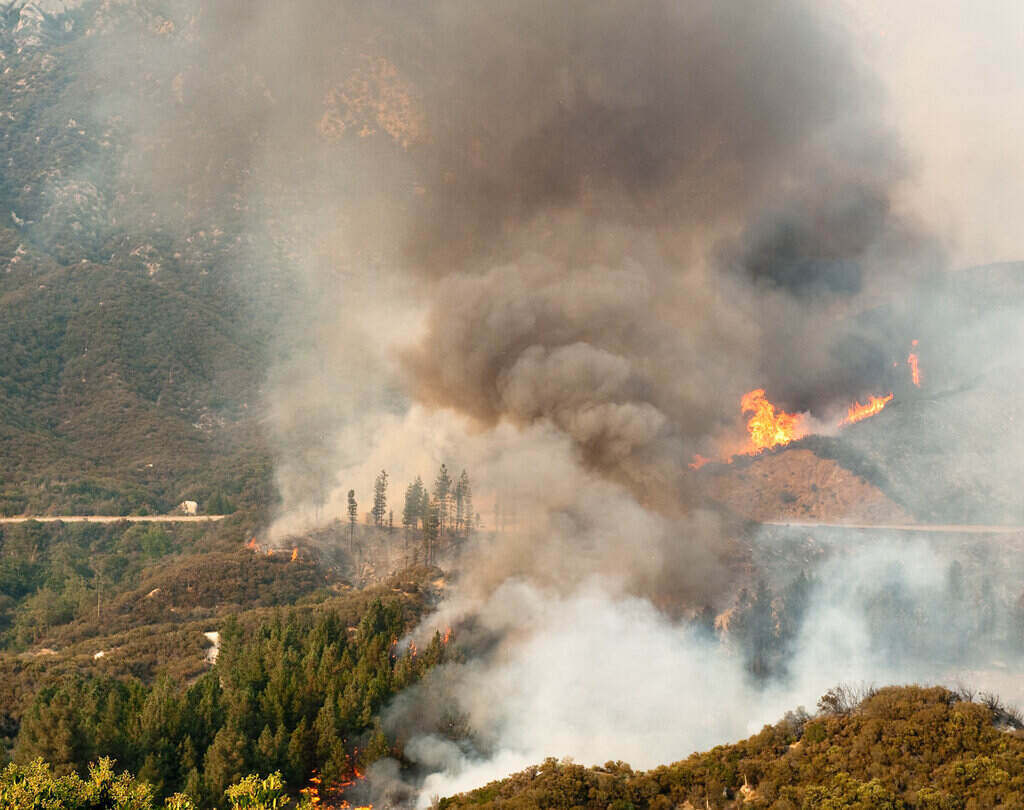
The Canadian wildfires began in May due to lightning strikes. As of June 5, there were over 150 wildfires active in Quebec. Many of the fires started because of lightning. The smoke and haze of these wildfires have created air quality issues in the United States (U.S.).
Canadian Wildfires Cause Issues
Not long after the fires began roughly 5,000 Canadians were ordered to evacuate a city close to Sept-Îles. As the Canadian wildfires spread the evacuations were extended to surrounding neighborhoods and western Quebec’s Normétal and Val-d’Or municipalities. An additional 9,000 individuals were asked to leave their homes.
The blaze has caused devastation across millions of acres across Canada. Additionally, the fires dramatically spread across swaths of western Canada, including British Columbia, Saskatchewan, and Alberta. The scorching flames have created mass amounts of smoke which have caused haze.
Air Quality Warnings
On June 4, authorities in Canada found the air quality index in the country was unhealthy. They stated the air quality index contained fine particulate matter (PM2.5) in eastern Ontario and southern Quebec. That particulate matter blew down into the Midwest of the U.S. This caused health officials in America to issue air quality warnings for parts of Minnesota, Illinois, Wisconsin, and Michigan.
The air quality warning has now expanded to parts of New England and the East Coast. When airborne particles are emitted into the air it can cause breathing issues for sensitive groups. Young children, the elderly, and those with medical issues such as asthma.
Effects of Particulate Matter
Particulate matter can cause:
- Asthma attacks.
- Decreased lung function.
- Coughing.
- Chronic bronchitis.
- Painful breathing.
- Heart attacks.
- Other cardiac problems.
It can also have environmental impacts such as acidification of streams and lakes along with nutrient depletion in soils and bodies of water.
Unusually Early
 Wildfire season for Canda occurs from May to September, however, this year the blaze started earlier than normal. As such, the season this year is set to become a historic one for the country. Normally, they only see small ones that burn hundreds of acres as opposed to the almost 9 million acres burning today.
Canada’s Natural Resources Ministry, Michael Norton stated, “The distribution of fires from coast to coast this year is unusual. At this time of the year, fires usually occur only on one side of the country at a time, most often that being in the west.” He admitted that if the blaze continues they “could hit record levels for area burned this year.”
“This week a dip in the jet stream will send smoke pouring southward out of Canada and into the northern and eastern U.S. for much of this week,” according to AccuWeather. “The impacts to air quality have been unprecedented this early in the season when we’ve mixed in the wildfire smoke with the dust and other pollutants, including ozone at the ground level, during hot stretches across the Great Lakes and Northeast,” explained Dean DeVore, a meteorologist for AccuWeather.
Additional Aspects Caused by the Wildfires
The smoke from the wildfires makes “days that are actually below historical seasonal averages and comfortable in terms of humidity, look like a hot and humid mid-July or August day,” added DeVore.
In addition to causing issues in the air quality, the smoke will also reduce visibility in certain areas. People living in areas where atmospheric conditions align might be able to smell the smoke.
Furthermore, the smoke can affect the atmosphere by contributing to vivid sunrises and sunsets. This is because the fine particles of the smoke can scatter “certain parts of the visible light spectrum,” explained AccuWeather’s Meteorologist Benz.
By Sheena Robertson
Sources:
AccuWeather: As historic Canadian wildfire season rages, US braces for more smoke and haze
NBC News: Air quality levels in parts of the U.S. plunge as Canada wildfires rage
NASA: Fires Burn Across Quebec
National Weather Service: Why Air Quality Is Important
Top and Featured Image Courtesy of Anthony Citrano‘s Flickr Page – Creative Commons License
Inset Image Courtesy of Michelle Spomer‘s Flickr Page – Creative Commons License




