
















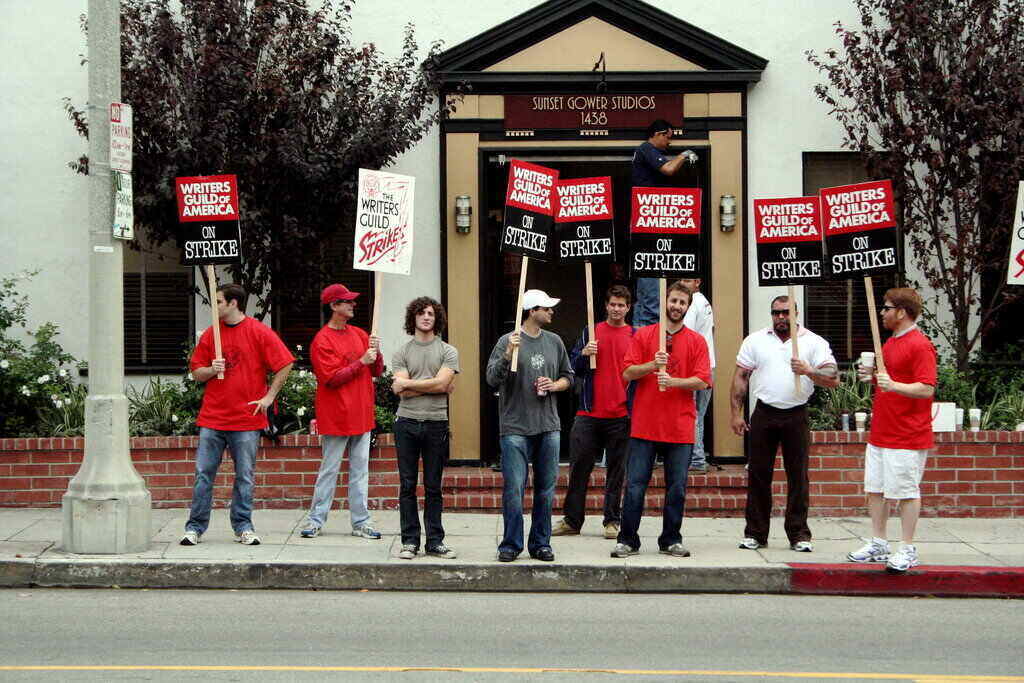
When normally citizens will see tons of film crew flocking around Chicago, the turnout is empty as the SAG strike continues.
What is seen in Chicago is a connection to Hollywood’s continuing dilemma with the writing and filming industry. Many big-name companies produce with actors and writers receiving equal pay to entry-level workers despite their popularity.
For many actors and screenwriters, the industry is no longer the same as when filming became popular. However, despite how widely received so many films are the market is designed to not favor its workers. Running on a model of favoring shareholders and executives, film studios profit from private subscriptions more so than distributing higher pay.
Low Residuals and Streaming Actors Not Just in Chicago
It is not just current pay rates. Many actors and writers discuss the lack of transparency between actors’ residuals and the payment from streaming shows.
Prior to streaming services’ popularity, an actor’s residual pay was subject to the show’s popularity during broadcasting. On older TV shows such as “Friends” or “Everybody Hate Chris,” actors leave their show but still garner thousands in residuals. Now streaming services, despite the popularity of a show or its initial budget give residual pay that is not equal to “the paper it’s printed on”.
Assistant executive director of WGA West, Charles Slocum, explains residuals as based on company say.
In streaming, the companies have not agreed to pay residuals at the same level as broadcast, or the same reward-for-success as they have traditionally paid in broadcast – If you write for a streamer, you get two residuals payments – one for domestic streaming and one for foreign streaming. It’s a set amount of money. If it’s a big hit, you do not get paid more residuals in streaming, whereas in the broadcast model, you do because of its success. That’s the sense that residuals were slashed – they have not agreed to a success factor when a program is made for streaming.
Actor Whitney Morgan Cox also remarked on the drastic difference between broadcasting checks versus streaming checks. In her role in Criminal Minds, she recounted how residuals immediately stopped coming once the show moved to streaming. Only coming back once it gained a little popularity on cable again.
With that in mind, the writers guild is calling for a separation in how more experienced writers are paid. Right now companies have no inclination to give senior writers more status. Often the showrunners in charge of writing the series will receive the same pay as story editors.
Companies Take Verses The Union

Despite actors like Kimiko Glenn from “Orange is the New Black” talking about how her residuals only amount to $27. Companies stick to their statement that streaming services are an opportunity for writers.
An undisclosed producer in a statement news claimed that platforms like Netflix, Hulu, and Disney Plus are a “boon to writers, who are making residuals on series that would otherwise have not continued to earn them income, and they are benefiting from greater opportunity for writing assignments with more producers greenlighting more projects than ever before.”
This argument that subscription platforms provide writers the opportunity to work on series that otherwise would not reach broadcasting networks, is why many actors will not negotiate their pay.
Michael B. Woods, from Chicago’s series “The Bear” raised the sentiment that many actors “feel like, if you say that treating us this way is unjustified, you’ll be pushed aside for somebody who won’t bring that up.”
Written by Brielle R. Buford
Sources
NBC Chicago: SAG-AFTRA, WGA Strikes Hit Home in Chicago
Deadline: Are Streaming Residuals Being Slashed? As WGA’s Own Data Shows, It’s Complicated
Fortune: What is a ‘residual,’ anyway? Here’s why Hollywood is on strike over streaming and A.I.
Featured and Top Image Courtesy of ChristyMacintosh‘s Flickr Page – Creative Commons License
Inset Image Courtesy of Niall Kennedy‘s Flickr Page – Creative Commons License




