















What Is House Music ?
House music is an electronic dance music genre that resurrects the disco of the 1970s with a repeating four-on-the-floor rhythm. Also, a typical pace of 120–130 beats per minute. It was made by underground club DJs and music producers in Chicago, and it began to become well-known in the early to mid-1980s when DJs began to give disco songs a more mechanical beat. House replaced the traditional 80s beat in popular music by early NUM0. Pop music, especially dance music, has been greatly influenced by house. Internationally renowned artists included it into their works. House music has persisted and gained popularity on the radio and in clubs. Maintaining a grip on the underground scenes that exist worldwide.
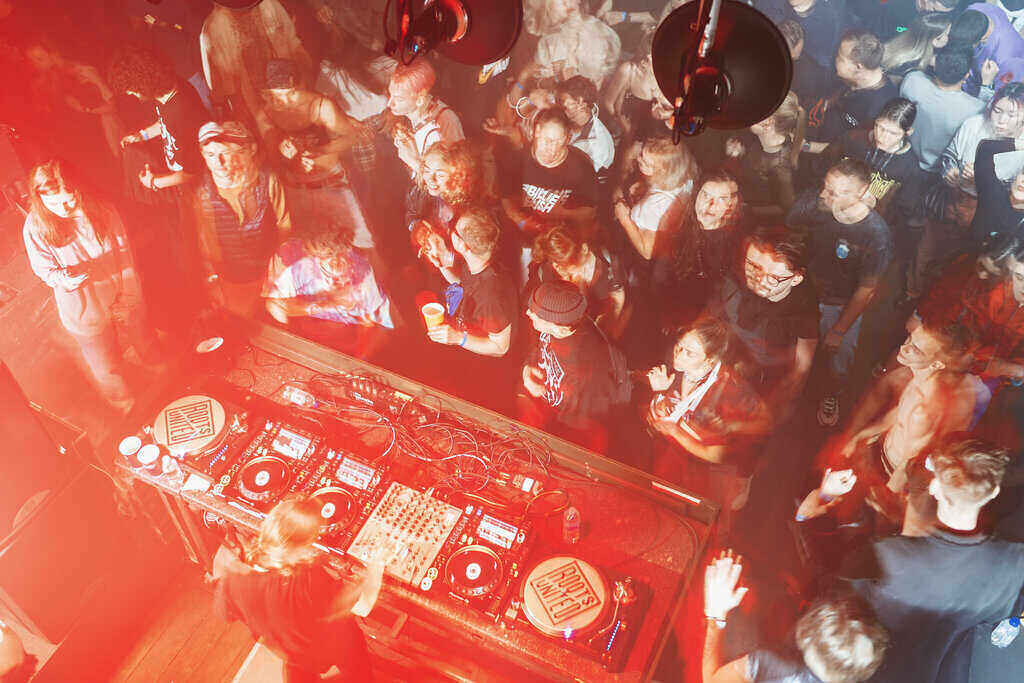
House music made it simpler for indie labels and DJs to generate tracks. Construction of house music can come from “cheap and consumer-friendly electronic equipment” and sound equipment.
It usually consists of an intro, a chorus, a midsection, a few verse sections, and a short outro. Certain songs reuse the chorus’ vocal section as the verse, skipping the stanza entirely. House music songs frequently consist of recurring eight-bar segments. Numerous subgenres of house music have emerged over time, each with distinctive qualities of its own.
Examples
Deep house, acid house, progressive habitat, tech habitat, and more are a few examples of house music. House music is characterized by its soulful and lively voices, even when instrumental songs predominate. The vocals may be from original recordings or song samples. It was the epicenter of house music, and it swiftly expanded to other states and countries. It established itself as a mainstay of electronic dance music and impacted many other genres.
House music has changed over the years, embracing new trends, technology, and production methods. It is still a vibrant and inventive genre within the larger electronic music landscape.
Originated In A Nightclub
House music originated in Chicago in the early 1980s, namely in a nightclub named The Warehouse. The storeroom was a well-liked hangout for African American and LGBTQ+ people and was instrumental in the growth of the home chords movement. The organization has become famous for its long-lasting DJ, Frankie Knuckles. At this time, the nightclub had become more well-known due to his frequent citation as the “Godfather of House Music. The sound known as council music has been significantly shaped by Knuckles, along with other DJs such as Ron Hardy, contributing to its development.
Disco, funk, soul, and electronic dance music comprised some of the elements that merged to produce house music. The DJs at the setting experimenting with synthesizers, drum machines, and other electronic instruments to produce a distinctive and upbeat sound that matched the club’s eclectic clientele.
Warehouse
“House music” originated at The Warehouse.
It was called for the club by some, while others believe it corresponded to the residence played throughout parties in the “warehouse” or underground. Regarding the term’s origin, The Warehouse was essential for providing a platform for the development of a fresh and revolutionary creative subgenre.
House music started growing in popularity and soon expanded outside of Chicago, becoming a global phenomenon that affected electronic dance music (EDM) organizations all over the world. Most people agree that The Warehouse and its DJs had a significant influence on the rise of home music. Contributions from warehouses to the electronic music scene are still valued today.
Early House Music From Chicago
Throughout the course of the 1980s, Chicago had a lively underground dance scene, and DJs were constantly on the lookout for fresh music that would spice up the dance floor. Furthermore, as music technology established, more Chicago DJs released and produced original music. House music subgenres which includes acid house and deep house had begun appearing by the middle decade of the 1980s. Record labels were quickly aware of these genres’ expanding popularity. Chicago’s Trax Records, located on North Clark Street, was the most known of these labels. Important house music recordings, such Marshall Jefferson’s “Move Your Body,” Phuture’s “Acid Tracks,” Larry Heard’s “Can You Feel It,” Frankie Knuckles’ “Your Love,” and many more, were released by this legendary organization.
Written By : Chiquita Street
Sources :
Fox 32 Chicago – From The Warehouse to the World: How one Chicago nightclub sparked the birth of house music
Icon Collective – THE HISTORY OF HOUSE MUSIC AND ITS CULTURAL INFLUENCE
Britannica – House
Top & Featured Image Courtesy Of Andrey X ‘ s Flickr Page – Creative Commons License
Inset Image Courtesy Of Simon Law ‘s Flickr Page – Creative Commons License




