
















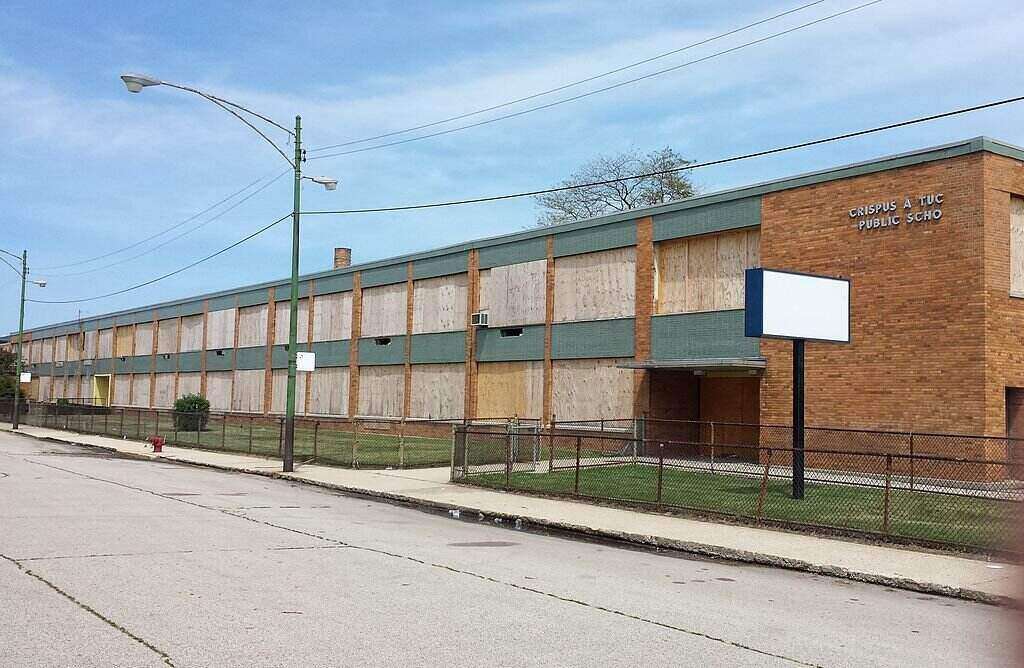
Chicago Schools Have Funding Problems
All through the Chicago area, there are plenty of schools that are under-funded. This is shown with the Evidence-Based Funding Act, also known as EBF. Although the EBF legislation is committed to fully funding schools by 2027. The state has continuously failed to provide schools with the full funding that they need.
Instead, the state has chosen to fund its school children with the bare minimum. This, even despite constant appeals from numerous public education stakeholders to raise the state’s annual evidence-based funding contribution.
Gov. Pritzker still has not increased the EBF beyond the $350 million stipulated by law. With EBF being underfunded in 2023, by more than $7 billion, at present rates, it will take until 2054 to gain adequate funding.
Additionally, they need to also have transparency issues with EBF reporting. Current reporting on EBF spending is very limited. Although the agency’s annual spending plans are required by law. However, they are not mandated to be added to school district budgets or needed to be included in annual school district report cards.
This lack of transparency means that parents, students, and educators lack an effective way to comprehend and push for fair and comprehensive school funding. Publically announcing EBF funding information will let educators, parents, and many others hold schools and districts accountable for how they use this funding. This, in turn, can help ensure that the funds are being used in a manner that benefits the students.
Teachers Strike for Others
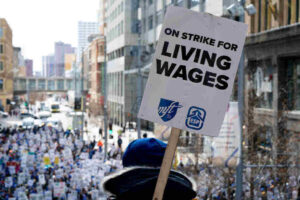
In Oakland, California, teachers went on strike on May 4, 2023. Three weeks before the last day of the academic calendar. The strike lasted seven school days. They fought for higher wages and needed resources.
Additionally, their efforts ensured that all unhoused families in their district were eligible for Section 8 housing vouchers.
This is not just a one-off thing. Over the years, teachers’ unions have begun to slowly introduce what they call “common good demands.” These can include offering more eco-friendly and free transportation options, defunding campus police, and even more.
In 2012, more than 25,000 members of Chicago’s own teachers’ union had common good demands when they walked in a picket line. Their strike lasted seven days. The point was to bring awareness to the situation and demand common items that should be in all classrooms, along with other needs.
If a classroom without air conditioning is too hot to focus in, or if an unhoused kid is constantly absent, it makes sense to address these issues. These issues are essentially workplace concerns while also overlapping with problems like climate change, and racial and economic inequality.
Teaching Into the Future
All in all, the only way to continue into our future with a brighter outlook is to help fund our schools when we can. Always try to find a way to help your local Chicago school. Look at the school’s website to see if they have a place where you can donate to them.
It’s our duty to help our local schools, teachers, and other staff when we can. When we help our teachers, they help the youth grow and become great, and eventually these youth will help the world.
By Randall P. Buford
Sources:
Chicago Business- Commentary: Illinois fails to provide schools with the full funding they’re owed
VOX- Teachers are striking for more than just pay raises
Chicago Sun-Times- CPS could face $600M deficit by 2026 as costs shift to schools with no long-term funding plan
Top and Featured by Steven Kevil Image Courtesy of Wikimedia – Creative Commons License
Inset Image Courtesy of Chad Davis’ Flickr Page – Creative Commons License




