















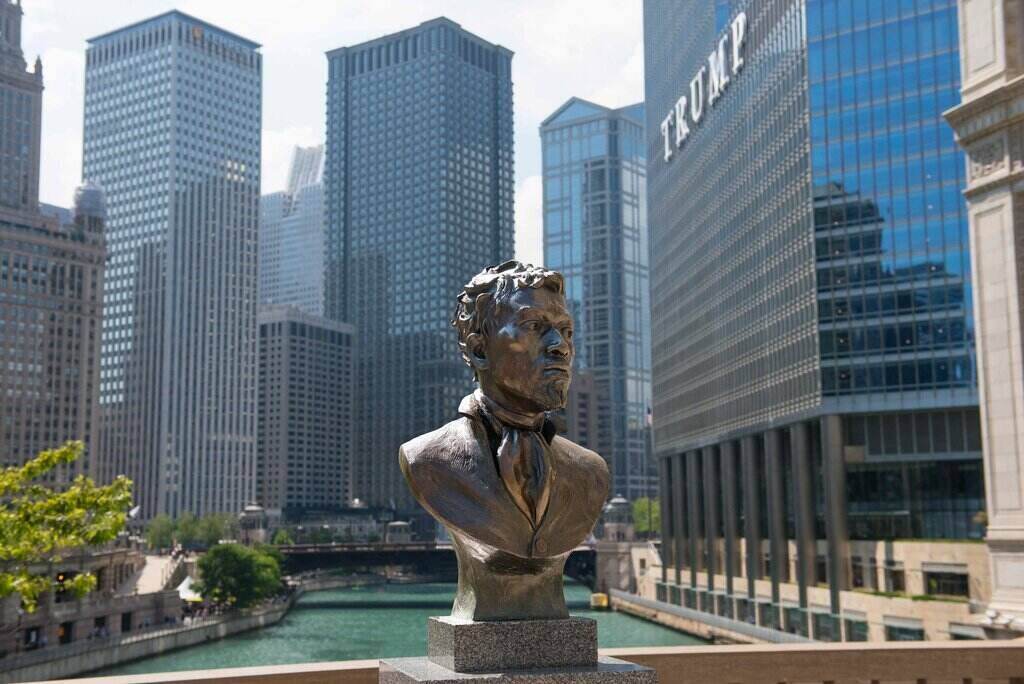
Chicago icon Jean Baptiste DuSable is having his history honored once again. This time in the form of a bronze cast sculpture over eight feet tall and 2,000 pounds. The sculpture was financed by a Haitian-American businessman named Lesly Benodin. Its unveiling happened on the corner of Orrington and Church, which resides in the Evanston area.
Who is DuSable?
Jean-Baptise DuSable is known as Chicago’s first non-indigenous resident of Chicago. However, his journey to the did not begin so early in his life. Around the year 1745, he was born to a French mariner and a Slave of African descent on the island of Haiti. He got his education in France during the early 1770s and then sailed to New Orleans.
From Louisiana, he made his way up the Mississippi River to Illinois where he married an indigenous woman. She was a Potawatomi woman named Cathrine and became Dusable’s wife and mother of their two children.
His days in Illinois were done however, in 1779 the settler developed a trading post and farm along the Chicago River.
DuSable knew no discrimination. His post served Native Americans, British and French explorers. Not only was he humanitarian but intelligent as well. He was a mediator and an entrepreneur who spoke Spanish, French, English, and a few Native American dialects.
Before he passed away on Aug. 18, 1818, he sold his estate and moved to St. Charles, Missouri.
The More Monuments, The Better
President of the DuSable Heritage Association, Ezter Cantav, says this sculpture is another step toward honoring Black Historical Figures. He also states they every citizen who showed up to see the unveiling is unintentionally doing the settler’s work, “…all of you here in one way or another are the embodiment of his legacy.”
The Sculpture is just one of the many ways the icon is honored in the windy city. There is his original sculpture residence in Chicago’s downtown area. It was sculpted in 2009 and then re-sculpted to have a crown atop his head on Feb. 1, 2023.
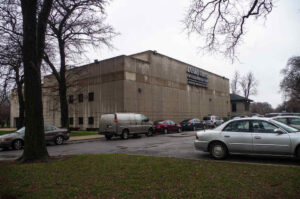
On Chicago’s South Side is where the DuSable Black History Museum can be found. The museum is known to be the best teaching in exploring African American history through its visual pieces and other various art. He was chosen as the museum’s symbol because of the work he did for and in the city.
Finally, off of Chicago’s Lake Shore is the DuSable Lake Shore Drive. The controversial name change of Lake Shore Drive to add his name in the front had critics upset, but the name seems to stick after years passed.
How DuSable’s Past affected Chicago’s present
His time in Chicago is more essential than most realize. He is an example of how it is to be multicultural. Born of French and Haitian Blood, married a native American woman, and served all Americans and Europeans alike with his goods.
The Chicago River sculpture getting its crown is a way to respect him during black history month and as the “Black Founding Father” of Chicago.
Black Heroes Matter Coalition President, Dr. Emphran M. Martin said, “There is no way Black History Month should be celebrated without recognizing him.”
One of the judges who attended the unveiling says the entrepreneur is the source of pride to Haitians. They stated that his work inspired them to “fully integrate into the community and make a difference.”
Joyy Norris, the city’s Cultural Arts Coordinator says the sculpture being placed by a library is very much intentional. “What better place to put it than in front of a Building which is dedicated to exploration and storytelling?” she said.
Written By Daylontie Jasper
Sources:
Evanston Now: DuSable bust unveiled downtown; by Jeff Hirsh
WTTW: DuSable to Obama: Chicago’s Black Metropolis; By WTTW Interactive Team
CBS News: Jean Baptiste Pontie DuSable Bust adorned with crown for the start of Black History Month: By CBS Chicago Team
Feature Image Courtesy of John MacDonald‘s Flickr Page- Creative Commons License
Inset Image Courtesy of Smart Chicago Collabrative‘s Flickr Page – Creative Commons License




