















Mankind’s impact on Earth may cause an “extinction crisis” in the near future. Researchers analyzed over 71,000 species — spanning insects, birds, fishes, reptiles, amphibians, and mammals — to assess their population growth over the years. They published their findings in the journal Biological Reviews on May 15, 2023.
The researchers found that 48% of these species have shrunk in populations with 49% appearing to be stable. However, only 3% of all the species have experienced a rise in population.
History of Human’s Causing Extinctions
It is no secret that humans have caused many species of wildlife, including plants, throughout the history of mankind. Human activity such as the development of land, deforestation, and over-harvesting of items assisted in many plants, animals, insects, and other wildlife dying off.
For example:
- In 1690, the Dodo bird became extinct because of the predation of pigs and cats.
- Stellar’s Sea Cows became extinct in 1768 because humans hunted them for their fur and oil.
- Labrador Ducks became extinct in 1870. Humans took away their sources of sustenance: mussels and other shellfish.
- In 1900, the Rocky Mountain Locust became extinct due to humans converting its habitat into farmland.
- The Tasmanian Tiger or wolf (Thylacine) became extinct in 1936. Thylacine’s cause of death was a cross between hunting, competition with dogs, and the loss of its habitat.
- The extinction of the Deepwater Cisco Fish occurred in 1952. The introduction of other fish species created competition and predation causing the Deepwater Cisco Fish to die out.
- In 1962, military installations created the extinction of the Hawaii Chaff Flower.
- Climate change caused the Golden Toad to become extinct in 1989.
- Logging and plantations caused the St. Helena Olive Tree to become extinct in 2004.
 There are many other wildlife species that have reached extinction due to human activities.
Death of Birds
Recently, scientists have estimated that over 3 billion birds have died in the United States alone since 1970. Included in this count are dozens of species that are considered threatened, endangered, or at risk. Threats to habitats, food, and climate change all pose a risk to the birds. These factors are also dangerous for plant life and wildlife.
Diseases also imperiled the decline of the birds, like avian flu. Ken Rosenberg, a conservation biologist with Road to Recovery, stated, “Birds are declining. It’s death by a million cuts.” The Road to Recovery is an organization that focuses on the recovery of the nation’s most rapidly declining birds.
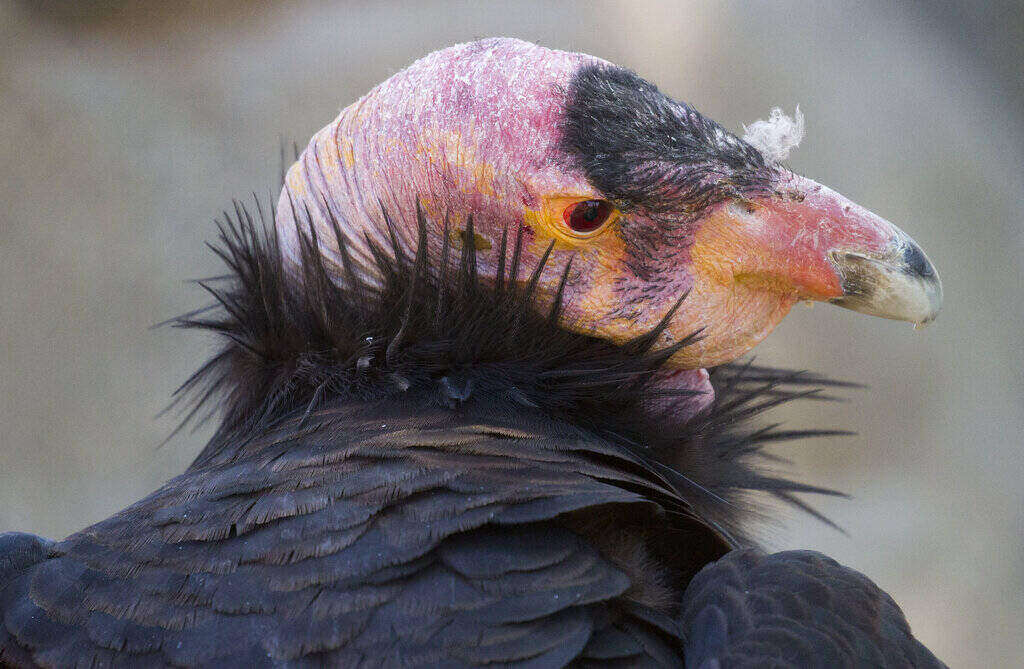
Avian flu struck hard this summer. Birds all across the world fell prey to the virus. In the northern quadrant of Arizona, 13 endangered California condors caught the avian flu. Unfortunately, they could not recover and succumbed to the virus. Recently, an emergency vaccine was just approved by federal officials.
Recent Bird Deaths Caused by Humans
Florida officials charged two men with gunning down cedar waxwings. One man who killed the colorful migrant bird was a blueberry farmer. He claimed he was trying to keep them off of his blueberry bushes.
They charged another man in Florida with driving a golf cart into a flock of American black skimmers on a beach. In that incident, five birds lost their lives.
 The Extent of ‘Real’ Biodiversity Loss
While it is common knowledge that species die off to make way for new and evolved species, the new study highlights the extent of “real” biodiversity loss. Co-author of the research, Daniel Pincheira-Donoso, stated, “The issue with this mass extinction, in particular, is that it is happening too quickly. Species do not have enough time to evolve to take [over] those [other] species. So we lose and lose and lose, and we don’t see our turnover.”
Traditionally, the International Union for Conservation of Nature (IUCN) assigns a conservation status to a species. The latest study suggests that relying solely on the IUCN’s Red List “runs a risk of downplaying the severity of biodiversity loss.” The data the researchers discovered showed that 33% of the species listed as “non-threatened” have declining populations.
For example, the IUCN has listed 13% of bird species as “threatened.” However, their data shows these birds have a falling population of 53%. This suggests they should be listed as endangered or that they are dying at a faster rate than the IUCN has predicted.
Geography Plays a Factor
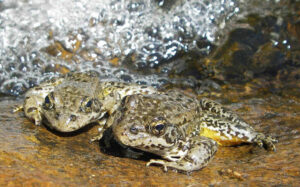
Geography plays a hand in the decline of some animal populations. The decline of certain species occurs in tropical areas more than it does in temperate regions. For example, some species of amphibians like newts and frogs appear to be more at risk. They have a high falling population and a low stable population.
“Collectively, our findings reinforce the warning that biodiversity is on the brink of an extinction crisis,” stated the authors of the new study. If the extinction crisis actually falls into play it will seriously devastate the planet.
The authors say it will have “extensive ecological and ecosystemic consequences, given that ecological functioning is severely impacted by population declines and the resulting changes in community compositions.”
Many of these species play an important part in the world’s ecosystem. Without further investigations and research, there is no telling if the ecosystem will be able to survive without the help of those species.
Animals on the Brink of Extinction
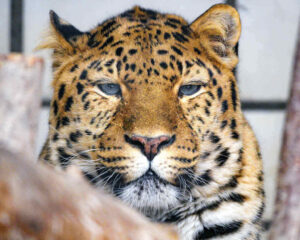 If something isn’t done soon there are cerian animals that will not be around much longer. The World Wildlife Foundation (WWF) has the following animals listed as “Critically Endangered”:
-
- African Forest Elephant.
- Amur Leopard.
- Black Rhino.
- Bornean Orangutan.
- Cross River Gorilla,
- Eastern Lowland Gorilla.
- Hawksbill Turtle.
- Javan Rhino.
- Orangutan.
- Saola.
- Sumatran Elephant.
- Sumatran Orangutan.
- Sumatran Rhino.
- Sunda Tiger.
- Vaquita.
- Western Lowland Gorilla.
- Yangtze Finless Porpoise.
 Steps have been in an attempt to save these animals. However, their numbers have not risen enough to get them off the list.
Endangered and Vulnerable Species
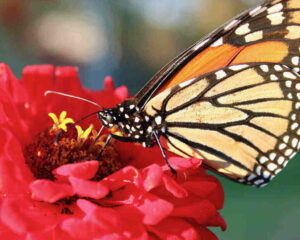
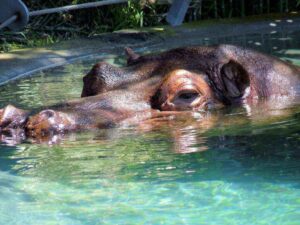
Species like the Monarch Butterfly, Indus River Dolphin, Green Turtle, and Red Panda have been placed on the WWF endangered list. The Bigeye Tuna, Black Spider Monkey, Giant Panda, Great White Shark, Hippopotamus, and Lion are on the foundation’s vulnerable list.
If people don’t do something some of these species will be eliminated while others will take steps further into extinction.
By Sheena Robertson
Sources:
USA Today: America’s birds are under siege. These are among the most at risk for extinction.
TIME: Biodiversity Is Nearing an ‘Extinction Crisis,’ Animal Researchers Say
Natural History: Extinction Over Time
Biological Reviews: More losers than winners: investigating Anthropocene defaunation through the diversity of population trends
WWF: SPECIES DIRECTORY
Top and Featured Image Courtesy of Nathan Rupert’s Flickr Page – Creative Commons License
First Inset Image by CDFW Inland Desert Region staff (possibly James Erdman Courtesy of
California Department of Fish and Wildlife‘s Flickr Page – Creative Commons License
Second Inset Image Courtesy of Cam Miller‘s Flickr Page – Creative Commons License
Third Inset Image Courtesy of Tambako The Jaguar‘s Flickr Page – Creative Commons License
Fourth Inset Image Courtesy of Michael Fraley’s Flickr Page – Creative Commons License




