
















Black Hair
For Black people, their Trichology is more than just hair. They express themselves through their tresses. It is deeply entrenched in their culture and history. Furthermore, some feel it connects them to one and another. Meaning, their hair is a huge part of their identity.
African locks is seen to be much thicker and more dense, meaning that the hair follicles are larger. Density represents the amount that grow from the head, with denser Trichology resulting from more hairs growing closer together from the scalp. An individual with high-density hair creates a fuller appearance of curls.
Visually, a Black person’s hair is thicker, curlier, and often frizzier, which can be hard to function with compared to Caucasian and Asian hair. From a grooming standpoint, it is also more sensitive to excessive manipulation, requiring a different set of styling techniques.
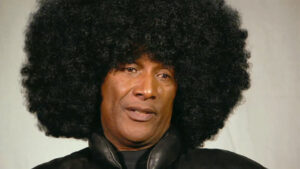
Hairstyles for women of African descent include thermally straightened, afros, locks, braids, weaves, and twists. Thermally straightened tresses is done with the use of heat, such as blow drying, flat ironing and pressing the Trichology with a pressing comb.
It has the slowest growth rate of 0.9 centimeters per month due to its spiral structure which causes it to twist on itself as it grows. African Trichology is often coiled, it also has a unique texture to function with. Furthermore, it produces plenty of protective oils, called sebum.
Purpose of Trichology
The most important function of hair in mammals is insulating against cold by conserving body heat. The differing colors and color patterns in hair (or fur) can also serve purposes of camouflage and sexual recognition and attraction among the members of a species.
Trichology is the body’s protector. It regulates body temperature, and facilitation of evaporation of sweat; it also act as sense organs. Furthermore, it develops in the fetus as epidermal down growths that invade the underlying dermis.
Not to mention, it can help keep mammals warm. It functions to protect their skin from many external influences, abrasion, water, chemical attacks, and all sorts of things.
As people get older, the pigment cells in their Trichology follicles gradually die. When there are fewer pigment cells in a hair follicle, that strand of hair will no longer contain as much melanin and will become a more transparent color like gray, silver, or white as it grows.
Men being able to grow chest hair comes down to genetics and biology. It is theorized that chest hair was a positive physical attribute thousands of years ago that helped keep your body warm. Chest hair also made it easier to visually spot fleas on the body.
The eyebrows function to provide moderate protection to the eyes from dirt, sweat and rain. The eyelash grows at the edges of the eyelid and function to protects the eye from dirt.
Therefore, Trichology has both functional and appealing purposes, which can be seen throughout history.
What Was Invented?
As technology grows, so do the various inventions and creations. From soap to shampoo to conditioner and bodywash, someone is always creating something to help people with their various hair needs. For example:
- In 1872, a French hairdresser named Marcel Grateau created a curling iron which was made up to function tweezers in the shape of tubes, the first one concave, and the other one convex. These tubes were heated to curl the hair.
- In 1909, Isaac K. Shero patented the first hair straightener, made of two flat, heated irons that were pressed together. Heated metal implements became more popular, as they were easier to use and made hair feel less dry.
- In 1869-1957, Annie Malone later became the first in the African American community to patent the hot comb, and.
- In 1867-1919, her apprentice Madame C. J. Walker later widened the teeth of the comb for better usage. The hot comb remained an essential hair styling tool well throughout the 20th century. Madam C.J. Walker is influential to the Industrial Revolution because of her inventions, social contributions, and long-term impacts. She was not only an inventor who created hair care products, she was also a civil rights activist.
- Theora Stephens, a hairdresser, created the pressing/curling iron in 1983.
Importance of Styles Today
Being able to express oneself is important, especially if it helps them stay culturally involved. This is something that can be difficult if a child of one ethnicity is adopted by a completely different one. This is why Tamekia Swint founded Styles 4 Kidz, a non-profit salon in Illinois that focuses on textured hair education for transracial adoptive parents and their children.
“Hair is a huge part of our identity,” stated Swint. As such, she offers a range of services including cornrows, braids and twists. Furthermore, Swint has one-on-one training sessions, online courses and workshops to help teach people the different hairstyles and ways to help keep their tresses healthy.
Swint is not along in her endeavor of teaching healthy hair care and styling tips to those who are culturally unaware of its importance. Tamiah Bridgett-Alexander specializes in natural hair. She hosts Black hair classes for foster parents and families in Pittsburgh, Pennsylvania. Additionally, she works with is the Foster the Love Project and other agencies who help foster parents and families the importance of healthy hair and knowing ones culture.
By Alana Wilson
Source :
Today – These women are teaching transracial adoptive parents how to do Black hair by Rachel Paula Abrahamson
Wikipedia – Hair by Wikipedia, the free encyclopedia
Cosmetic World – What is the most attractive hair color for 2024? + Poll Results by Monika Petite
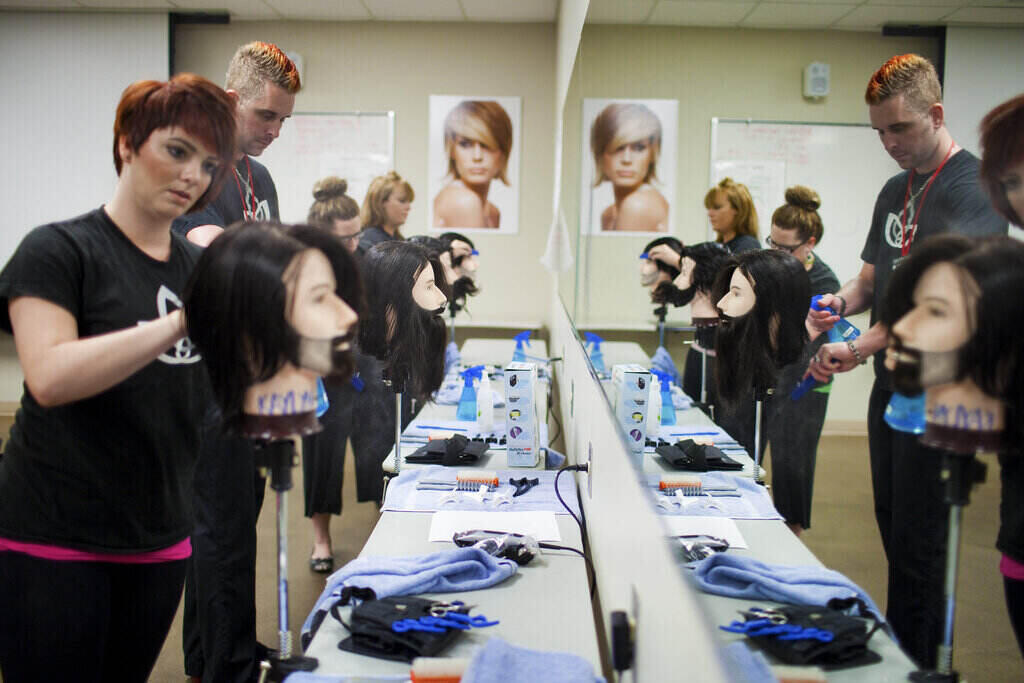
Top and Feature Courtesy Of Clary Sage College C00 Flickr Page- Creative Common License
Insert Image Courtesy Of Chris M. C00 Flickr Page- Creative Common License




