














Looking for Local Eats
If you’re someone who frequently uses food delivery apps such as DoorDash, Uber Eats, and Grubhub, you may have noticed a restaurant or two in your area that you’ve never heard of or seen before. They have cute names like “Broke, High and Hungry,” “Eye Heart Pizza,” or “The Meltdown.” You may be enticed by the prospect of giving a new independent restaurant in your neighborhood your hard-earned money.
Well, stop right there, and hold onto your patronage. What you are perceiving to be a new, hip, independent restaurant is actually likely a Virtual Kitchen, or as many have dubbed them, “Ghost Kitchens.”
just found out i’ve been ordering dennys thinking it was a gourmet grilled cheese place don’t text pic.twitter.com/kaDTsaIbwT
— ryan j ???? (@ryannoyance) March 5, 2023
How Ghost Kitchens Work
Ghost Kitchens are virtual fronts that appear as restaurants on food delivery apps. These fronts are used by either:
- A local restaurant using a different name.
- A chain restaurant using a different name
- Or a nameless, faceless, kitchen space that solely prepares food for takeout and delivery drivers.
These facilities often times have 10 to 20 restaurant names that they appear under, each with a unique name, logo, and menu. All are tied to one location and one address.
Many big-name chain restaurants have virtual names that they use on delivery apps. Buffalo Wild Wings has “Wild Burger,” TGI Fridays has “Conviction Chicken.” and Chuck E. Cheese’s has “Pasqually’s Pizza & Wings.”
Big-name ghost kitchens also exist. In 2020, YouTube star Mr.Beast partnered with Virtual Dining Concepts and started the brand “MrBeast Burger.” MrBeast Burger is a nationwide virtual brand that allows any form of ghost kitchen to order their food and branding and sell them directly to food delivery customers in their area.
Another company, Epic Kitchens, has launched several stores in the U.S., that serve as ghost kitchen facilities. These house multiple restaurants and are set up for both delivery and dine-in. Epic Kitchens opened locations in the Chicago neighborhoods of River West and Lakeview in just the last couple of years, but both locations are now closed, for reasons that remain unclear.
Is This Legal? Is It a Scam?

Ghost kitchens are still a fairly new concept, getting their start in the late 2010s before the COVID-19 pandemic exploded the food delivery business. No one knows how many there are in total, but according to the Wall Street Journal, Uber Eats alone listed 10,000 virtual restaurants in 2021, and now has over 40,000. ABC7 News in Chicago revealed that as of this past February, 300 virtual restaurants existed within the city of Chicago.
The practice of selling food from the same location under multiple restaurant names is legal, but it innately comes with some issues. One of those is that many of these restaurants and kitchens don’t always register their virtual names or DBA (Doing Business As) names with the city. This makes it very difficult to track down where your food came from, as well as report problems or look up health inspection records.
Uber Eats, which features a guidelines page for businesses looking to register under multiple names, is starting to crack down on the more egregious examples of this. Uber Eats fears that its app is becoming overly cluttered with these virtual restaurants. They have been removing thousands of virtual brands since March. Their main focus rests on restaurants like one deli in New York City that had listed one menu under 14 different names.
How to Spot a Ghost Kitchen
Despite the implication of their name, there are a few ways to tell if a restaurant you see on a delivery app is a ghost kitchen or not.
- Google the restaurant name. Be sure to look to see if it has a physical location, photos, ratings, etc. A lack of a footprint online could be a sign that it’s a ghost kitchen.
- Expand the restaurant’s description in the delivery app, and look for any relevant fine print regarding a parent company of the ghost kitchen brand.
- Check to see if the address of the restaurant you are considering matches the address of the restaurant’s brand headquarters. If the two are identical, the restaurant is likely a ghost kitchen.
- Examine the addresses of various offerings available in your area. If you observe a large concentration of restaurants in a single location, it’s indicative of a ghost kitchen operation.
Under the current laws and regulations surrounding this industry, it is on you as the customer to know where your food comes from. But of course, the number one way to avoid all of this madness is to cut out the “middle app” and order directly from your favorite independent, locally owned, neighborhood restaurants.
Written by Seth Herlinger
Sources:
ABC7 Chicago: Ghost kitchens make it hard to know where your delivery food is being made, or report problems
Block Club Chicago: Epic Kitchens’ Year-Old Lakeview Ghost Kitchen Location Closed Until ‘Further Notice’
CBS Los Angeles: On Your Side: ‘Ghost kitchen’ restaurant trend
MarketScale: The Growth of Ghost Kitchens in the Restaurant Industry
Mashable: Uber Eats wants to shut down those fake ‘ghost kitchens’ in your neighborhood
Wall Street Journal: Uber Eats to Take Down Thousands of Virtual Brands to Declutter the App
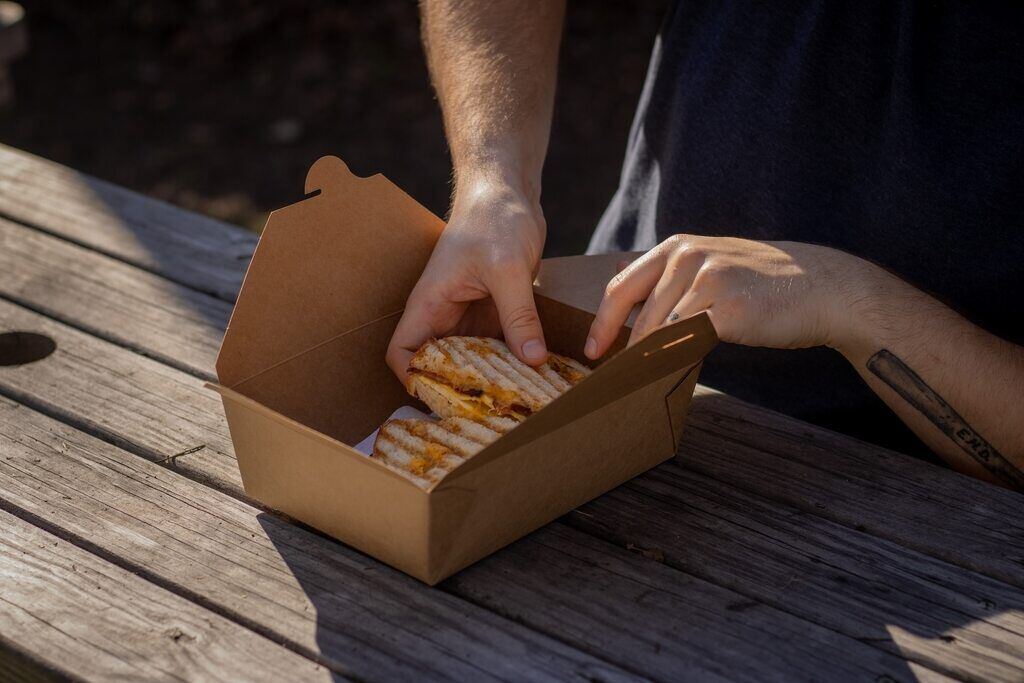
Top and featured image courtesy of Conor Brown’s Unsplash page – Creative Commons License
Inset image courtesy of S O C I A L . C U T ‘s Unsplash page – Creative Commons License




