
















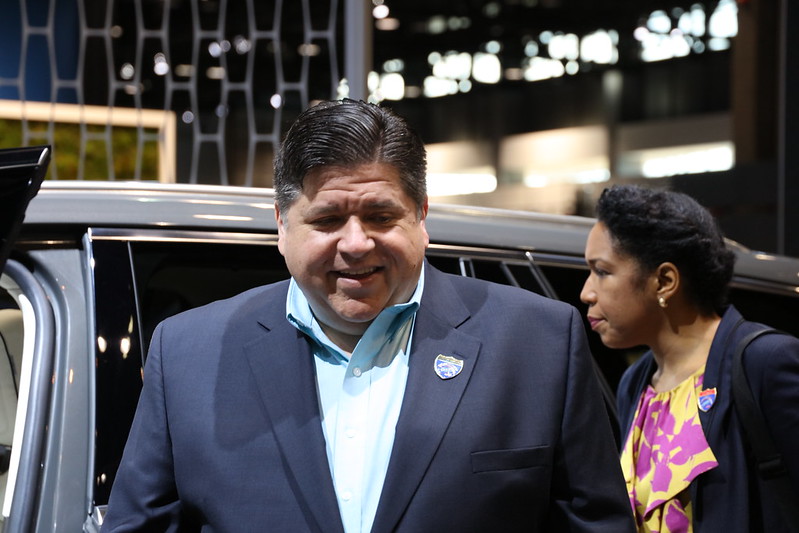
For years it has been legal for police officers to lie during interrogations in order to obtain confessions. However, the National Innocence project along with the Illinois Innocence project partnered together to get Governor J.B. Pritzker to sign Senate bill 2122. The law does not go into effect until 2022, however it bans police officers from lying to anyone under the age of 18 during interrogations.
History Of False Accusations
Many people are probably wondering why lying to minors is being banned. The law intends to keep innocent people out of prison, especially since Illinois was once the capital of false accusations. The new law specifically targets minors because they are two to three times more likely to falsely confess to crimes. Considering that Illinois was once known as the capital of false convictions, the signing of bill 2122 should be seen as a win. Police Officers commonly lie to minors during interrogations using the promise of sending them back home, and as a result out of 100 wrongful convictions in Illinois, 31 of them involve people younger than 18 years old. All 100 of the convictions are the result of police officers lying during interrogations.

False Conviction Cases
Two of the most notable cases are the Englewood four and the Central Park five. In the case of the Central Park Five, a group of Black and Hispanic teenage boys were wrongfully convicted of raping and murdering a young white female jogger in Central Park. They endured hours of interrogation and false promises to persuade them to confess. The Central Park five spent six to thirteen years in prison until the real perpetrator confessed to the crime. The Englewood four consisted of four teenage boys, Michael Saunders, Terrill Swift, Harold Richardson, and Vincent Thames were all wrongfully convicted of murdering and raping a woman in 1994 on the Southside of Englewood. Their convictions were overturned in 2011 by a Chicago attorney, however, they are still waiting for the case to be cleared from their record.
In both cases, the false convictions mainly targeted Black and Brown men of color. It is no secret that most of the prison system is also made up of Black and Brown men. Not only does Illinois’ bill 2122 highlight the systemic racism within the legal system, but it also emphasizes the reason why so many people distrust police officers.
Effects Of False Convictions
Although many people may believe that signing bill 2122 into effect will erase all of the damage done, they are wrong. False convictions have led to Black and Brown’s men being put in prison without proper evidence for years. The effects of this have run rampant in both communities for years as a result, so much so, that even when a crime is committed many Black and Brown people do not call police officers. Additionally, the young men who are falsely convicted are never able to truly regain their lives. Instead of spending time working summer jobs or going to prom with friends, they spent hours in prison surviving, and most of the time they spend hours outside of prison surviving also.
Truthfully, I do not believe the damage will ever be erased and that is because false accusations, as well as police brutality, have been going on for decades. In addition to this, the issue is a systemic issue, meaning that the problem lies within the system itself. While this law is a huge step in the right direction there are still many more to come. From Emmett Till to the Englewood Four, Black and Brown men have had to endure the harsh consequences of wrongful convictions with barely anyone fighting on their side.
Until systemic racism ends and the entire system is abolished there will always be another case that must be overturned. Bill 2122 is the result of years of lives being stripped away from innocent young men. It is a chance for the next generation of Black and Brown men to finally have a chance to be boys rather than be pushed into a system that will always see them as criminals.
Opinion by Reginae Echols
Edited by Sheena Robertson
Sources:
NBCChicago: Illinois Becomes First State to Ban Police From Lying to Minors in Interrogation Under New Law
NPR: Illinois Is The First State To Tell Police They Can’t Lie To Minors In Interrogations
The Times Of India: Illinois becomes first US state to ban police lying to under
Featured Image Courtesy of Raymond Cumingham’s Flickr Page – Creative Commons License
Inline Image Courtesy of Oh-Berlin.com’s Flickr Page – Creative Commons License




