
















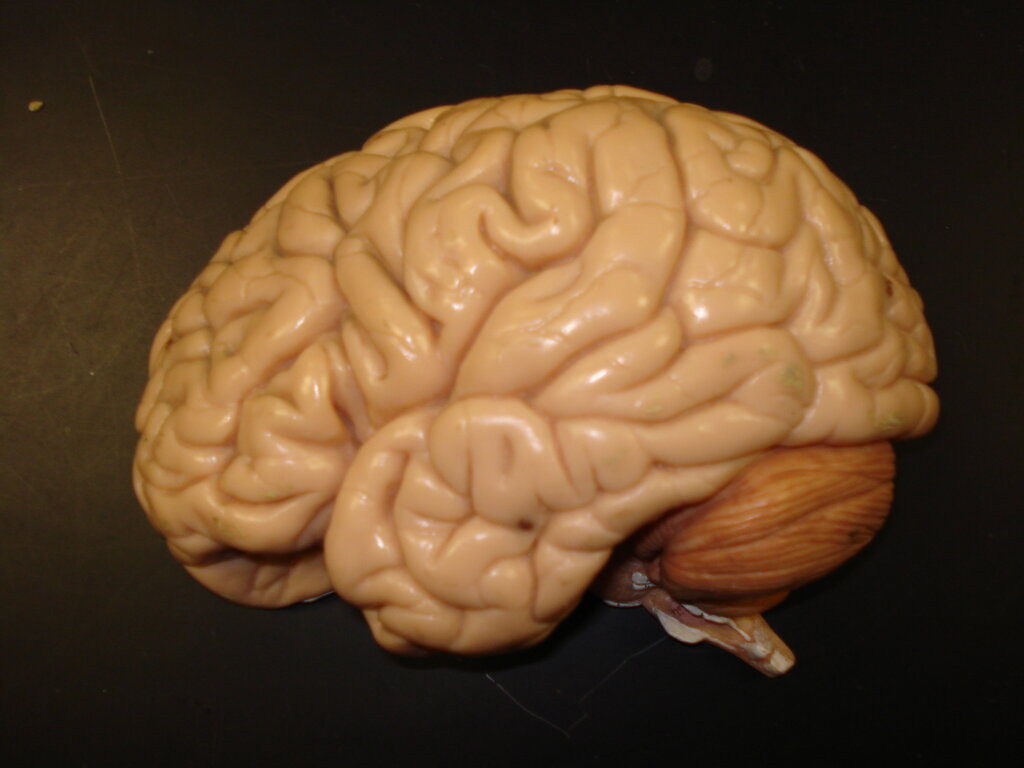
Alzheimer’s disease (AD) is a type of dementia that affects memory, thinking, and behavior. Symptoms eventually grow severe enough to interfere with daily tasks.
What Is Alzheimer’s ?
Alzheimer’s is the most widespread cause of dementia. Alzheimer’s is a general term for memory loss and other cognitive abilities bad enough to impair with daily life. AD accounts for 60-80% of dementia cases.
Dementia is not a typical aspect of growing older.
Growing older is the biggest known risk factor, and most Alzheimer’s patients are 65 years of age or older. If an individual under 65 has Alzheimer’s disease, it is referred to as younger-onset AD. Early-onset Alzheimer’s disease is another name for younger-onset AD. Additionally, AD can be in its early, medium, or late stages in people with younger onset.
Impact Over Time
Since AD is a progressive disease, symptoms of dementia progressively deteriorate over several years. Alzheimer’s disease causes little memory loss in its early stages. By the disease’s last stages, people are unable to respond to their surroundings or carry on a conversation. A person diagnosed with Alzheimer’s disease typically lives four to 8 years. However, they may survive up to 20 years, depending on other circumstances.
There are two treatments for the disease, but there is no cure. Thus creating the question, “Can Alzheimer’s disease be reversed?”
Additional therapies can help people with AD and their careers live better lives by momentarily slowing the progression of dementia symptoms. A global search is currently ongoing to discover more effective treatments for the illness. As well as strategies to postpone its beginning and stop it from progressing.
Disease Increasing

Proactive intervention and early disease diagnosis may potentially have a considerably higher impact. Experts are stressing the significance of early detection and care because AD is killing out more individuals than it has ever before.
The 2024 Disease Condition Facts and Figures study states that from 2000 and 2021, the number of deaths caused by AD climbed by 141%. In addition, the number of Americans afflicted with the illness is increasing, reaching 6.9 million and growing.
Identified Early
When a patient is able to communicate their goals and desires, the family can make plans for their future care thanks to early identification and diagnosis. Furthermore, the majority of symptom-relieving drugs work best when used early in the course of the illness. Early diagnosis also increases a patient’s likelihood of being accepted into clinical trials for novel drugs and diagnostics. Hopefully one day there will be a way to reverse Alzheimer’s disease.
James E Galvin is the chief of cognitive neurology and director of The University of Miami Health System’s Comprehensive Center for Brain Health. “There are newer medications that have the potential for disease modification that are approved or under consideration for approval, so patients have more treatment options,” Galvin said.
While various trials are being conducted to evaluate preventative medicines, the majority of the existing medications address symptoms and halt the progression of the disease.
Is it Reversible?
Can the Alzheimer’s disease be reversed ?
Dementia is the term for thinking, memory, and decision-making problems that interfere with day-to-day functioning. It is possible for infections and other medical problems to cause symptoms similar to dementia.
Treatment may make symptoms better. According to Sandison, the author of the upcoming book “‘Reversing Alzheimer’s: The New Toolkit to Improve Cognition and Protect Brain Health,’ there are different ways for individuals to potentially reverse Alzheimer’s because the causes of Alzheimer’s vary from person to person,” Fox News said.
There are also different medical conditions that might present with symptoms similar to dementia. With the appropriate care, these illnesses and related cognitive symptoms might be curable. Common HIV medications may lower AD incidence. The study indicated that HIV-positive patients taking reverse transcriptase inhibitors had a considerably lower rate of AD compared to the general population, using anonymized prescription data from approximately 225,000 individuals.
This study expands on earlier research suggesting that enzymes similar to those targeted by HIV medications may recombine genes associated to AD. The findings may open the door for novel treatment approaches utilizing currently available medications to address the escalating AD epidemic.
Written By Chiquita Street
Sources :
Neuro Science News – HIV Drugs May Reduce Alzheimer’s Risk
Fox News – Can we reverse Alzheimer’s disease? Experts suggest ‘new paradigm’ for combating dementia
HSPH.Harvard.EDU – Researching new ways to prevent Alzheimer’s
ALZ.ORG – What is Alzheimer’s Disease?
Healthline – Is Dementia Ever Reversible?
Top & Featured Image Courtesy of biologycorner’s Flickr – Creative Commons License
Inset Image Courtesy of Adeel Anwer’s Flickr – Creative Commons License




