














The life of Jay Robert Nash, a Chicagoland novelist who wrote over 70 books and was a cultural sensation and was also a member of the ensemble of individuals. They congregated with journalists from the press and other authors in 1970s bars such as O’Rourke’s, Riccardo’s, and the historic Old Town Ale House.
In 1972, Chicago Sun-Times journalist Tom Fitzpatrick wrote of Nash: “instructed me to place myself in a chair and try to think back to the most memorable individual I have ever met, i would have to begin with Jay Robert Nash. The great, novelist, editor, raconteur, explorer, bon vivant, and writer, stands 5 feet 6 inches tall and bears a mustache. The very sound of his name causes shivers down my back.”
Jay Robert Nash passed at age 86 on April 22 from leukemia. Nash could tell a narrative, regardless of whether he was frequently viewed with skepticism or suspected of hyperbole.
He possessed a comprehensive understanding of American crime and cineplex and had scratch cards with notes that covered the cupboards in his apartments on the North side and contributed to the manuscripts of exhaustive novels he authored. He also authored books about quirky celebrities, disasters, police officers, and pieces of poetry and literary fiction.
His First Novel
Nash’s very first novel delves into conspiracies, “Dillinger Dead or Alive?” The book was first released in 1970, and it claimed that famed armed robber John Dillinger organized the murder of a copycat who stood in front of the memoir Cinema in 1934, permitting him to live a lengthy life of incognito on the west coast of the United States. When the Federal Bureau of Investigation (FBI) learned what had happened, he claimed, the choice was made in order to conceal it and capitalize on the positive publicity that followed with removing the country’s most wanted criminal from the streets.
Sun-Times cinema reviewer Roger Ebert, an acquaintance and a fan, wrote in a report post that Jay Robert Nash had informed him he once met an older gentleman Dillinger at an Phoenix, Arizona senior facility.
“We were skeptical that He was committed but he never once confessed he wasn’t,” Ebert stated in his book. “You hear a lot of tales in O’Rourke’s.”
How he Became Successful
Jay became financially successful in 1973 with “Bloodletters and Badmen,” a history of U.S. offenders.
The book “Hustlers and Con Artists,” profiled deception leaders such as famed Illinois scam artist Joseph “Yellow Child” Weil. One of the authors of the novel was the comedian ad TV host Johnny Carson, who featured Nash on his show in 1976.
His 1978 book “Among the Missing,” collected unusual incidents involving missing people.
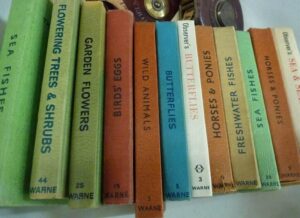
In the course of the 1980s, Nash released a multi-utility “Motion Image Handbook” with precise details on almost 25,000 titles. He recruited a study team and collaborated with Stanley Ross, a screenwriter who worked on the “Batman” and “Columbo” TV shows.
The Life of Nash
Nash came into this world on November 26, 1937, in the city of Indianapolis, and raised in Green Bay, a small town in Wisconsin. His biological mother, Jerri Lynne Nash, was a talented musician and nightclub owner. His father, Jay Robert Nash II, a newspaperman, passed away during the Second World War.
Jay graduated from Marquette University before working in military operations overseas.
According to his lover Judy Nash, Jay eventually enrolled in the University of Paris and fought alongside the bulls in Pamplona, Spain.
Coming back to the U.S., he lived 12 months in New York, “attempting to create an iconic American novel, like every other individual.” Prior to going back to the Midwest and simply restoring the Fictional Times, a newspaper established by famous journalist Ben Hecht, according to Sun-Times columnist Bob Herguth in 1987.
His Success in the City of Chicago
In 1962, he relocated to Chicago, where he worked as a reporter for Chicago publication, befriended Mike Royko, Studs Terkel, Nelson Algren, and other writers, and became involved in Chicago’s vibrant literary scene. He relocated to Wilmette in 1987. “Jay was certainly the last significant novelist of that specific time,” stated author and friend Marc Davis.
Nash’s 1992 novel, “Dictionary of Criminal Activity: Criminal Justice, Criminology, & Law Enforcement,” had hundreds of underground terminologies such as “choir boy” (a thief’s apprentice) and “performing” (the final days of a jail sentence).
But internet access decreased demand for his encyclopedia volumes.
“Now, you’re able to simply hop on a laptop,” Judy Nash remarked. “You do not require an encyclopedia guide. But instead, he resisted. He was a traditional kind of guy until the end. ‘People need literature. You have to keep it in your hands,'” he would say.
Written By Kyla Hughes
Sources:
Chicago Tribune – Remembering Jay Robert Nash, a prolific writer with a huge personality
First Inset Image Courtesy of misslizzy63 Flickr Page – Creative Common license
Second Inset Image courtesy of Susan Smith Flickr page – Creative Common License




