
















Chicago citizens voted in the 49th Ward in the northside area of Rodgers Park on a Lakeshore National Park. Out of all of those who voted on the referendum, 62% of them were in favor.
This hasn’t been a new question to float around the city, however, it picked up traction again. Groups like Preservation Chicago have resurrected the idea.
Preservation Chicago
Preservation Chicago is an organization whose mission is to promote economic growth within Chicago, as well as protect the environment and beauty of the city. This doesn’t only include the natural environments and parks of Chicago, but also the historic architecture.
A statement from the group expresses: “The idea of a national park partnership and shared responsibilities for these vast lakefront parklands would allow for improved maintenance, less privatization of recreational lands and facilities, and access to more funds for new parklands in communities across Chicago,”.
Preservation Chicago goes on to say that building a national park also helped park funds for programming and services to be spent properly as well. The group also predicts that funding from tourism would be profitable.
Benefits of a Lakeshore National Park

Organizations like Preservation Chicago find more benefits with a national park designation as opposed to issues. Firstly, one of the points the group has made is the benefits of certain maintenance upkeep of parks and areas along the shore.
The organization goes on to further state a partnership between the Chicago Park District and the National Park Services can ensure help with funding and maintenance work to be done to multiple park bindings and structures. Certain areas along the lakeshore are referenced as well. Such as certain statues in Jackson Park and comfort areas around the Museum of Science and Industry which pulls in large amounts of revenue annually.
It is then stated how these are examples of a lack of funding in the Chicago Park District, as well as the effects of Tax Increment spending.
Another point to be had is a national park can also free funding for park programs and services and lessen the privatization of recreational land as well as buildings.
Furthermore, this lakeshore national park would border Lake Michigan, one of the largest freshwater lakes in the world. A lakeshore national park can promote the cleanup of toxic and polluted sites along the area such as brownfield sites as well as areas where runoff pollutes the Chicago River and runs into Lake Michigan.
Conflict of Creating a National Park
An article from the Chicago Tribune in 2021 also states how this can be a smart move for the city. The article states that if done properly by City Hall, this can be a good way of opening up more public access to help maintain the lakeshore’s future.
However, not all people think it would be a profitable or easy move for Chicago. Another Chicago Tribune article counters the point, stating giving the Federal Government can backfire on the city.
The editorial further says that though this can preserve certain parts of the lakeshore, there are unintended side effects. Such as how the National Park Services don’t tend to expand buildings on National Park lands.
However, expansions of the frequently visited tourist buildings like the Shedd Aquarium or the multiple different museums in the area may need to happen in the future. Also, the decision can stifle certain Chicago local planners and future renovations and projects around the lakeshore.
It is also anticipated that a Lakeshore National Park can have the same success as the Pullman National Historical Park or the Indiana Dunes National Park.
Pullman National Historical Park
The Pullman Company was one of the first company towns in the United States. A company town is a group of businesses and buildings owned under one parent company.
The Pullan neighborhood being home to one of America’s first company towns makes the area historical to the US. The National Park Foundation gave a reported $10 million for the resurgence of the 12-acre park, as well as the creation of the visitors center.
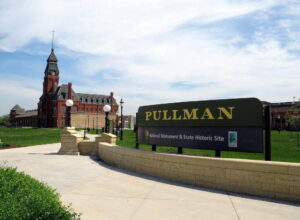
The company town was first generated in 1800. By 1883 it was home to more than 8,000 employees of the Pullman Palace Car Company. The workers were given housing that had a close community to the factories and buildings under the parent company.
However, the Pullman area over the next decades would soon implode upon itself. Worker wages were being cut, while housing and other expenses were still being kept at the same cost.
The employees would soon strike and perform walkouts in 1894. This led to the boycott of Pullman cars across the country, civil unrest, and an upheaval in national railroad traffic. This would continue until negotiations were met, although the company still suffered great effects.
Furthermore, the Pullman company had a hand in African American civil rights as well. African Americans comprised around 44% of the car company’s workforce in the year 1925. This made the Pullman company at the time the nation’s largest employer of African Americans.
Around the same time, the company had also come in accord with better conditions and higher wages with the Brotherhood of Sleeping Car Porters (BSCP). BSCP was the first African American labor union.
The Pullman National Park gets around 300,000 annual visitors. Lastly, it provides children and the local community with exhibits and community-engaging historical information.
Written By AriAnna Rathers
Sources:
NBC– A Chicago Lakeshore National Park? Some city voters cast ballots in favor of idea
Preservation Chicago– Chicago Lakefront National Park Coalition
National Parks– Pullman Historical National Park
Featured Image Courtesy of R Boed’s Flickr – Creative Commons
First Inset Image Courtesy of Chris Rycroft’s Flickr – Creative Commons
Second Inset Image Courtesy of Sean Marshall’s Flickr – Creative Commons




