






Fight Book Bans Act
On December 5, lawmakers brought a new bill to Congress regarding book bans. The bill is part of an effort to push back on nationwide book bans that effect the American education system.
The bill was formerly known as H.R. 6592. However, it now goes by the title “Fight Book Bans Act.” The act will give the Department of Education (DOE) agency to allow grants to schools and school districts to combat the restriction of certain books. This would include even the “costs such as attorney fees and court fees.”
Book bans have been put in place and effected America’s education system for decades. Representatives such as Florida’s Maxwell Frost, and other U.S. lawmakers, had gone to Washington to further the journey to end the bans across the country.
Frost had also made political commentary on book bans and why they really need to be end. He stated that bans further far-right agenda and that more youth are getting wind of this and pushing back. Frost stated, “Instead of changing their policies to appeal to young people, they want to change the way young people learn in schools to try to change what they think.”
Differing Opinions
Organizations such as PEN America, actively work against school’s book bans. The organization defines bans as actively restricting or diminishing the access to certain works based on the content. This can be enforced through parental, administrative, or governmental urgency.
One side tends to believe that parents have the right to dictate what content their children ingest in schools and libraries. Yet, it seems others are more prone to believe that to give into differing parental beliefs puts more of a strain on the education system that is already underserving its’ students.
Another belief held by those in favor of banning certain content is that many of the literature on the list are too sexually explicit and/or contain graphic depictions of violence and abuse.
However, those against bans believe these to be excuses. Furthermore, most of the books being banned contain historical violence, LGBTQ+ content, and honest real-world issues.
LGBTQ+
In 2021, the American Library Association (ALA) had compiled a list of the top ten challenged and banned books in schools and libraries. A large portion of these books are tailored and or written by members of the LGBTQ+ community.
This includes memoirs such as “Gender Queer: A Memoir” by Maia Kobabe. The graphic novel details their personal journey with gender. As well as “All Boys Aren’t Blue: A Memoir-Manifesto,” another memoir by LGBT activist George M. Johnson. Both were deemed too “sexually explicit”.
There were also LGBTQ+ works on the list by authors such as Jonathan Evison, Juno Dawson, and Susan Kuklin. Susan Kuklin’s work “Beyond Magenta,” highlights the story of six transgender teens through interviews and photographs.
Race and Social Issues
Other books on the list delt with issues of race, growing up, and abuse. ‘”The Bluest Eye” by Toni Morrison, “The Hate U Give” by Angie Thomas, and “The Absolutely True Diary of a Part-Time Indian.” All three novels follow the stories of youth of color and their struggle with race in their environments.
“The Bluest Eye” is about a young black girl and her desire for blue eyes and blonde hair, or the European beauty standard. However, it was seen as very controversial for its’ “depiction of child sexual abuse.”
“Hate U Give” follows the story of an African American girl who witnesses her friend get shot by a police officer. Critics had said the book held anti-police messages and pushed social agenda.
Lastly, “The Absolutely True Diary of a Part-Time Indian” follows the story of young Native American teen who leaves his school on his reservation to then attend an all-white school.
Teenage Angst
Growing up often comes with anxiety and a newborn deer’s way of navigating. As a direct result angst is a very favorable genre for young adults. Most stories with an angst description contain significant levels of characters feeling emotions such as fear, anxiety, or sadness. However, it can deal with certain issues that some believe to be “too adult” for the youth.
Some of these books that deal with growing up made the banned and or challenged list due to issues containing content that is deemed to be inappropriate for young adults.
Such as, “Out of Darkness” by Ashley Hope Pérez. The story deals with an interracial couple set in 1937 around the time of a schoolhouse explosion in Texas. The book was said to be too sexually explicit and depicted graphic abuse.
Another is by Jesse Andrew’s, titled “Me and Earl and the Dying Girl.” This book follows the story of two friends who are film buffs and the main character’s childhood friend who is a girl dying from leukemia. It was seen to be too sexually explicit and degrading to women.
All of these books are important through how they highlight marginalized communities, navigate growing up, and can give safe spaces for those struggling.
Written By Arianna Rathers
Sources:
CBS NEWS– Banned books: The 10 most commonly challenged books in the U.S. (and where to buy them)
UPI NEWS– Democrats unveil legislation to fund schools fighting book bans
CNN NEWS– Bestselling authors join Penguin Random House lawsuit over Iowa’s new book ban law
By Paradise Afs
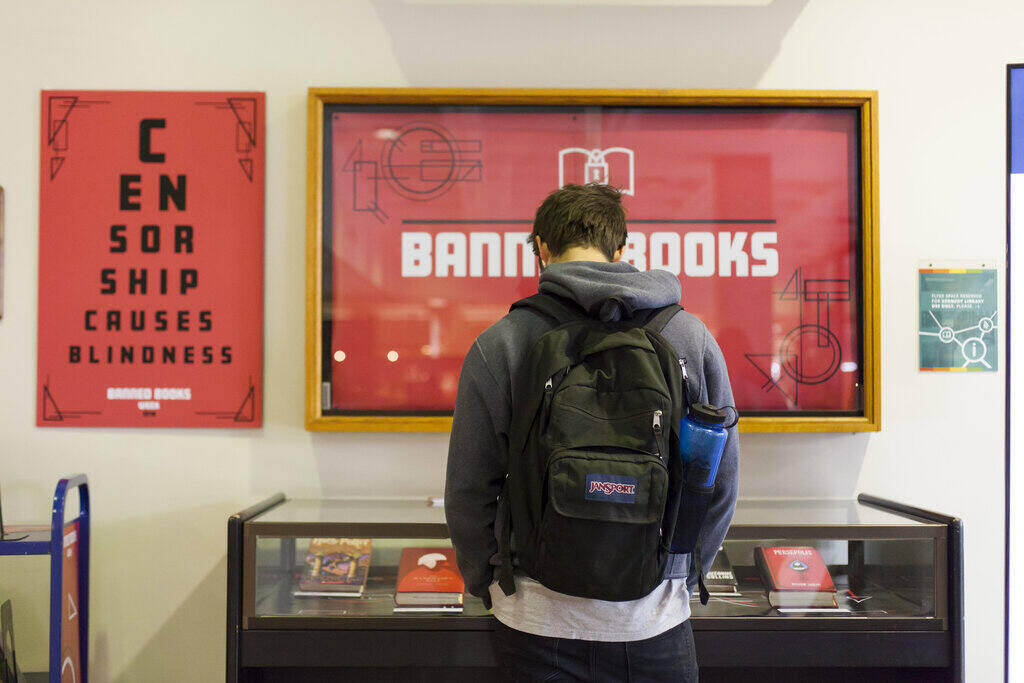
Featured Image Courtesy of Kennedy Library’s Flickr Page – Creative Commons License
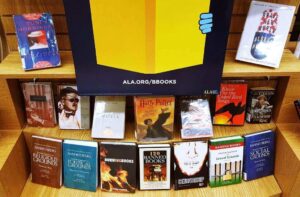
First Inset Image Courtesy of COM Library’s Flickr Page – Creative Commons License




