

















Mary Wollstonecraft was an English writer who dedicated herself to a life of writing and women’s equality. She is remembered for her significant contributions to feminism. Through her journey to Scandinavia, she shaped the art of travel writing as a literary genre. Wollstonecraft’s imagination and thoughts ultimately impacted the Romantic movement.
Brought up by a cruel father, Wollstonecraft left home and dedicated herself to a life of writing. As a woman from an impoverished household, her opportunities were few. Quickly she entered the most likely employment for someone of her gender and circumstances and worked as a school teacher, a lady’s companion, and a governess.
While working as a governess of the Kingsborough family in Ireland, Wollstonecraft completed her book, “Mary, A Fiction.” Later she worked as a translator and adviser to a noted publisher of radical texts, Joseph Johnson. She became a regular contributor to Analytical Review established by Johnson in 1788. Four years later, Wollstonecraft published her famous book, “A Vindication of the Rights of Woman in 1792.”
In this book, she renounced the idea of monarchy and called for a republican country. She was disheartened at characterizations of women as submissive figures in a male-dominated society, making this her best-known work. Since then, this book has been acknowledged as one of the most influential creations of the Enlightenment.
In her work, she stated that civilization breeds “gentle domestic brutes” and that a restricted existence creates frustrated women. It transforms them into intimidators of their children and housekeepers.
She purported that the key is an educational makeover to give women access to the same educational possibilities as men. At that time, her book was truly revolutionary and caused immense controversy.
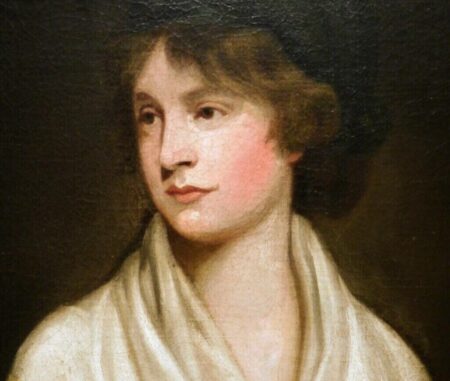
One challenging reason for the pronouncements was the thorough understanding of the female in human relations within a civilization controlled by greed and consumption. Her first publication, 1788, “Mary: A Fiction,” was on the education of daughters.
She then went on to write about history, politics, and diverse facets of philosophy in various genres that incorporated translations, critical reviews, novels, and pamphlets.
But, the scandalous aspects of her life were more noted than in her works. Nevertheless, her articles were of moral and aesthetic nature, and her published writings showed she had acquired a true command and good knowledge of the Bible and famous Ancient philosophers.
While Wollstonecraft lived the philosophic, feminist freedom she wrote about, she was scorned by many in her time because of the scandalous aspects of her life, reports the British Library.
A century after her death, Wollstonecraft was eventually acknowledged for her ethical and political writing, according to the Stanford Encyclopedia of Philosophy. Later she took her place in the pantheon of female literary greats beside her daughter Mary Shelley.
By 2016, scholars were using Wollstonecraft to publicize contemporary feminist discussions regarding education, autonomy, and nature.
There have been many influential women throughout history. Women like Wollstonecraft made a considerable impact on society through activism, art, politics, and leadership.
Wollstonecraft, April 27, 1759 – Sept. 10, 1797, was a political and moral philosopher whose critique of the circumstances of women in modern civilization retains much of its earliest radicalism. Wollstonecraft died of septicemia about ten days after her second daughter, Mary, was born.
Written by Janet Grace Ortigas
Edited by Cathy Milne-Ware
Sources:
Live Science: 10 Influential women in history; by Daisy Dobrijevic
Britannica: Mary Wollstonecraft Biography
Biography: Mary Wollstonecraft
Featured and Top Image Courtesy of Open Plaques’ Flickr Page – Creative Commons License
Inset Image Courtesy of Eden, Janine, and Jim’s Flickr Page – Creative Commons License




