















Last week, in Gabon, Central Africa, military officers have declared they are seizing power from President Ali Bongo Ondimba. The family’s half-century rule over the Central African nation is threatened in a stunning coup.
This isn’t the first time a coup attempt has come. In 2019 a group of soldiers and military officers stormed the state radio and television headquarters, took staff hostage, and declared they had taken control of the nation.
Gabon is located on the west coast of Central Africa and is known for its rich natural resources — particularly oil and cocoa. Despite having one of sub-Saharan Africa’s highest average yearly incomes per head, over a third of the population lives in poverty.
The Bongo Families Long Ruling
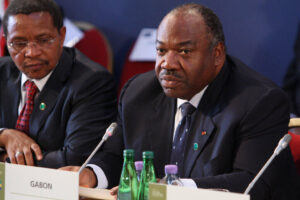
Bongo began his career in 1981, serving as foreign minister and congressman from 1989 to 1991, according to the Gabonese embassy website in the U.S. He was defense minister from 1999, before becoming president in 2009.
Bongo took over in 2009 on the death of his father Omar, who had ruled since 1967. Opponents say the family has done little to share the state’s oil and mining wealth with its 2.3 million people.
Bongo went up against 18 challengers. Many of those were pushing for change in the oil-rich but poverty-stricken nation.
Military Coup More in-Depth
After their recent election, the Gabon army put Bongo in a coup on house arrest. He has been declared the winner but others claim it was fraudulent. Saying they represented the armed forces, the officers declared on television that the election results were canceled. Borders closed and state institutions dissolved, after a tense vote that was set to extend the Bongo family’s more than half-century in power.
Within hours, generals met to discuss who would lead the transition and agreed by unanimous vote to appoint General Brice Oligui Nguema, former head of the presidential guard, according to another televised address.
Additionally, General Brice Oligui Nguema told Le Monde that military generals would meet on Wednesday to elect a leader for the transition of power, adding that he has not “yet” declared himself the new head of state in Gabon.
He said Bongo Ondimba, has been “retired” and is enjoying all his rights as an ordinary Gabonese citizen.
Reactions of Citizens
Men in army uniforms appeared on national television Wednesday. These men announce the president’s house arrest during the military takeover. This influences celebrations and reports of gunfire on the streets of the capital.
In one video presented by CNN, citizens can be seen shouting “Liberated!” and waving the Gabon flag in the Nzeng Ayong district of the capital, alongside military vehicles.
“I am marching today because I am joyful. After almost 60 years, the Bongos are out of power,” said Jules Lebigui, a 27-year-old who joined crowds in Libreville.
The Agence France-Presse news agency aired a video of the president pleading for help. In the video, he says “I am calling you to make noise.” he also states that he is separated from his family and doesn’t know their whereabouts.
The Gabon officers, calling themselves The Committee of Transition and the Restoration of Institutions, said the country faced “a severe institutional, political, economic, and social crisis”, and that the Aug. 26 vote was not credible.
They also said they had arrested the president’s son, Noureddin Bongo Valentin, and others for corruption and treason.
By Jamarion Thomas
Sources
BBC: Simple guide to Gabon coup
CNN: Military officers in Gabon declare coup and place president under house arrest
Reuters: Gabon officers declare military coup, President Ali Bongo detained
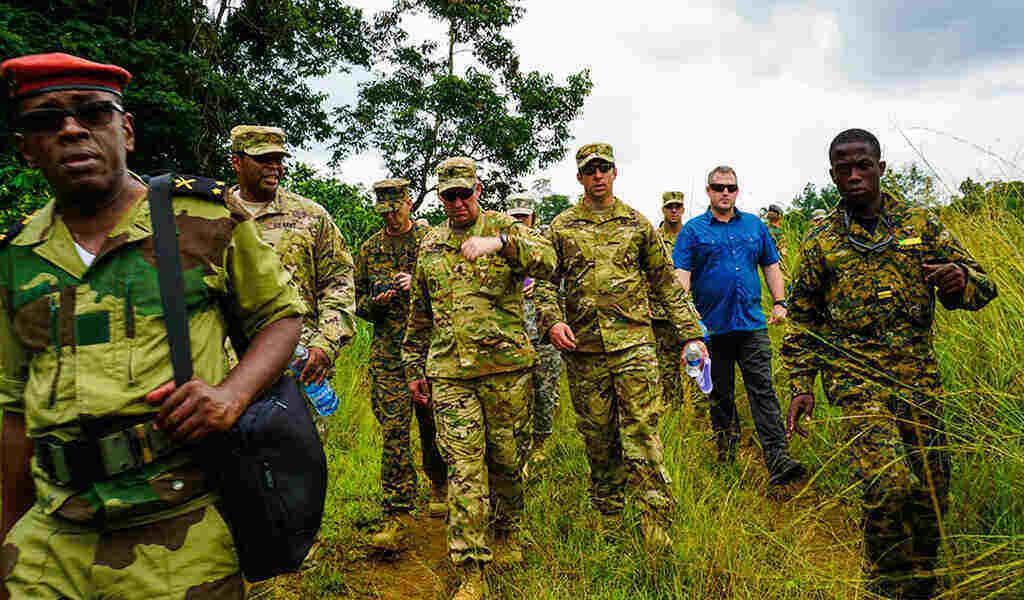
Top and Featured Image by by Capt. Jason Welch Courtesy of U.S. Army Southern European Task Force’s Flickr Page – Creative Commons License
Insert Image Courtesy of Foreign, Commonwealth, and Development’s Flickr Page – Creative Commons License




