















Importance Of This Bur Oak Tree
Some people may look at this tree and say, “This is just some random tree! Why is this even at the Lincoln Park Zoo!?” They say this without knowing how important this tree actually is. This Bur Oak Tree has been alive for nearly 300 years. “It was here before Chicago was officially a city, but it’s reached the end of its natural life,” stated CBS News. As this quote mentions, this is a piece of Chicago history, and it unfortunately is now at the end. Many are saddened to see such a valuable and beautiful piece of Chicago history will be taken away. However, people can rest assured that its legacy will forever live on, as the Lincoln Park Zoo has a plan.
Lincoln Park Zoo’s Plan
The Lincoln Park Zoo has a plan to keep this oak tree’s legacy intact. “The tree’s legacy will live on through a partnership with the Morton Arboretum, where 36 of its scions were grafted onto rootstock for propagation to preserve its genetics, according to zoo leaders. Slices of the tree will also be given to the Illinois State Archaeological Survey to support dendrological and climate studies in Cook County and with the Forest Preserve,” according to the Block Club Chicago. Clearly, they have several measures in place to help preserve this tree, despite it not being up and standing anymore. Although nobody really knows what they will do after preserving genetics, they may plant more trees of the same nature. If this does happen in the future, then the tree never really died after all.
Were There Attempts at Saving the Tree and Prolonging its Lifespan?
There were several people that were trying different things to prolong the lifespan since it’s incredibly important in Chicago’s history. As they tried, and many of their attempts failed, their options continued to decrease over time. Eventually, they were completely out of options.
Their only option was to wait until it was the right time to cut it down and preserve this oak tree’s genetics. “For months, staff at the zoo tried to keep the tree alive, pumping nutrients into its soil,” reported Fox 32 News. Unfortunately, pumping nutrients did not work whatsoever, and eventually, it was time to cut down the oak tree. As disheartening as it is to see a piece of Chicago history get cut down, its legacy will forever live on.
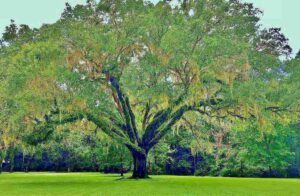
More Bur Oaks Over 100 Years Old
On the other hand, even though this oak tree is being cut down, there is a light at the end of the tunnel. “It’s really sad to be losing one of our oldest trees at the zoo, but everything has an end of life, and we’re happy to say we do have many other bur oaks that are fairly large and over 100 years old,” stated Katrina Quint, the zoo’s director of horticulture. Although they will not replace this amazing oak tree, there is still history wrapped around each tree no matter what.
The Future Of This Oak Tree, and What Happened Before Cutting It Down
To show their respect for this oak tree, there were religious leaders there before it was cut down. “On Sunday, Native American religious leaders conducted a traditional blessing for the tree,” stated Fox 32 News. This is a gesture that was shown to honor this tree, which has been standing for nearly 300 long years. However, even though the physical tree is dying, its legacy will continue to live on, not only in the arboretum but in the hearts of many as well.
Written by David Loran Jr
Sources:
CBS News: There’s still time to see nearly 300-year-old tree at Lincoln Park Zoo
Block Club Chicago: Dying Lincoln Park Zoo Oak Tree Older Than Chicago To Be Cut Down Monday. Here’s How To Say Goodbye
Fox 32 News: Tree older than Chicago gets one more day to stand
Top and Featured Image Courtesy of Wildcat Dunny’s Flickr Page – Creative Commons License
Inset Image Courtesy of Olin Gilbert’s Flickr Page – Creative Commons License




