















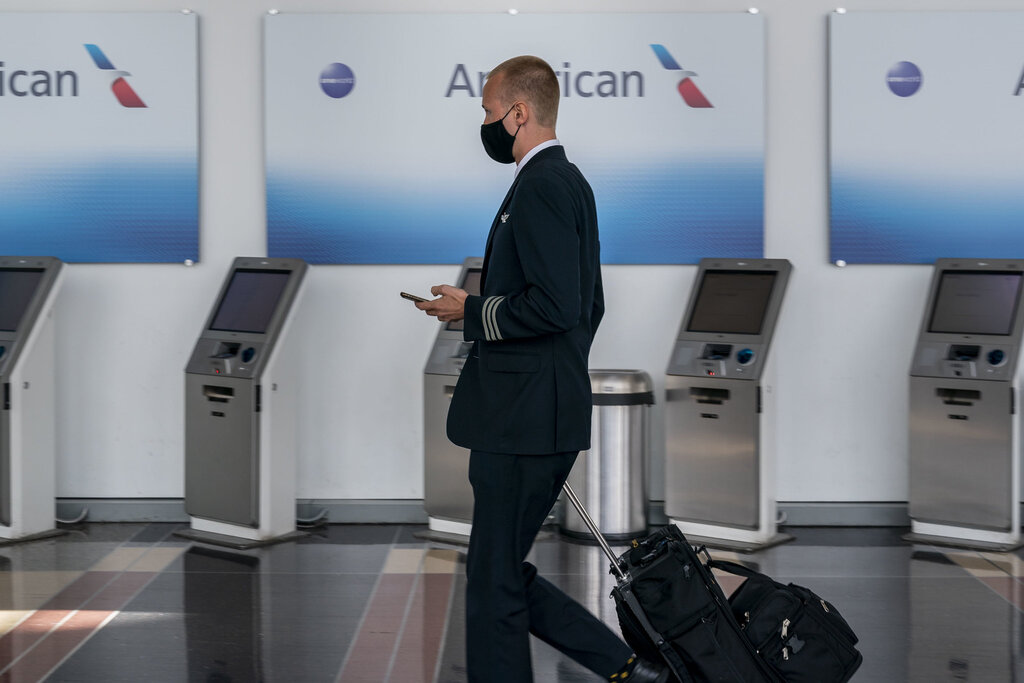
The Transportation Security Administration (TSA) extended the airline mask mandate for another month. Officials announced that travelers must continue to wear masks until April 18 when flying commercially. The extension applies to using public buses, ferries, and subways.
The Centers for Disease Control and Prevention (CDC) announced a shift in COVID-19 guidance last month, stating that most Americans are safe without a mask in indoor settings. The recommendation dramatically shifted from the previous one, which recommended facial masks in countries with a high transmission category. Last Thursday, the metrics update revealed that 90% of Americans live in low or medium COVID-19 transmission, so they need not wear masks.
Generally, society has enough of wearing masks. During President Joe Biden’s State of the Union address, nobody wore them. Masks became an option at major school systems after some data showing academic damage emerged. Yet, the mask mandate still applies to airplanes and other public modes of transportation.
Airlines want this mandate to go away as it is the source of onboard disruption. However, the flight attendant union expects this extension will keep passengers and crews protected.
The wearing of masks by the airlines was established in mid-2020 to keep the coronavirus from spreading. At the time, Donald Trump’s administration declined to implement the mask mandate. But, shortly after President Biden took office, he issued the order requiring citizens to wear masks in all transportation settings. The mandate fueled a rash conflict on airports and planes.
Revised CDC Guidance
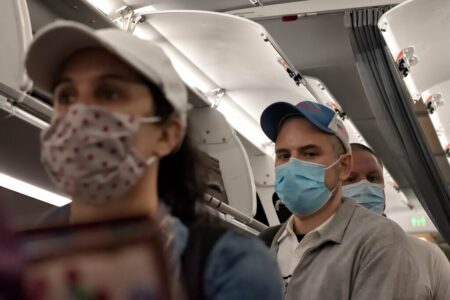
The revised CDC guidance gave hope to those who wish to abolish the mask mandate. Rather than focusing only on case counts, CDC considers other factors like room utilization and hospitalization rates, creating “low, medium, or high” risk by county. In addition, CDC offered corresponding mask guidance in an interactive site where people can check the status of each county.
The challenge to airlines is that if a person flies from one of the risk regions to another, and in between, there is no formal risk assessment for the plane or airports, which makes it harder to remove the airline mask mandate.
Airline Safety Compromised
Last summer, 75% of onboard violence was related to mask-wearing policies being misunderstood, ignored, or violated. While there are many reasons for increased escalation, removing the mask mandate could minimize the violence. Flight attendants may wear masks on the assumption that masks keep individuals from passing the virus to others.
Unclear If Masks Improve Airline Safety
Southwest Airlines retired CEO Gary Kelly has testified to Congress recently that masks do little to help in airplanes. This was disputed by many claiming that masks have helped on commercial planes. Reportedly, the air inside the aircraft has a continual recirculation system using outside air and HEPA filtering to make it safer. However, while it is rational to think how using masks has helped, it is uncertain how its implementation improved the situation, according to The Washington Post.
Sign Of Normalcy and Political Angle
Many airlines wanted to remove the mask mandate to stress a sense of normalcy and encourage more travelers. On its own, the airline mandate may not have this effect, but in combination with further loosening of rules in many areas, we could be looking at the most normal summer since 2019.
In the end, stopping the airline mask mandate makes the most sense. Those pushing to end the directive cannot think of this as a solution that may extend beyond this summer, assuming that no dangerous variant appears.
Written by Janet Grace Ortigas
Edited by Cathy Milne-Ware
Sources:
NBC Chicago: Federal Airline Mask Mandate Set to End March 18, But Will It Be Extended?
The Washington Post: Mask mandate extended for airline flights and on public transportation until April 18; by By Lori Aratani, Ian Duncan, and Tyler Pager
Forbes: Extending The Airline Mask Mandate Makes Sense To Some, Politics Aside; by Ben Baldanza
Featured and Top Image Courtesy of International Monetary Fund’s Flickr Page – Creative Commons License
Inset Image Courtesy of A Guy Named Nyal’s Flickr Page – Creative Commons License




