
















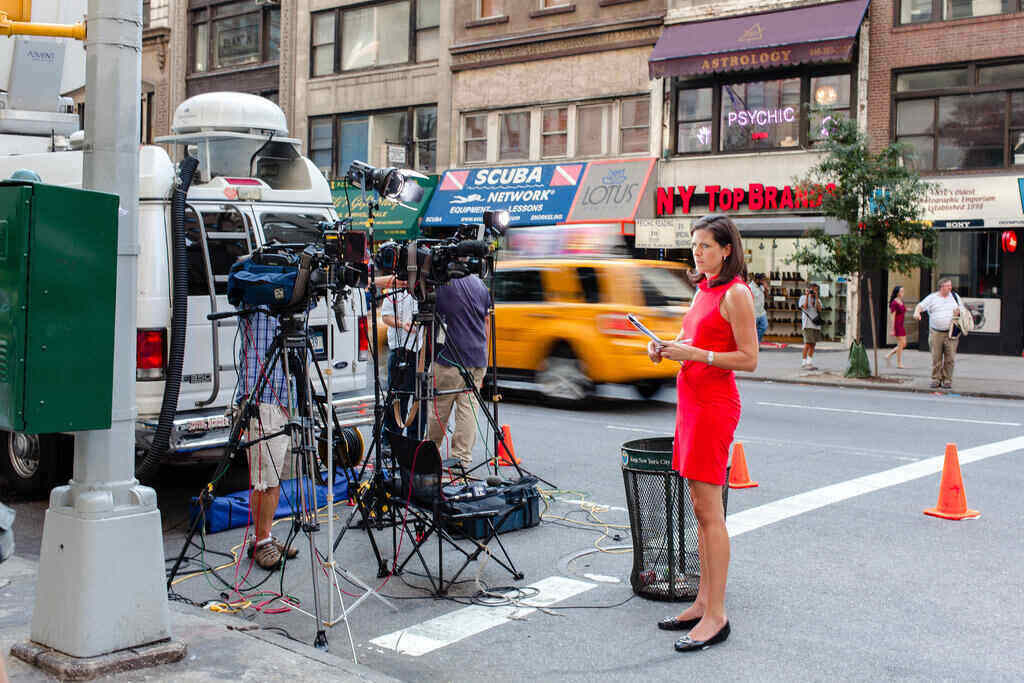
News is how people learn about the world beyond their direct experience. This is how people discover what has happened; what will occur next with family, friends, neighbors, and people around the country and world. People need the news to live their lives, protect themselves, bond with one another, and identify friends and enemies. However, over time, people have learned that journalism hasn’t always been top-notch.
The press helps people make sense of the world. It does so by adding more context and helping people answer new questions as information is gathered. This is why people care about the character of the news and journalism people get.
News, whether good or bad, influences the quality of people’s lives, their thoughts, and their culture. From the beginning, the news created what technologists today call the “social flow” of information. Author Thomas Cahill wrote several books on the history of religion. He stated, “The worldview of a people…the invisible fears and desires…in a culture’s stories.”
Digital Era Starts the Distrust in News and Journalism
 In June 1997, 25 journalists congregated at the Harvard Faculty Club. They consisted of editors, top journalism educators, prominent authors, and influential names on TV and the radio. They gathered under the consensus that there was something wrong with the profession. The running feeling amongst them was that they barely recognized what they considered journalism in most of their colleagues’ work. They feared their profession was damaging the public interest instead of serving it.
In turn, the public had begun to distrust journalists. So much so that they had started to hate them. This feeling began before the birth of the internet. This feeling would only get worse as the years went on.
In 1999, around 45% of Americans believed the press protected democracy. A year later, this number had further fallen by 30%. In 2020, 36% of people felt that journalism hurt democracy with 33% unsure.
Growing Skepticism
Around this same time, journalists began to share the growing skepticism about the press. “In the newsroom, we no longer talk about journalism,” stated Maxwell King, former editor of “The Philadelphia Inquirer. Another editor at the meeting concurred, “We are consumed with business pressure and the bottom line.”
While many weren’t concerned that the value of the news had deteriorated, they were worried that the press no longer believed in those values. News started to become entertainment and vice versa. Profit margins were tied to journalists’ bonuses and not to the quality of the work itself.
As digital technology grew, so did the advertising revenue model, which financed journalism. By 2005, the newspaper revenue reached its peak in growth. At that time, news companies that focused on gathering and verifying the news still dominated the flow of information the public received.
Tech Companies Influences
The technology companies’ values were soaked in massing huge audiences by resisting editing, review, verification, or a focus on what people had in common. They built their companies to isolate people by their demographics, political beliefs, and interests, which included prejudices and hate. All so they could target their advertising.
Thus started the commercialization of educational and journalistic institutions. They became more concerned with growing profits than investing in innovative journalism that could assist in engaging new audiences.
The thought of user-generated content had not risen. User-generated content is “news that everyone takes part in, including state-sponsored agents using disinformation.” As technology progressed, “new forms of entertainment emerged to [compete] for people’s attention.” With that media changed, losing a portion of its audience, then it adapted as a smaller entity.
Surviving Journalism
 Journalism has survived due to its ability to provide something unique to a culture: reliable, independent, accurate, and comprehensive information that people require to make sense of the world around them.
As a whole, journalism provides something more than subverts democratic culture. When the government controls the news, they only release what they feel is pertinent to the people. As seen in places like China and Singapore, where news is controlled to discourage citizens’ participation in public life while pushing capitalism.
The public’s growing distaste for journalism, which started in the 1980s, started with the rejection of journalism’s values as they transmitted disinformation. Now, people continue to distrust the press because they believe journalists continue to live up to the values they are supposed to uphold.
Ethics in News and Journalism
News and those in the journalism field should follow a few basic ethics to ensure they are telling the whole truth to their audiences. These ethics include:
- To tell the truth. Giving the facts allows citizens to come to their own decision without being guided to think one way or another.
- Be loyal to their citizens. Doing so will gain a bigger audience, one that trusts what they are being told.
- Practice the discipline of verification. It is important to verify the facts before relaying them to the public. When news reporters cannot verify the facts, they risk spreading misinformation.
- Maintain independence from those they cover. It is important to not compromise the news with self-interests, intimidation from power, or to become seduced by sources.
- Serve as a monitor of power.
- Present the news in a way that is comprehensive and proportional.
Some believe fairness and balance should also be in play. However, fairness is subjective, which can offer little guidance on how to operate. Same for balance. It is limited and often distorted to the truth.
Recent Surveys of People’s Views of the News
Last year, The Economist/YouGov sent out a poll to Americans asking how much they trusted 22 prominent media organizations. This year, they revisited the subject. Only this time they asked how much people trusted 56 broadcast, digital, print, and social media outlets.
Both polls showed Americans had the most trust in The Weather Channel. Next, they trusted PBS, the United Kingdom’s BBC, followed by The Wall Street Journal. Near the end of the list was CNN, Yahoo News, Axios, Politico, Fox News, HuffPost, and BuzzFeed News.
In February, Gallup and the Knight Foundation released a survey asking people their views on news outlets. The survey asked if people believed that national news organizations didn’t intentionally mislead. The Foundation found that 50% of those polled disagreed with the comment with 25% agreeing.
 Journalism News Needs to Go Beyond
Furthermore, the Foundation’s study found that 52% of those polled didn’t think news outlets cared “about the best interests of their readers, viewers, and listeners.” Only 23% felt that journalists acted in the public’s best interest.
While those statistics are concerning, they emphasize the need for the press to verify the facts. It is the job of those who provide the news to make sure they are correctly informing the public.
That’s why places like The News School and Chicago Leader instill journalism ethics in all who publish for them.
By Sheena Robertson
Sources:
The Element of Journalism, Revised and Updated 4th Edition (Kindle Edition) By Bill Kovach & Tom Rosenstiel
YouGov: Trust in Media 2023: What news outlets do Americans trust most for information?
Fortune: Trust in media is so low that half of Americans now believe that news organizations deliberately mislead them
Top and Featured Image Courtesy of Matt Biddulph‘s Flickr Page – Creative Commons License
Inset Images Courtesy of TNS Staff




