















How Do Potholes Form?
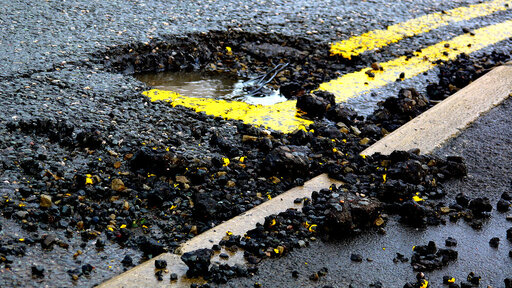
Potholes develop in various places. Potholes are cracked and worn-out holes in the ground on streets caused by scientific forces. They can also be caused by the friction of the tires rolling on the ground, expanding it. This expansion can form cracks and holes in the road, allowing water to seep through these cracks. Water can come from rain or snowfall. The water then freezes later on when the temperature drops and expands the surface, pushing against the edges of the cracks.
That is why these holes are more likely to develop in areas that get a lot of snow or rain. In cooler climates, the freeze-and-thaw cycle can turn tiny cracks in the ground into holes within seconds. But living in an area with no snow and rainfall or an area that’s always warm doesn’t completely mean there aren’t any holes present. Water eats away at road surfaces in any climate, so even without a freeze-and-thaw cycle, water can still get underneath pavements and cause large cracks called divots.
Another way potholes form is when the temperature goes back up and melts the water in these tiny cracks on the road, leaving divots. When people drive on a surface that has a divot below it, the weight pushes the top layer of pavement into the space, creating a hole. But why are these holes such a major problem?

The Effect on Cars from Potholes
Holes can cause severe problems for people driving in vehicles. Speeding over these holes in the streets can ruin the tires on the car. This may also lead to tires being blown out.
A married couple, Gina Petrick-Sands and Bill Petrick-Sands live in Chicago, where there are a numerous amount of potholes on the streets and highways. The couple lives near Navy Pier and wanted to travel down to suburban Lockport to celebrate their 3-year-old grandson’s birthday.
As they drove through DuSable Lake Shore Drive, their car hit a big hole near McCormick Place. This blew out one of their front tires and damaged a rear tire.
Not only did this cause them to be four hours late to the birthday party, but they also had to pay $1,200 to repair the damages with the help of AAA.
AAA is a popular car business that provides roadside assistance and auto repairs. The insurance company stated that 57% of drivers are affected by potholes all across the country this year as they seek repairs on their cars. They issued a warning for drivers in Illinois and Indiana, telling them to drive safely and slowly. Driving fast over these holes can lead to terrible damage, so citizens in these states are encouraged to drive with caution.
Most people, though, already know about the effects of potholes. So they try to avoid them by steering out of the way. But this could also be dangerous.
The Dangers of Avoiding Potholes
When a hole is seen on the road, most people’s first thought to avoid it is to swerve and move the car out of its path immediately. Doing this can be dangerous though and lead to deadly accidents. Swerving the car so suddenly alerts and takes other drivers by surprise, causing a car accident. Holes in the street make drivers lose control of their cars and make them focus on the hole instead of their safety.
Some ways that Chicagoans can avoid this is to keep both hands on the steering wheel, at all times. This allows the driver to stay in control of the car and swerve back onto said road after avoiding the pothole. They should also check their tires regularly, especially the tire pressure. Safe tire pressure psi ranges from car to car, but most should be at about 30-35 psi.
Chicago has many of these holes in the ground all over the city. They are avoidable, but they will worsen over time to the point where removal is needed. But until then, Chicagoans must drive with caution.
By Micah Grison
Sources:
Fox 32 Chicago: Pothole Problems: Rough Roads are an Expensive Nuisance for Chicagoans
Wonderpolis: What is a Pothole?
Entrepreneurship in a Box: How to Swerve the Risk and Dangers of Driving Over Potholes
Top and Featured Image Courtesy of _chrisUK’s Flickr Page – Creative Commons License
Inset Image Courtesy of Blondinrikard Fröberg’s Flickr Page – Creative Commons License




