













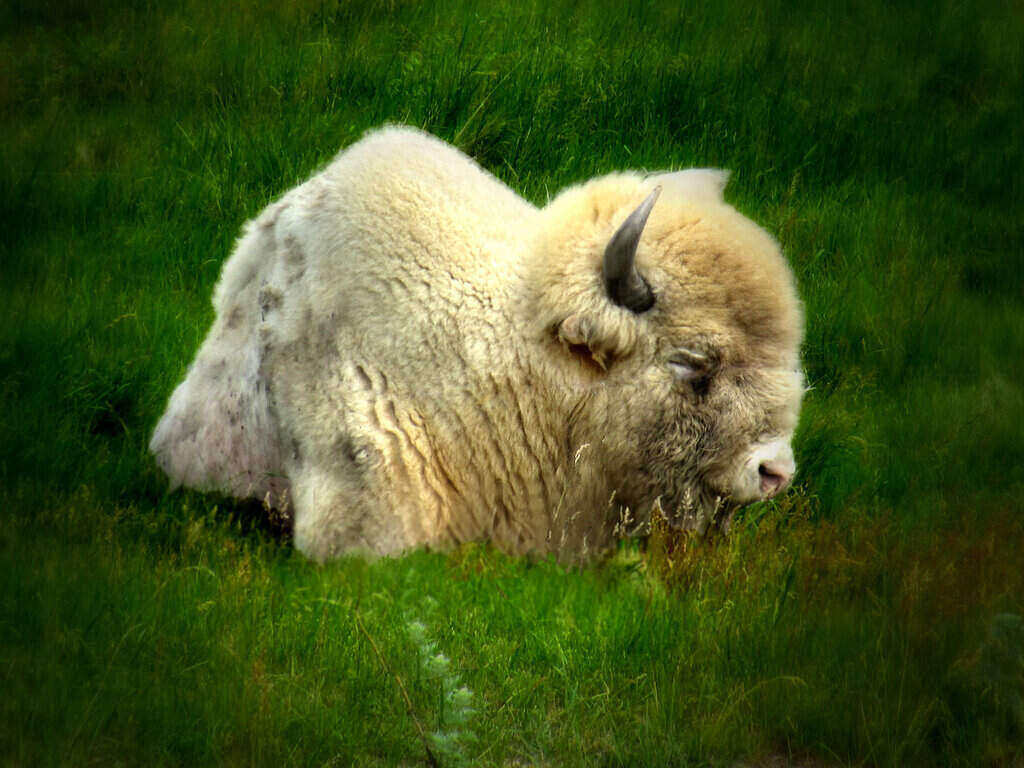
A rare white bison has been born in a Wyoming state park. The State Parks shared a photo of the one-in-a-million calf on May 16. The calf and its mother live in Bear River State Park in Evanston. At the time of birth, the white calf weighed 30 pounds, which is on the smaller side. However, officials say the rare bison calf is doing well.
At first, some people thought the bison was an albino. However, Bear River State Park clarified on Facebook that it wasn’t an albino. The animal has a rare genetic makeup that gives it white fur.
In 2021, the park received two white bison heifers. White Hope, the calf’s mother, was bred by a resident bull at the site. The calf is the first white bison to be born at Bear River State Park.
The Birth of a Sacred Animal
For the First Nation people, the birth of the white bison is a good omen. They are considered to be sacred animals that are harbingers of hope, peace, rebirth, and unity. For many, being in the presence of such a beast could beast a spiritual experience.
To honor the presence of the white bison, it is not uncommon for people to bring offerings. Additionally, they would adorn corrals with medicine pouches and prayer flags as a sign of respect.
Native Americans have shared stories of the white bison for many generations. One such story is the White Buffalo Calf Woman or Ptesan Wi. The Cherokee, Lakota, Navaho, Dakota, and Sioux incorporate Ptesan Wi’s teachings in their prayers and celebrate the white bison calf.
Legend Has It
 Many moons ago there was a great famine and a Lakota chief sent two scouts out to find food. As they hunted for food, the two men saw a figure in the distance. Upon approaching the figure they discovered it was a beautiful woman.
One of the men became filled with sexual desire. The other scout warned the man that the woman appeared to be sacred. However, the one filled with desire ignored him and approached the woman. Not long after, a cloud encompassed the pair and the man turned to a pile of bones.
Filled with fear the second man approached the woman. She explained that she was holy or wakan. The woman directed the scout to go back to his tribe and inform them of her arrival. When Ptesan Wi arrived she brought the White Buffalo Calf pipe (chanupa) which is the most sacred object an individual can possess. It taught them seven sacred ways to pray.
Before Turning into a White Bison
Prior to her departure, she told the people that she would return one day to restore harmony and spirituality to a troubled world. Then, Ptesan Wi rolled upon the earth four times, changing color each time, before she departed she turned into a white bison calf. In addition, upon her departure, great herds of buffalo surrounded the First People’s camps.
Now, when a white buffalo or bison is born it is a sign, their prayers are being heard and the promises of Ptesan Wi’s prophecy are being fulfilled.
Omen of a White Bison Calf
The birth of the most sacred living thing on earth is a momentous event. The birth of the white calf is a sign of life’s sacred loop. Some First People say the white bison calf is a good omen. “The birth takes place in the most unexpected place and often happens among the poorest of people,” according to the National Bison Association. “The birth is sacred within the [Native American] communities because it brings a sense of hope and is a sign that good times are about to happen.”
“Most of the bison you find anymore have some cattle genetics,” Bear River State Park Tyfani Sager told Cowboy State Daily. In the 1800s, bison were nearly hunted to extinction. When people became “concerned about extinction and cattle inbreeding was used. A white bison birth is still fairly rare.”
Near Extinction
Bison was the primary food source for most Native Americans. When the civil war broke out many Natives were forced from their lands. Rumors stated that they were causing problems with local settlers and wagon trains that passed the areas. Back then, and sometimes still today, the White settlers called Native Americans “savages” and created horrible stories about them.
Native Americans used all the parts of the bison. The United States military wanted to eliminate the threat of the Plains People. To do so, they decided this could be done by taking away their food source. Ultimately, this forced them to live on reservations.
In order to keep control of Native Americans, the military ordered the mass killing of the bison. So the First People couldn’t use the meat; they left the animals where they dropped, allowing them to rot.
Killing Bison for Railroads
Railway authorities were also guilty of the near extinction of the bison. They felt by thinning out the bison population, these risks were reduced.
 Especially because the locomotives were not great at breaking. The bison created lots of damage when they were hit. Shooters would sit on top of the train roofs as the trains were slowed because of the herds. This allowed them to “hunt” the animals from where they sat.
Rejoice Over the Birth of the White Bison Calf
Lakota Man tweeted, “The births of white bison calf’s are incredibly good signs. They convey a deeply profound spiritual omen of goodness and hope and positivity. Also, they are believed to signify that the Creator has heard humanity’s prayers and lamentations for salvation and an aggregate healing.” He did not add the exact location.
One Twitter user replied to Lakota Man’s post saying, “I lived in Colorado for about 20 years. There were white bison born within a mile of my house. They were entrusted to a local tribe for the same reason you state.”
#Evanston #Wyoming A white bison named Wyoming Hope gave birth Tuesday morning to a 1-in-10 million white bison calf at Bear Lake State Park. A 30-pound rare white bison calf hit the ground at the Bear River State Park near Evanston, Wyoming. @CoachellaJones… pic.twitter.com/2Xs8osUQpP
— SLCScanner (@SLCScanner) May 27, 2023
By Sheena Robertson
Sources:
CBS News: 1-in-10-million rare white bison born at Wyoming state park
National Park Service: Bison Bellows: The birth of a white buffalo calf
North American Nature: What Caused The Near Extinction Of Bison?
Top and Featured Image Courtesy of Bill Tanata‘s Flickr Page – Creative Commons License
First Inset Image Courtesy of Bill Tanata‘s Flickr Page – Creative Commons License
Second Inset Image Courtesy of Los Paseos‘ Flickr Page – Creative Commons License




