















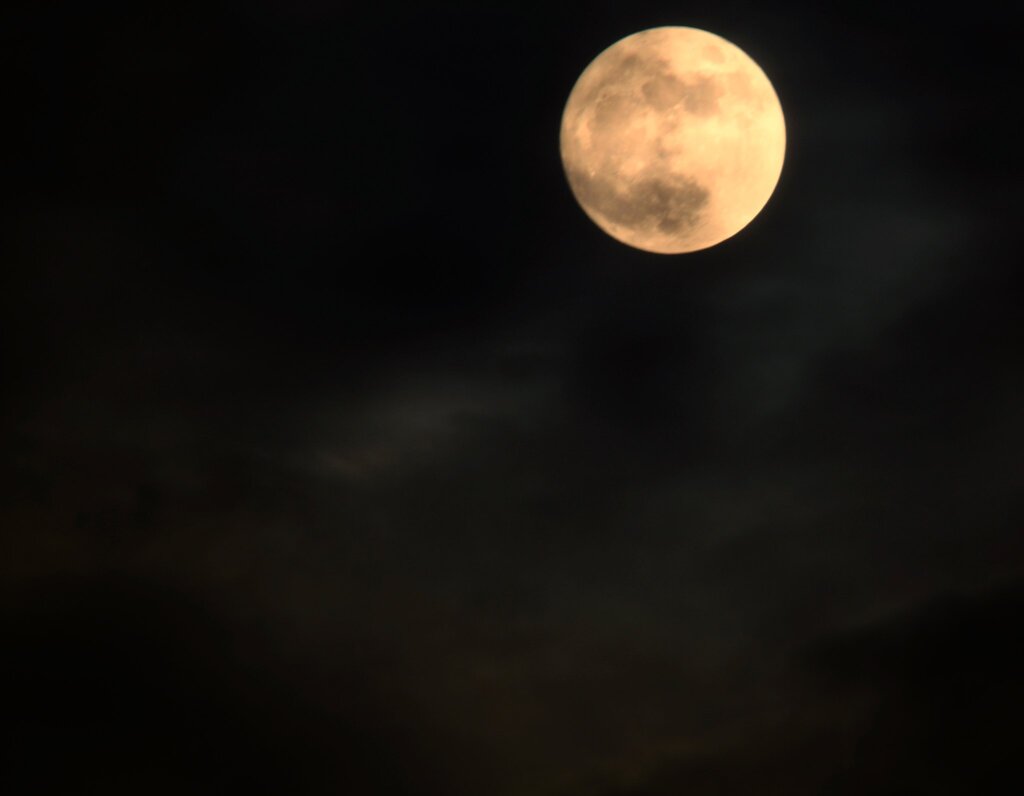
Findings posted Monday, October 23, in the journal Geochemical Perspectives Letters, have proven the first proposed age of the Moon was incorrect. Scientists previously believed that the Earth’s celestial satellite was 4.425 billion years old. However, astronomers have now dated it to be 4.46 billion years old.
Theia and the Moon Theory
One theory of the creation of the moon is that when the Solar System was still new it was a very chaotic environment with many celestial bodies often colliding with each other, creating chaos. For example, a Mars-sized object smacked into a proto-planet Earth when it was only 100 million years old.
Scientists nicknamed the Mars-sized proto-planet, Theia. A proto-planet is a young, still-forming planet. This collision between Earth and Theia then sent magma and debris flying out. This then would cool and form what we know as the moon. Scientists even believe that this solar event could have melded Earth and Theia together.
Yet, once the displaced magma of the Earth cooled it formed a rocky structure that then became the moon. Kickstarting its birthday of 4.46 billion years.
Another opposing theory is that the moon was formed elsewhere and was pulled into Earth’s gravitational pull.
Calculating the Age of The Nightly Celestial Satellite
Scientists have been able to calculate the new age of our celestial satellite through the use of zircon crystals. Zircon crystals are formed from cooled magma rocks since they can’t form at hot temperatures. According to Field Museum of Natural History in Chicago Senior Director, Philipp Heck, they’re created from zirconium, oxygen, silicon, as well as elements such as uranium.
Astronomers reanalyzed the moon debris brought back from the Apollo 17 mission. The Dec. 11, 1972, Apollo 17 mission consisted of NASA astronaut Eugene Cernan and Harrison Schmitt landing on the moon. Amongst setting up They collected dust and rocks and other lunar samples from the moon’s surface, set up equipment, took photos, and gathered other crucial information.
A new analysis of these samples shows that the earth is older through the tracking of the age of the zircon crystals. This is done by analyzing the zircon crystal traces. This dates them back to 4.46 billion years.
Written By AriAnna Rathers
Sources:
Discover– The Moon Is Even Older Than Scientists Thought
CNN– Rock collected by Apollo 17 astronauts reveals the moon’s true age
Popular Mechanics– The Moon is 40 Million Years Older Than We Thought
Featured and Top Image Courtesy of Blondinrikard Fröberg’s Flickr Page – Creative Commons License
Inset Image by NASA Courtesy of NASA’s Marshall Space Flight Center’s Flickr Page – Creative Commons License




