















The Tree of Life, growth and eternity, is a concept that spans across different cultures, religions, and philosophies, symbolizing various profound ideas about existence, interconnection, and the universe. Its roots run deep in history, embodying themes of growth, strength, and interconnectedness that resonate through myths, art, and spirituality.
Historical Roots and Cultural Significance
The Bush of Life concept appears in many ancient cultures, each imbuing it with unique meaning and significance. In ancient Mesopotamia, the Tree of Life was associated with the gods and was a central feature in their cosmology. The Sumerians depicted it as a symbol of eternal life, with gods and goddesses standing beside it, indicating its divine significance.
In ancient Egypt, the Bush of Life symbolized the cycle of life and death, with connections to the myth of Osiris, the God of the afterlife. The tree represented both the growth of life and the rejuvenation of the soul in the afterlife.
For the Celts, the Bush of Life, or Crann Bethadh, was a symbol of balance and harmony. They believed that trees were ancestors of human beings and held knowledge of the past, present, and future. The Celtic Tree of Life depicted an oak tree with branches and roots forming a circle, symbolizing the eternal cycle of life and nature’s interconnection.
Spiritual and Religious Symbolism
In religious contexts, the Tree of Life growth and eternity holds a prominent place. In Christianity, it appears in the “Book of Genesis,” located in the Garden of Eden, alongside the bush of “Knowledge of Good and Evil.” It represents immortality and the divine provision of life. The Tree of Life reappears in the “Book of Revelation “as a promise of eternal life to the faithful, growing in the paradise of God.In Judaism, the bush of Life (Etz Chaim) is a metaphor for the Torah, representing wisdom, life, and God’s eternal presence. It is often depicted in synagogues and Jewish art as a bush with roots in the ground and branches reaching towards the heavens, symbolizing the connection between earthly and divine knowledge.
In Norse mythology, Yggdrasil, the immense ash tree, serves as the World bush, connecting the nine realms of the cosmos. Its roots extend into the well of Urd, where the fates reside, and its branches reach the heavens, embodying the universe’s structure and the life force that sustains it.
Philosophical Interpretations
Philosophically, the Bush of Life has been interpreted as a representation of the interconnectedness of all life and the cosmos. It symbolizes the idea that all living beings are part of a larger, interdependent system. This idea resonates with ecological awareness and the understanding that human actions impact the broader environment.
In modern times, the Bush of Life has been adopted as a symbol in various contexts, including science. In evolutionary biology, the Bush of Life represents the relationships between different species, illustrating the process of evolution. Charles Darwin’s famous sketch of the Bush of Life shows how species diverge from common ancestors, reflecting the interconnectedness of all life forms through evolutionary history.
Artistic Representations
The Bush of Life has inspired countless artists throughout history. It appears in ancient carvings, illuminated manuscripts, paintings, and modern art. Each depiction varies, reflecting the artist’s cultural background and personal interpretation of its symbolism.
Gustav Klimt, an Austrian symbolist painter, created one of the most famous modern representations of the bush of Life in his 1909 painting. Klimt’s work showcases a stylized, golden tree with swirling branches, merging Art Nouveau aesthetics with deep symbolic meaning. His Tree of Life conveys themes of connection, continuity, and the interplay of life and death.
Contemporary Significance
In the contemporary culture. The Bush of Life continues to be a powerful symbol. It appears in jewelry, tattoos, and various forms of popular media. Its enduring appeal lies in its ability to convey universal concepts such as growth, resilience, and interconnectedness.
As a metaphor, the Bush of Life encourages individuals to reflect on their place in the world. The connections they share with others, and the natural environment. It reminds us of the cyclical nature of existence and the importance of nurturing our roots while reaching for the sky.
A Symbol of Connection
The Tree of Life is a timeless symbol that transcends cultural and religious boundaries, embodying profound ideas about existence, growth, and the interconnectedness of all life. Whether through ancient mythology, religious texts, philosophical discourse, or artistic expression, the Tree of Life continues to inspire and resonate with people across the globe. offering a rich tapestry of meaning and a reminder of our shared human experience.
Written by Adrianna Murrell
Sources:
Science News – The Tree of Life Gets a Makeover by Susan Milius
CRAM – Importance of Trees Essay by CRAM
BBC- What Trees Teach Us About Life and Happiness by Lindsay Becker
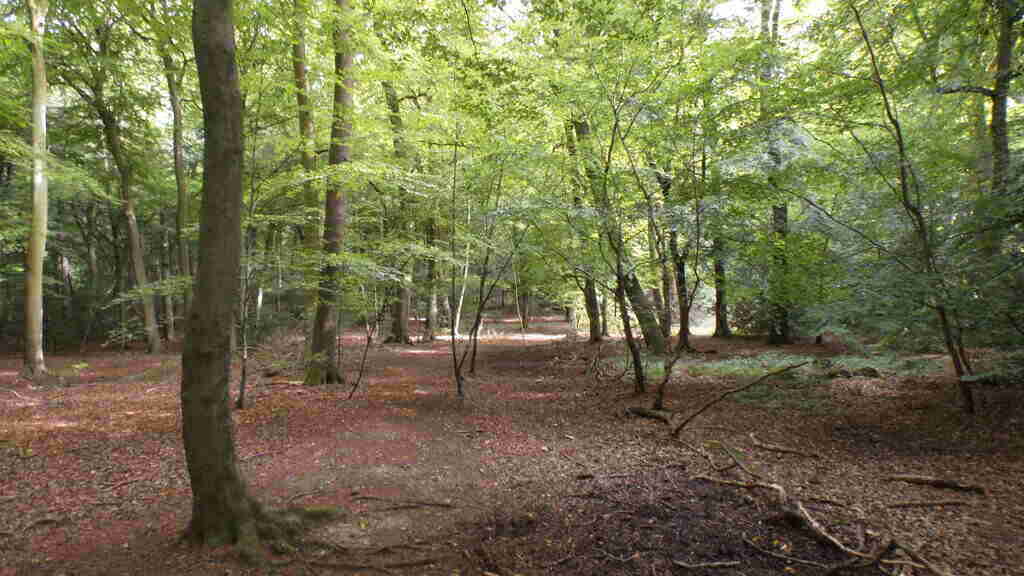
Feature image courtesy of oatsy40 Flickr Page – Creative Commons License
inset image courtesy of Stanley Zimny Flickr Page – Creative Commons License




