














It is no secret that racial bias plays a part in society; it has propelled misleading and hateful claims about darker-skinned people from those in power for centuries. But the profound impact that it has had on the African-American community continues to affect the medical field.
During recent events relating to the COVID-19 vaccine, many urban communities were greatly affected and in dire need of medical services. For example, the risk for African-Americans to be hospitalized because of COVID-19 as of September 2021 is 2.8 times greater than the risk for White, Non-Hispanic people.
Despite this, most African-Americans either refuse to get the vaccine or do not trust its necessity. Research from NPR in December of last year showed that 42% of African-Americans were willing to get the vaccine, compared to a whopping 83% of Asian Americans, 63% of Whites, and 61% of Latin American people.
The underlying reasoning behind this dismissal of scientific research is complicated, but one of the main attributions is the history of racial bias in this field. For years, research programs would test on African-Americans and exploit people of color in the medical field.
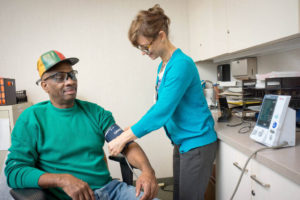
One tragic example of this is the notorious Tuskegee study, where hundreds of Black males were tricked into a project by researchers who claimed to be testing “bad blood” treatments. In reality, the scientists were letting the Black men die from untreated syphilis, and this went on for 40 years instead of the six months they originally planned.
Incidents like that, along with the growing social tension from police brutality incidents involving black people, and significant pressure from the Black Lives Matter movement, have caused a severe lack of trust between minorities and medical care.
Sources at NPR say that Black people are less likely to volunteer for medical studies. One of their polls determined that 1-in-5 African Americans avoid doctor’s offices and health clinics because of concern about discrimination.
Recently, more research groups have been working harder to accommodate and involve Black people in medical studies. Programs like the Precision Medicine Initiative, now called All of Us, are working to “engage more participants of all ethnicities to improve our ability to prevent and treat disease based on individual differences in lifestyle, environment and genetic makeup,” according to NPR. However, the question remains: will these strides towards equality will help minorities overcome their suspicions?
Written by Ogechi Onyewuchi
Edited by Cathy Milne-Ware
Sources:
Center for Disease Control and Prevention (CDC): Risk for COVID-19 Infection, Hospitalization, and Death By Race/Ethnicity
National Public Radio (NPR): Survey Finds Asian Americans Are Racial Or Ethnic Group Most Willing To Get Vaccine Courtesy of Brakkton Booker
National Public Radio (NPR): Troubling History In Medical Research Still Fresh For Black Americans Courtesy of Rob Stein
Featured Image Courtesy of Ruusu2010’s Flickr Page – Creative Commons License
Inline Image Courtesy of the National Insititute of Health Image Gallery’s Flickr Page- Creative Commons License




