















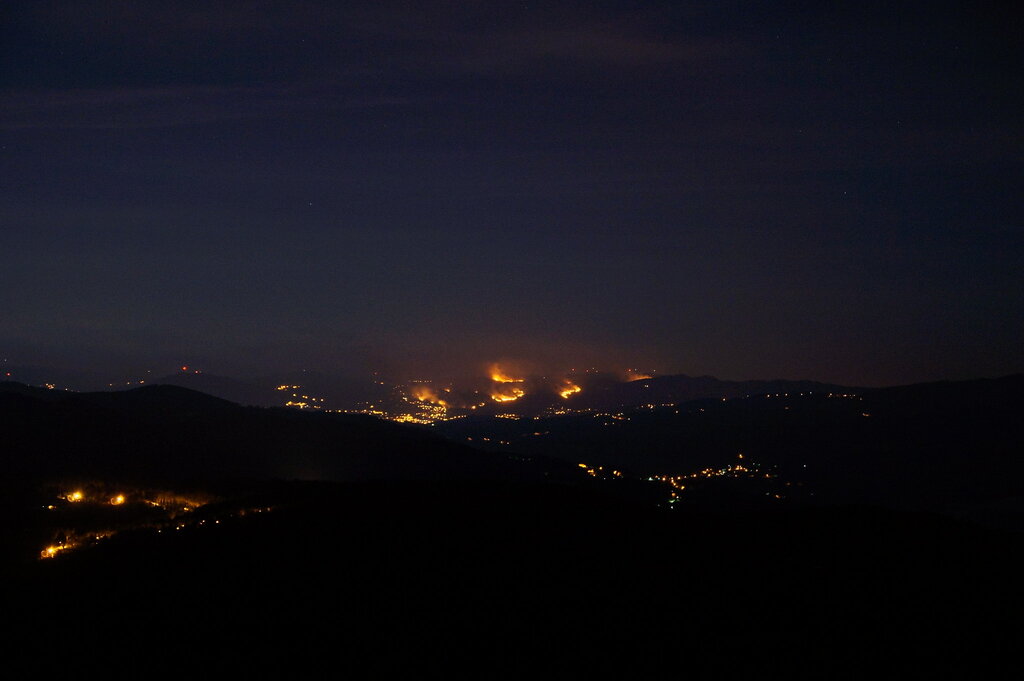
Dark situations enveloped sections of four states on Monday May 13th. Smoke caused by wildfires in western Canada caused air quality alerts and warnings. In accordance with the Canadian Interagency Forest Fire Centre, there are 146 ongoing wildfires in Canada.
Winds sent clouds of smoke across Montana, North Dakota, South Dakota, and Minnesota, prompting alerts. The Minnesota Environmental Management Agency released an air quality advisory on Sunday May 12th. The agency stated that the northern portion of the state has now cleaned up, however smoke remain above southern Minnesota on Monday as northerly gusts grow light throughout the day.
The index of air quality among all four states on Monday May 12th ranged from average to harmful. Nevertheless, the United States Environmental Protection Agency created an indicator to monitor daily air pollution conditions and explain the associated concerns.
Wildfire air quality is regularly monitored since microscopic particles in smoke have a diameter of less than 2.5 micrometers. Roughly, four percent of the width of a typical human hair can penetrate deep into the lungs. Contact to this form of particulate matter can promote inflammation and impair the immune system, as well as intensify or raise the risk of asthma, lung cancer, and other chronic respiratory disorders. As air quality deteriorate, the most vulnerable groups include the old, new born children, and pregnant women are affected.
The index of air quality analyzes PM2.5, as well as four other important toxins: ground-level ozone, carbon monoxide, sulfur dioxide, and nitrogen dioxide.
Thousands evacuate as Canada wildfire Spreads to U.S and grows
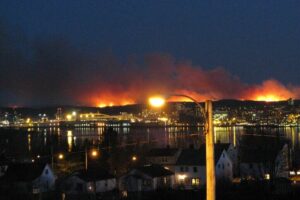
In British Columbia, Canada’s westernmost state, thousands of residents has been evacuated from their residences as officials fear that it is spreading. Scientists believe that global warming was mainly to blame for the recent spate of wildfires. Rising temperatures lengthened the Canadian cycle and boosted lightning strikes.
A warmer climate also burns out fire fuels, like the grass on forest floors. Nevertheless, these drier fuels allow it to be simpler for flames to ignite and grow, resulting in greater intense flames which are more difficult to extinguish. Rob Fraser, mayor of the Northern Rockies Regional Municipality, stated that approximately 3,500 people had departed from the region. Local media stated that several people have stayed.
Fort Nelson First Nation Chief Sharleen Gale said in a statement on Sunday May 12, “We cannot emphasize the significance of this situation enough”. “Your existence are of greatest significance, thus you must leave the neighborhood immediately for your own safety. Please take this alert seriously and leave immediately.”
It was confirmed by Chapman of the BC Service, who cautioned on Monday May 13th. Continuous winds of no less than 25 km/h (15 miles/hour) were forecast throughout the day. “Those conditions are expected to be around for the next 48 hours,” Chapman told reporters.
Canada Wildfire Spreads to U.S and marked as the first and major of the season
This past summer, smoke via wildfires across Quebec blanketed large parts of the United States, causing air quality to fall in places from the Midwest to the East Coast. More than 24,000 acres in western Canada, representing the first of the season had their air quality affected.
The previous year, Canada saw one of the most disastrous seasons in recorded history. Nevertheless, over 45 million acres were destroyed, according to the Canadian Interagency Forest Fire Centre.
The Canadian government stated on Friday May 10th that dry weather “may be anticipated to continue in high-risk regions in May”. This raised the “risk and severity of both spontaneous and human-caused.” Nevertheless, according to research, climate change is causing higher circumstances that make it easier for plants to dry out, which is a major factor in wildfires that ignite and propagate. Wildfires are projected to become more frequent and deadly as the earth warms.
Smoke in Canada Spreads to Minnesota and starts an air quality alert
Having over 100 ongoing wildfires in Canada, smoke has crossed through the border into the United States, causing Minnesota authorities to put out the state’s first air quality advisory for 2024.
More than 37 out of 141 engaged in Canada are currently declared “out of control”. The majority of ongoing wildfires, at least 90, occur in British Columbia and Alberta. The Canadian Interagency Forest Fire Center reports that Canada’s National Protection Level has risen to level 2 out of 5, indicating that “wildland blaze activity has risen across one or more jurisdictions.”
Smoke from the Canadian wildfires reached areas ranging from Montana to Wisconsin. Minnesota’s air quality advisory was published Sunday May 12th and will stay in effect until Monday May 13th.
By Desmond Jackson
Yahoo : Canadian wildfires trigger air quality alerts across 4 U.S. states
Aljazeera : Thousands evacuate as wildfire grows ‘dramatically’ in western Canada
Axios : First major wildfires of Canada’s season hit northern U.S. air quality
Featured Image Courtesy of Ricardo Faria Flickr Page – Creative Commons License
Inset Image Courtesy of Jenn Calder Flickr Page – Creative Commons License




