















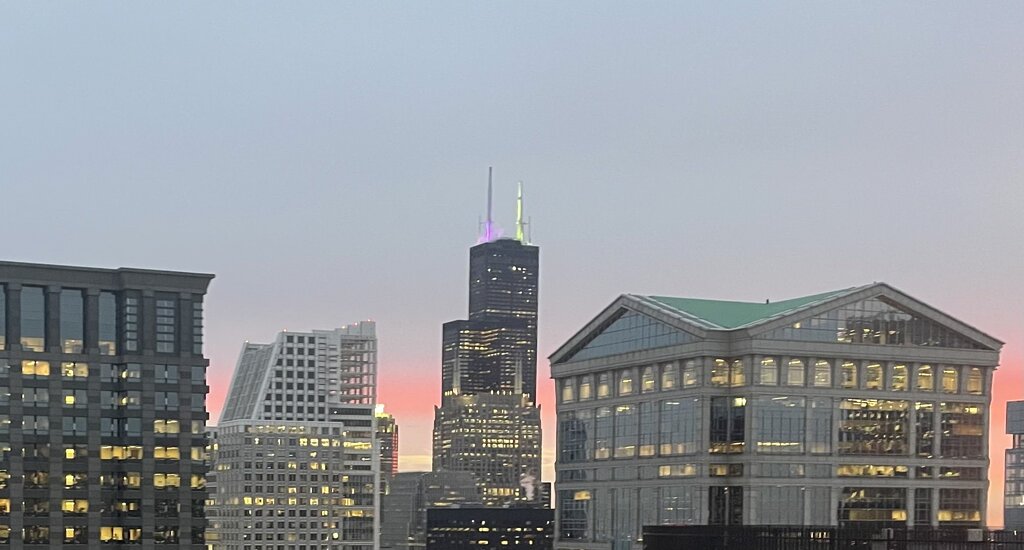
There was a very special birthday this week in Chicago. The Willis Tower, formerly known as the Sears Tower, celebrated the 50th anniversary of its completion on May 3. Since its completion in 1973, it has stood as an iconic moniker for the city of Chicago. A structural symbol is known worldwide as a defining piece of the Chicago skyline.
After its completion, it stood as the world’s tallest building for almost 25 years. It took the title from New York City’s Empire State Building, and remains one of the tallest buildings in the Western Hemisphere to this day at 1450 feet high, not including its colorful antennas. Its former namesake, the Sears Tower, was given once Sears, Roebuck, and Co. moved from their offices in Homan Square to the Loop.
Building a Behemoth
For Chicago to build the tallest building in the world, it had to first figure out how to make the building safe. This is because the lake-effect winds that can create gusts of up to 200 miles per hour. This posed quite an engineering question for engineer Fazlur Khan and the architecture firm, Skidmore, Owings, and Merrill. The Sears company wanted millions of square feet available inside the building, meaning the usual method of using interior columns would’ve meant there was less open space for offices. Khan decided to use a vertical structural tube of concrete or steel to allow the square footage Sears requested.
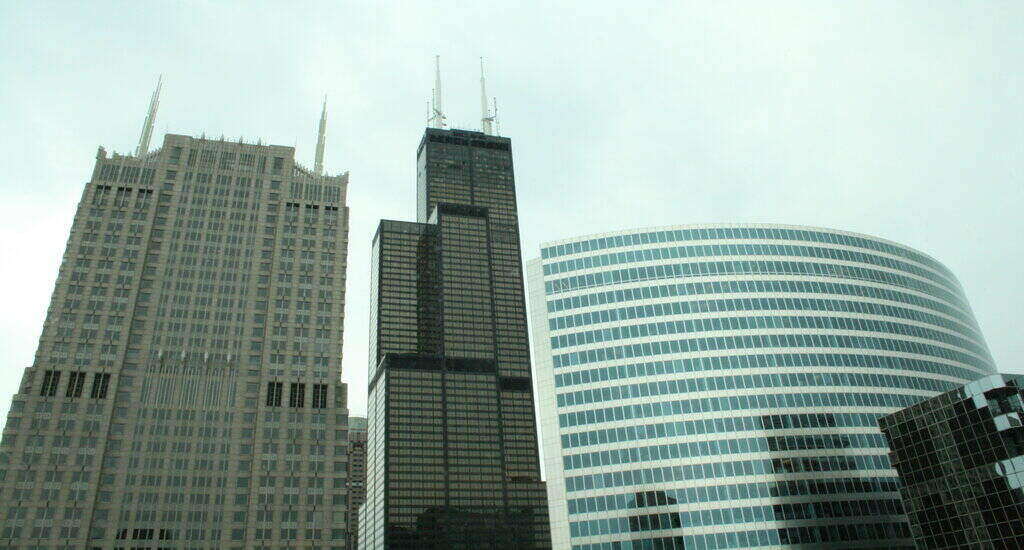
Khan also pioneered an architectural design called bundled columns, meaning the building is one tower made up of multiple towers. Rumor has it that in the design process, the architects used bundled cigarettes as a means of demonstrating this on a smaller scale. If you were to see the Willis Tower from a bird’s eye view, you would find that it looks like nine towers in a three-by-three pattern. Smaller towers provide support for the larger, middle tower. This inherent structural stability also meant that there would be fewer materials needed.
Building Sway
Now if the building is structurally secure that means that the wind has zero effect on the building, right? Well, skyscrapers are engineered to sway slightly in strong winds. This sway in the buildings allows for the core of the building to bend instead of break.
This means a building that can sway is safer than a building that cannot. Most inhabitants of highrises and skyscrapers wouldn’t notice the swaying of a building. Some smaller buildings are only meant to sway a few inches in each direction. The Willis Tower, though, is different. While the average sway of the building is around six inches from the center, on heavy wind days the building can sway up to three feet. This is enough to slosh water out of toilet bowls on the top floors.
Height Controversy
The Willis Tower stood as the world’s tallest building until 1998 when the Petronas Twin Towers in Malaysia finished construction. This caused a stir in both Chicago and the architectural community, as the Petronas Towers have a decorative spire that was taller than the Sears Tower, but the highest floor of the Sears Tower was higher than the highest tower of the Petronas Towers.
Eventually, the Council on Tall Buildings and Urban Habitat had to create four different categories of ‘tallest buildings’. The Sears Tower won out in one of them, where spires don’t count. Eventually, the Burj Khalifa in Dubai became the tallest building in the world when it surpassed every other building in all four categories.
The Willis Tower now is the third-tallest building in the U.S., losing to One World Trade Center in New York City. Again, the tallest floor or roof of the Willis Tower is higher than the roof of One World Trade Center, so in some schools of thought Chicago is still home to the U.S.’s tallest building.
What’s Its Name Again?
The Willis Tower goes by many names. Chicagoans tend to call it its nostalgic namesake, the Sears Tower. Although it is known professionally by its new name, the Willis Tower. What caused the change in names when it is known as the iconic Sears Tower? Well, companies actually rent out the naming rights to the building. The U.K.-based insurance company Willis Group Holdings bought the rights to the name of the tower in 2009. The price tag on the name? One million dollars.
Whatever you decide to call this building, 50 years of being a pillar of the Chicago skyline is no small feat, even if you’re the tallest building in the world.
Written by Caroline Buehler
Sources:
Chicago Tribune: Willis Tower is no longer the tallest building in the world. But it’s still a trendsetter as it turns 50 this week by Brian J. Rogal
Crain’s Chicago Business: What happens to Willis Tower’s name after Aon deal? by Danny Ecker
WillisTower.com: About
Featured and Top Image Courtesy of Caroline Buehler
First Inset Image Courtesy of Compujeramey’s Flickr Page – Creative Commons License




