















Early Summer residents were advised to stay indoors due to hazardous air. Now some worry about the pollutant effects of the upcoming NASCAR race during humid July weather.
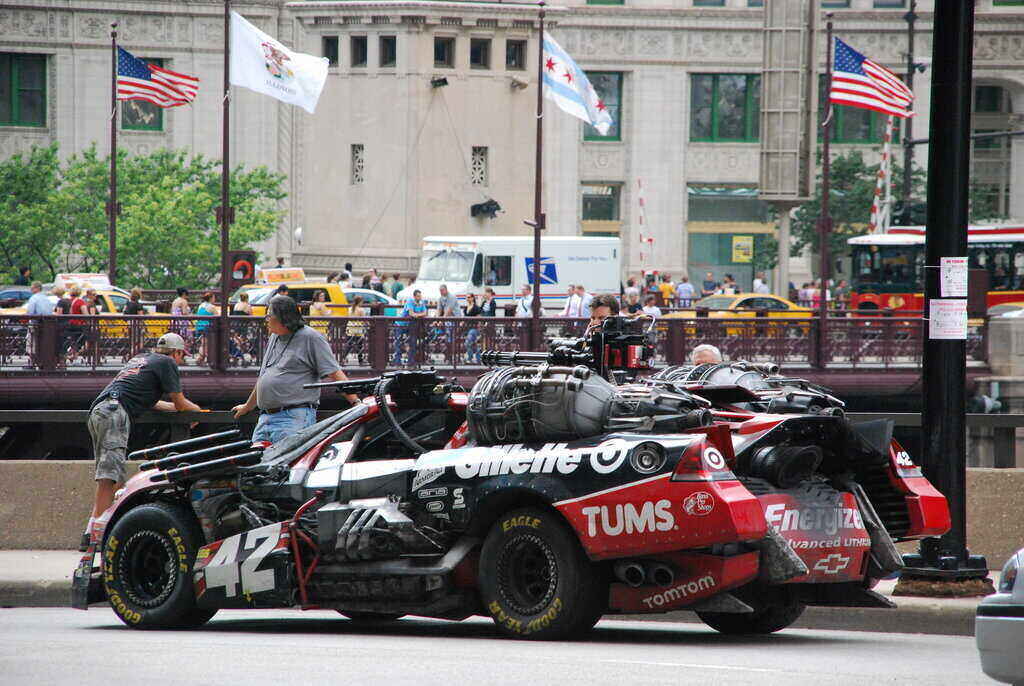
In less than a week Chicago will introduce a front-seat fest for NASCAR fans all around Chicago. But the catch – there is no enclosed stadium. The NASCAR event will be a street race. While it sounds simple enough, in Chicago it means racers have no margin for error. Racers will pass through six popular streets in Chicago. The race totals twelve different turning corners that they have to be wary of.
What’s so different about this NASCAR Race
The race will take place from July 1 through the 2nd. NASCAR’s Xfinity series is not in an effort to turn a massive profit but to draw in new fans and a once-in-a-lifetime tourist spot. For 2.2 miles, racers will be traveling at 100 miles per hour in cars that are not equipped to handle everyday pollution like pedestrian vehicles.

As fans are excited about the race, the same can not be said for the drivers themselves.
Martin Lee Truex Jr., one of NASCAR’s biggest American racers, regards Chicago’s track as something that goes against everything a racer is familiar with. Truex and other drivers see Chicago as a race of “survival.”
It’s gonna be who can tread that line and not fall off.
Strategically, there is no guarantee that the race cars’ tires and suspension can handle the varying state of the Chicago roads.
Race cars have different requirements in terms of their make. There are no restrictions on how much pollution a race car exhausts. Built to be pushed to extremes in a short amount of time, NASCAR vehicles consume much more energy to make. expelling pollutants more than normal vehicles due to the fact that the cars are regularly rebuilt. Excluding the safety concerns for the drivers themselves, researchers and engineers say that what gets released into the air that day will have an effect on the rest of the year’s air quality.
‘Just a drop in the bucket, right?’
A mechanical engineer at Purdue University, Greg Shaver, points out that overall there would not be a much higher output in the two days as compared to the daily pedestrian driving. However, there is some effect on a hot and humid day in July.
Are we having more environmental impact during the race with these cars than we were with conventional cars? The answer is absolutely yes – They’re going faster and they’re gonna be using more fuel in that period of time because they’re being driven more aggressively than you and I would legally be allowed to drive.
An air quality alert took effect earlier, June 17 until Friday, June 23, 2023. The warning covers every county in Chicago along with northwest Indiana.
The alert announced high levels of ozone in the air and is expected to meet or exceed the threshold for sensitivity to adverse conditions. These come as an effect of the increase in warm weather in combination with the high levels of concentrated pollution in the city.
While In effect, people-children especially — are advised to limit excess outdoor activities. Children and adults with preexisting asthma and other respiratory diseases.
Residents are also asked to contribute their help in reducing the dangerous air quality. Officials maintaining the U.S. Air Quality Index advised those inside Chicago to reduce unnecessary pollution. This includes carpooling and opting for public transport, eliminating excessive engine idling.
Written by Brielle R. Buford
Sources:
MSN: What NASCAR Cup drivers are saying about Chicago’s inaugural street race
NASCAR: NASCAR reveals Chicago Street Race on tap for 2023 Cup Series season’s July 1-2 weekend
Chicago Tribune: NASCAR in Chicago: On top of a stretch of hot weather, how will 40 cars racing around downtown at speeds over 100 mph affect air quality?
Top and Featured Image Courtesy of Michael Kappel‘s Flickr Page – Creative Commons License
Inset Image Courtesy of RS2Photography‘s Flickr Page – Creative Commons License




